From mammoth to penguin: what can Romanelli cave's symbolic imagery tell us?
The Origins of Art: from Portable to Rock Art
Art emerged in the latest and most recent phase of the Paleolithic (Gravettian culture, 28,000-21,000 years ago), when Italy was inhabited by small communities of nomadic hunter-gatherers. They had learned to work stone following rules of symmetry and, through flaking, created new tools; they manufactured and collected worked materials including stones, bones, tusks and antlers. Driven by subsistence and security needs to aggregate into increasingly larger societies, they lived constantly in contact with a supernatural and mysterious reality, with which they interacted through rituals and symbolic signs, in order to make sense of aspects of existence they could not understand. From these experiences artistic expression originated, appearing as a primary need even for primitive peoples.
In the first phase, art is portable (mobiliary) : prehistoric men, being nomadic, produced artifacts they could carry with them; artistic objects that have no practical function, but are solely aimed at representation and visual communication. Examples include the Venuses of Balzi Rossi or those of Savignano, Chiozza and Trasimeno, anthropomorphic female statuettes linked above all to ritual and magical purposes. They celebrate female fertility, and are characterized by the exaggeration of body parts related to generation and maternity: breasts, belly and buttocks that exalt the woman's sexual attributes. Sexuality and generation establish the deepest bond between human beings.
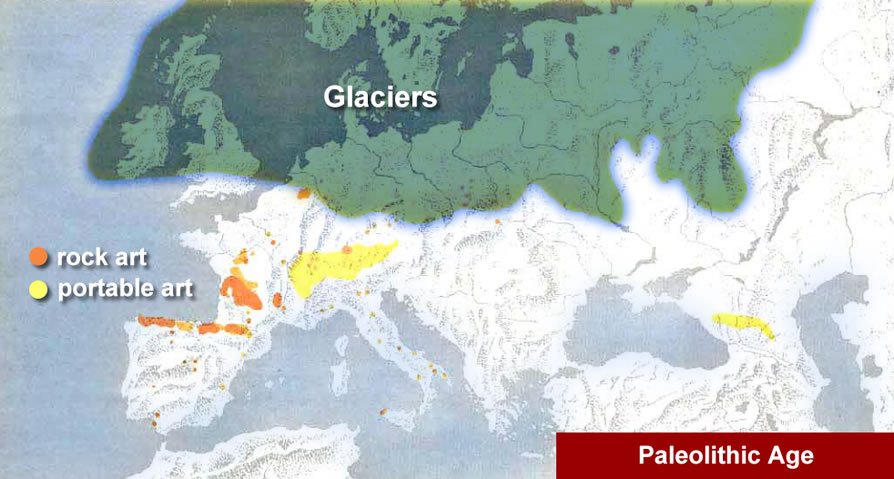
Subsequently, when nomadic tribes became seasonal, rock art developed. The main theme is hunting, the terrible bond – between life and death – that unites man with nature; it requires group solidarity and propitiatory ritual acts. Rock paintings and engravings, with their stylized or more realistic representations of pierced or fleeing animals or anthropomorphic figures, fix in lasting images the ritual acts that favor a fruitful hunt, making the places where they are found sacred.
At a considerable distance from the entrance of a cave, without apparent order, Paleolithic men engraved or painted. They often encountered considerable difficulties, given the poor visibility inside the cave and the height at which some figures have been found, which suggests that they probably made them using rudimentary scaffolding.
During the course of prehistoric times, various techniques of cave painting developed, most notably found on the rocky walls of caverns. Among these, we recall the so-called "blowing" technique, in which natural colored powder—such as ground stone, sand, and the like—was placed in the palm of the hand or inside a hollow bone or reed. A "figure" (a primitive stencil), which could be the other hand itself, a leaf, or a small statuette, was then positioned between the powder and the wall, and the powder was blown over the "figure." In this way, the outline of the "figure" remained on the naturally damp wall. We also recall the so-called "scratching" technique: over the course of the days, the fire lit within the caves produced soot that would settle on the damp walls and ceilings. This layer of soot was then scratched away using wooden or stone tools, thereby bringing out the figure through the contrast between the soot and the lighter color of the cave wall.
The subjects were mostly animals (Paglicci cave) such as mammoths, horses, bison, wild cattle, deer, bears and rarely fish such as the tunas painted in the Genovese cave on the island of Levanzo. This has led scholars to suggest magic-religious interpretations, related to hunting, fertility or both. The animals that appear most frequently are large in size, as if these images were meant to exalt their physical strength. When humans appear, they are generally depicted in a schematic manner, mostly in hunting scenes. Women rarely appear in rock paintings (as for example in the Graffiti cave).
For the paintings, local metallic pigments were invariably used, ground on site and mixed with a binder such as resins, egg white and other substances. The details of these images tell us little about their purpose. Sometimes they have been interpreted as decorations inspired by visual experience.
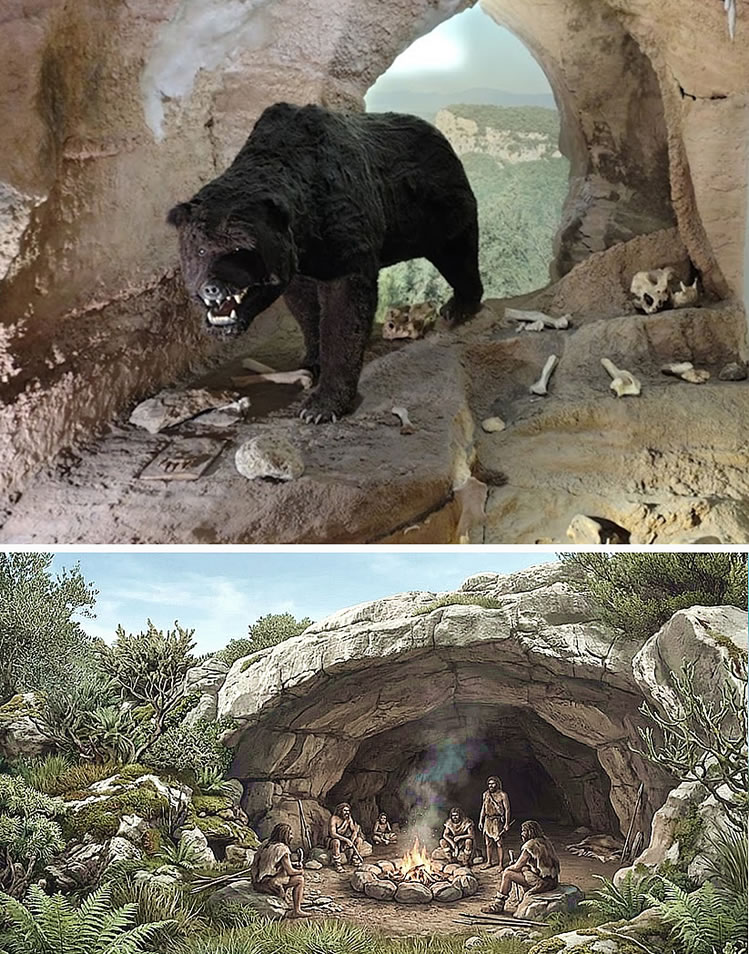
t is commonly but wrongly believed that these caves served as dwellings. In reality, the innermost part, besides being cold and dark, could hide many dangers: it could be inhabited by animals such as bears or hyenas – as in the Guattari Cave where Homo ended up becoming their prey – or have emissions of lethal gases such as the carbon dioxide of the Castelcivita Caves, which proved fatal for a child who first explored the cave. Primitive man instead preferred to live outside the cave, in tents made of animal skins, which could be easily dismantled, transported and reassembled elsewhere.
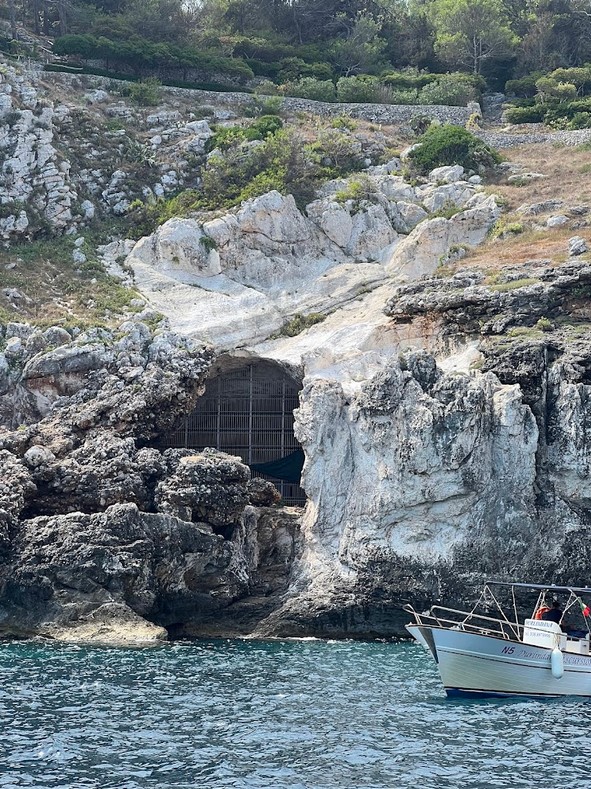
Romanelli cave
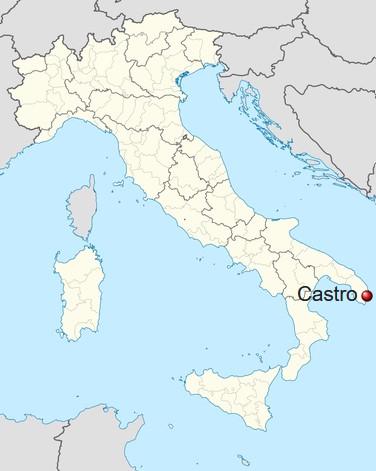
Located along the Salento coast near Castro, Romanelli cave has attracted the attention of scholars since the late 19th century, and is still the subject of studies today. Due to the richness of its finds, it was soon considered a key site for the study of climate change and human-environment relationships in the Mediterranean area during the Quaternary. Fossils have also been discovered inside the cave, testifying to and confirming the presence in southern Italy of proboscidean animals (ancient rhinoceroses and elephants), and large canids (hyenas, wolves). These finds confirm the historical reconstruction according to which the territory, once characterized by a savanna, transformed after the glaciation into a sort of tundra, populated even by polar animals.
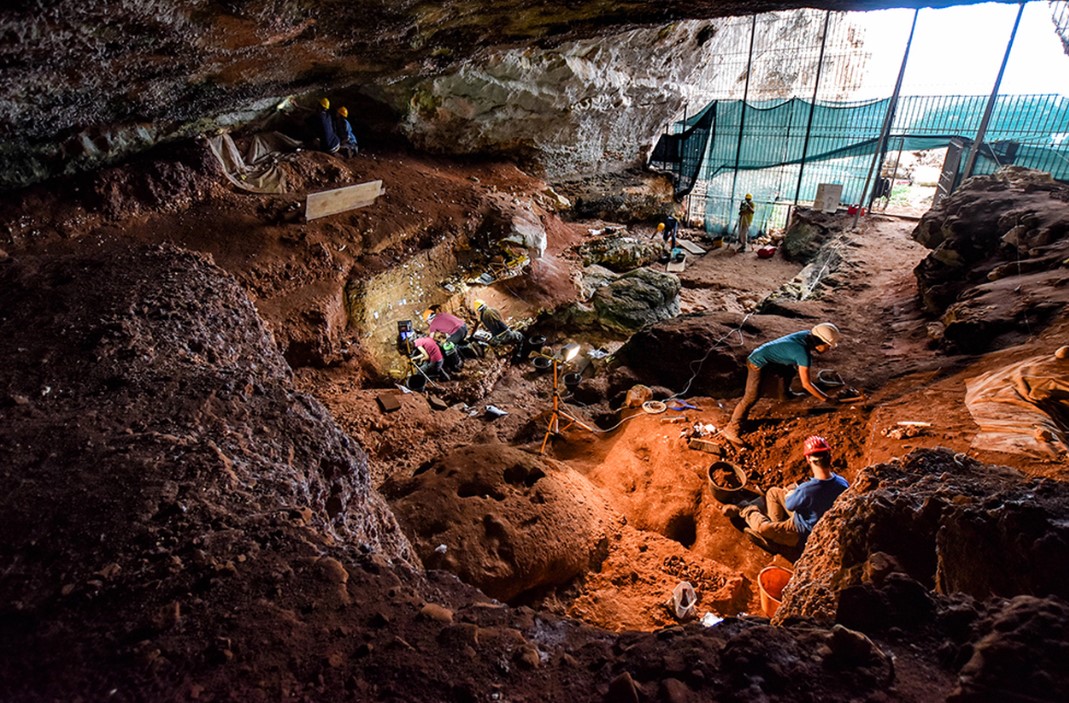
It is reached from the sea, but access to its interior is prohibited. It consists of a single chamber located 7.5 meters above sea level, 16 meters wide, 35 meters deep, with a passageway 8 meters long, and with the vault partially collapsed at an unspecified time. This cavity served repeatedly as a shelter or dwelling for Paleolithic hunter-gatherer groups between the Last Interglacial (120,000 BC, fossil marine beach with rare Mousterian artifacts) and the end of the Pleistocene (10,000-8,000 BC, terminal Upper Paleolithic). In the "red earths" stone scrapers (120,000-40,000 years ago) were found, made by Neanderthal man, while in the "brown earths" lithic tools, remains of 2 child skeletons and some mandibles, and engraved stones of the final Upper Paleolithic were found. The parietal art features animals and other signs, dated between 10,700 and 9,700 years ago. Moreover, it is precisely in this layer that about 200 portable art finds were discovered, with different themes and techniques.
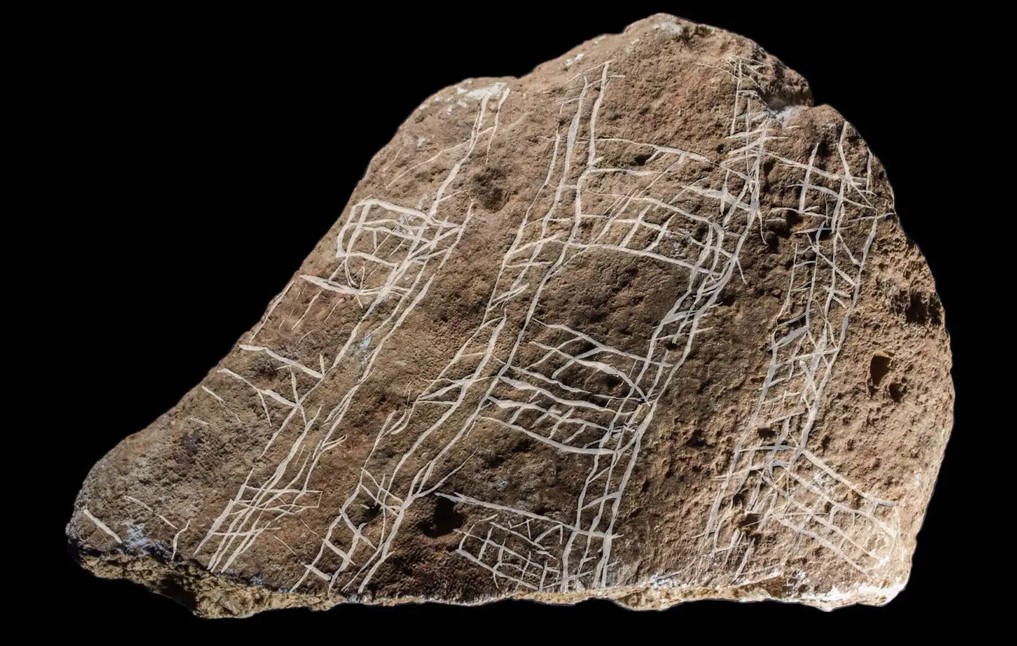
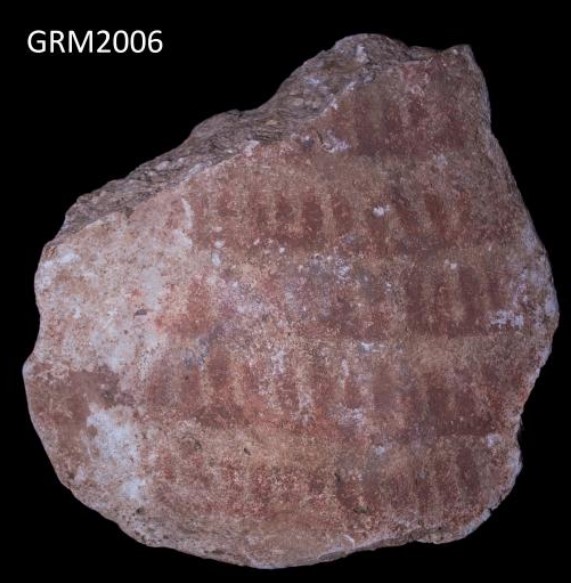
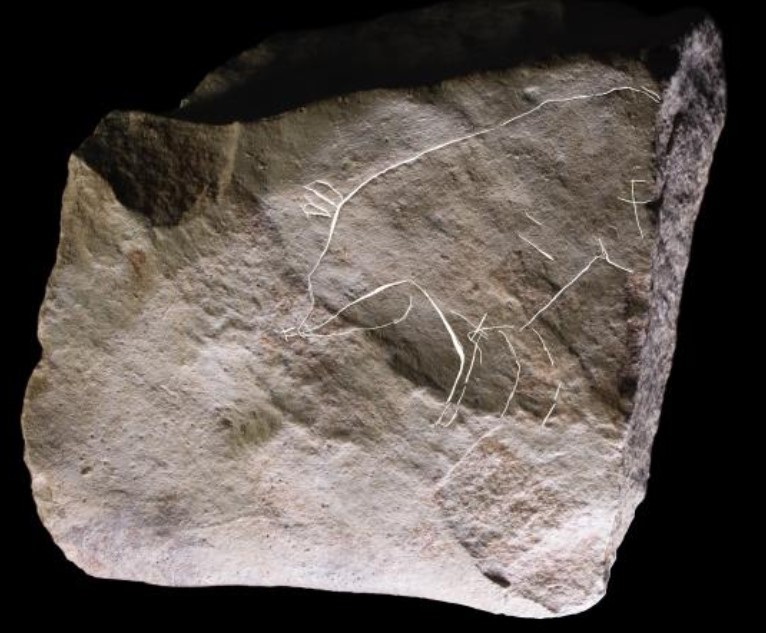
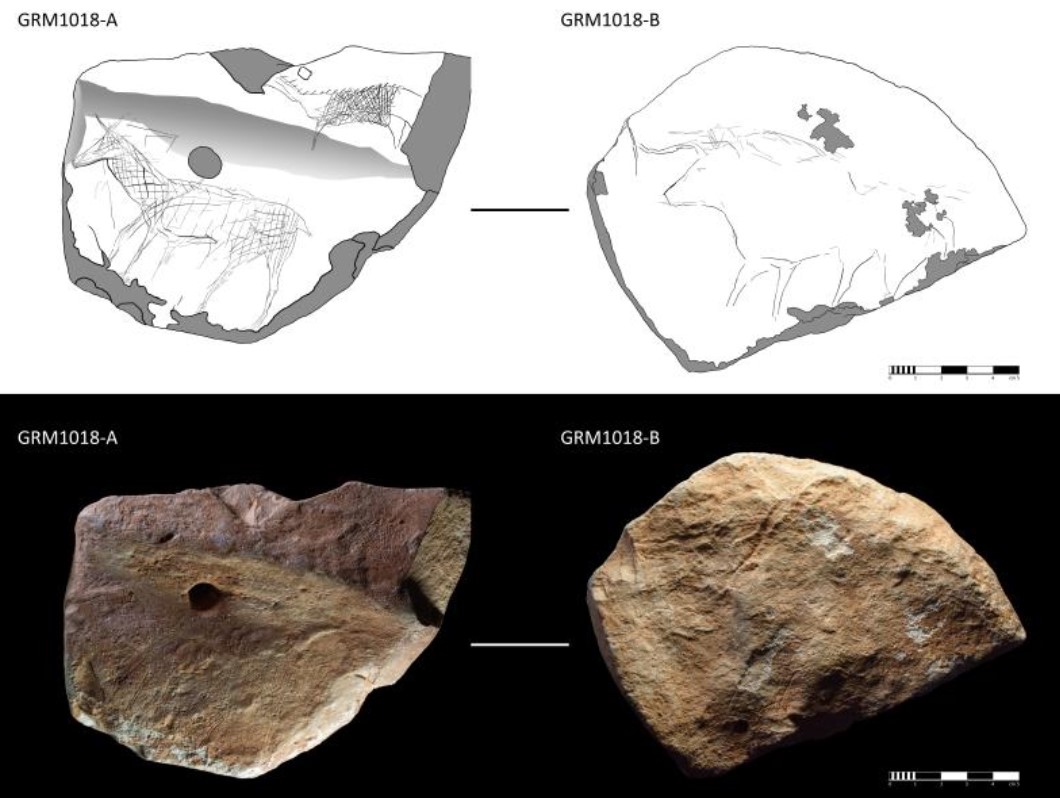
Romanelli cave guards one of the richest heritages of Paleolithic portable art in Italy, so far only partially studied systematically: pieces of equid bone and limestone blocks, with various signs and figurations that refer to symbolic production. They have been grouped into three main categories: zoomorphic figures (9 images dating to about 13,400 and 10,400 years ago, including two bovids, a deer, a feline, a wild boar and 4 images of quadrupeds difficult to interpret), geometric figures and others with abstract designs not exactly identifiable. The designs are more or less complex, with parallel lines of varying width, with broken or overlapping lines, with lattice, zig-zag or meander patterns, serpentine or ribbon-like decorations.
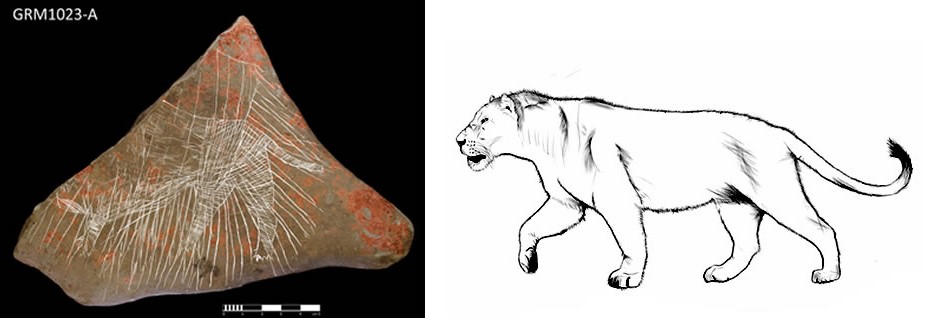
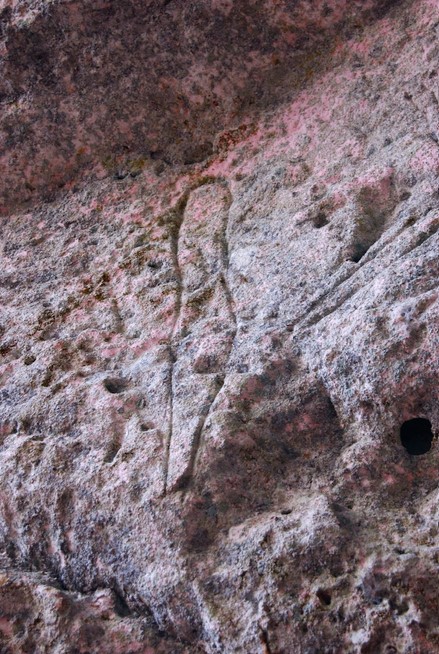
The graphic units identified are sixteen: four fish, three bovids, two wild asses, a hind, a deer, a canid, a wild boar, a cave lion, an indefinable animal and a rare anthropomorphic subject, namely a phallic representation. The latter is important because it indicates that at Romanelli cave, among the figurative motifs, not only zoomorphic but also anthropomorphic subjects appear. About 10,000 lithic artifacts (scrapers, burins, blades, retouched bladelets) with typical local characteristics are also referable to the same layer, which have determined the definition of "Romanelliano", a typical industry of the final Upper Paleolithic (Final Epigravettian). But of particular importance are the parietal engravings. Among these, noteworthy is the bovine figure placed on the north wall of the cave: the shape of the head and horns recalls the Aurochs or Bos Primigenius, whose remains abound in the brown earth layers of the cave. Another important engraving is that of the "rediscovered cervid" over which is superimposed the image of a finely engraved bovid. Many other engravings have been identified on the walls of Romanelli cave, especially in the area near the entrance, a few meters above the modern ground level; they are linear and spindle-shaped patterns, some of which probably represent vulvas and anthropomorphs. In particular, there is a figure with buttocks protruding backward and legs and torso stretched forward; the legs have no knees and end in points while the upper limbs are completely absent.
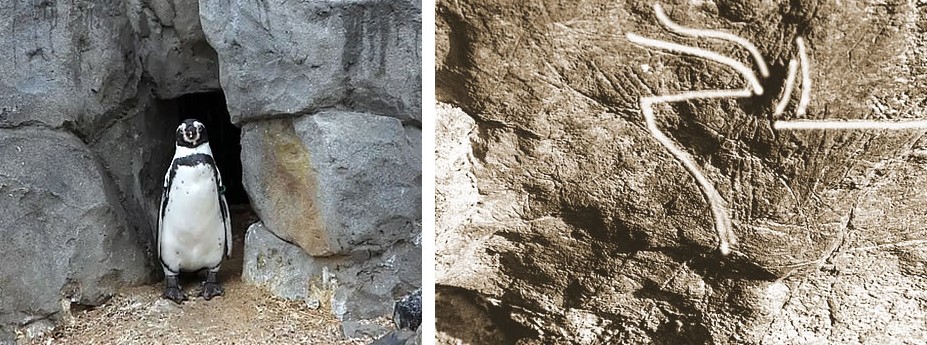
New parietal engravings, about 31 new graphic units, including the figure of a bovid, a rare representation of the boreal penguin, the great auk (Pinguinus impennis) – which has become a true icon of the so-called "Ice Age" – and some geometric and linear signs, emerged during the recent excavation campaign that began in 2016. The investigations carried out have made it possible to identify the use of four different engraving techniques and traces of direct application with fingers on the rock of a natural pigment known as "moon milk". An aspect that emerges is the relationship between "global" and "local". On the one hand, themes and stylistic features confirm the pan-European diffusion of a shared visual tradition, probably due to demographic expansion and the development of a network of contacts; on the other hand, the presence of certain subjects – such as fish, wild boar, canid or cave lion – suggests the influence of the surrounding landscape and environmental conditions on the prehistoric imagination, thus attesting to the development of local traditions. The techniques also show variability: the figures are mainly made with engravings, but in at least two cases traces of red pigment (hematite) appear, indicating that painting and engraving could coexist. Furthermore, on some surfaces, overlaps of signs and engravings can be seen, evidence of corrections and possible reuse of the stones themselves.