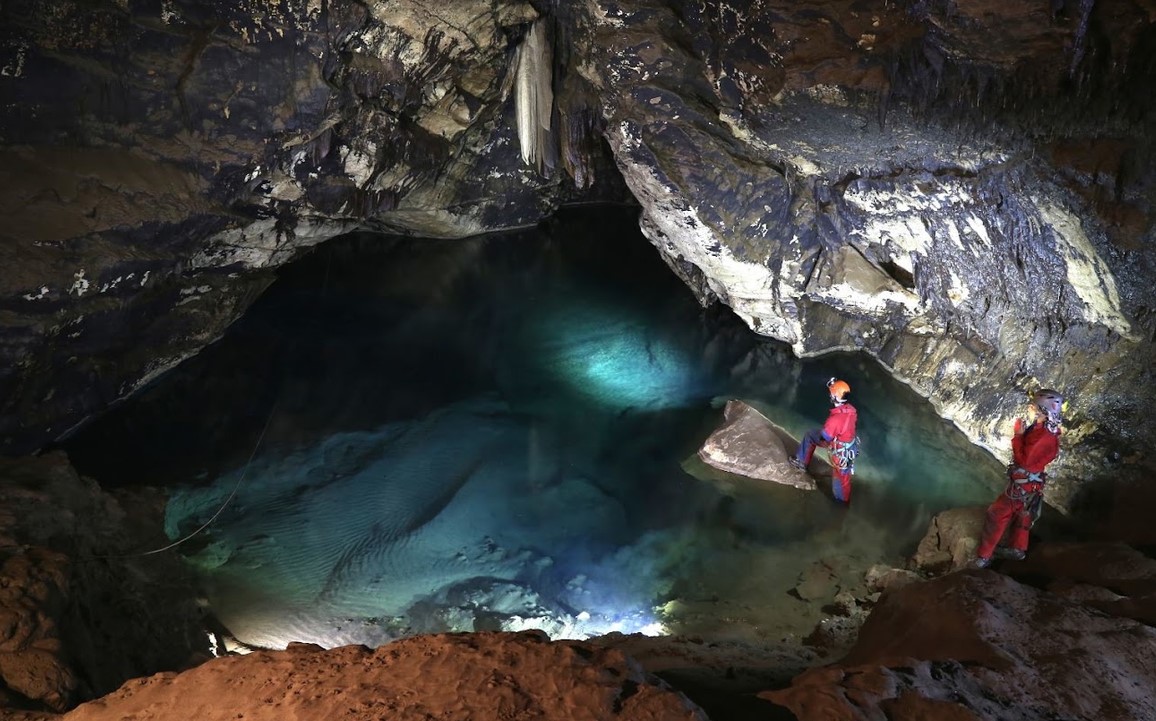
Were the Castelcivita Caves the Sapiens' first stop in Italy?
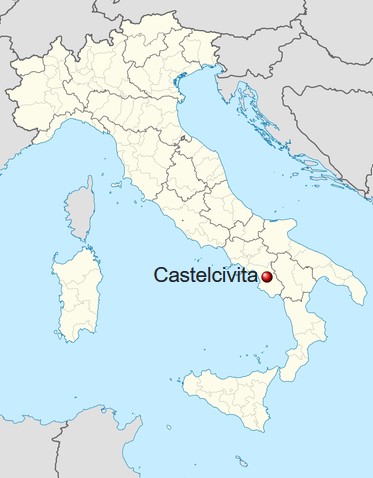
The Legend of Spartacus
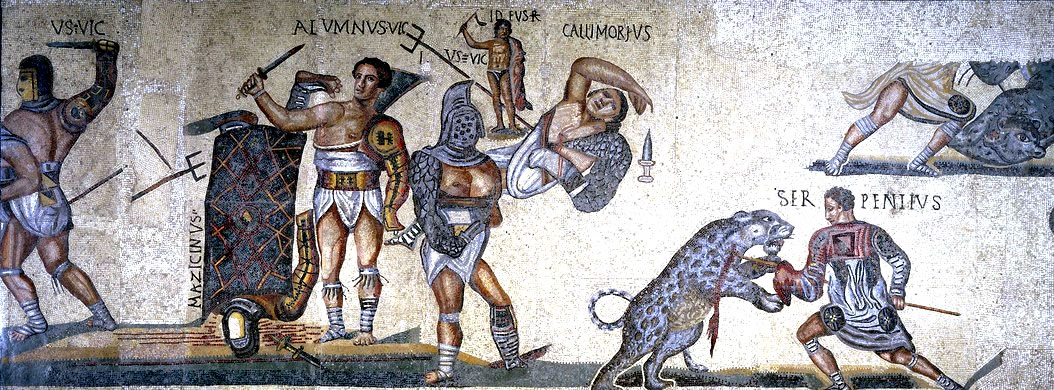
Spartacus was a former Roman soldier of Thracian origin (died 71 BC). A deserter and thus reduced to slavery, he escaped in 73 BC with a few companions from the gladiatorial school in Capua. He quickly gathered thousands of fugitive slaves around him (Thracians, Celts, Germans), with whom he pillaged Campania for about a year. After parting ways with his fellow rebel, the Celtic Crixus, he headed north, defeating the consul L. Gellius and, at Modena, the governor of Cisalpine Gaul. He then turned back south, but in Lucania he was surrounded by M. Licinius Crassus, who commanded no fewer than ten legions. Crassus drove the slaves battle after battle toward the southern tip of the peninsula, eventually trapping the rebels in Calabria. To force them to surrender by starvation, since they were blockaded by land and sea, he had a great palisade and a ditch thirty kilometers long built, cutting the tip of the Italian boot in two. In 71 BC, the bloody battle took place: the gladiator was defeated and took refuge in the caves of Castella (today Castelcivita, in the province of Salerno, Campania) together with his wife Norce and a few wounded warriors. Captured, he was killed; of his followers, 5,000 died in battle and 6,000 were crucified along the Appian Way, between Rome and Capua. From then on, they were called the Caves of Norce and Spartacus, and according to legend, Spartacus hid a treasure there. The search for it led to their first exploration in the 19th century.
The Castelcivita Caves
In 1889, two young brothers from the neighboring village of Controne, Giovanni and Francesco Ferrara, aged 14 and 16 respectively, tragically ventured into the cave with two oil lamps and some matches to find their way through the cavities. But just a few meters from the entrance, they were engulfed in total darkness, and after less than 300 meters, the two brothers became trapped. The lack of oxygen made the combustion of the lamp oil impossible, leaving the youths in darkness and without any sense of direction. Overcome by carbon dioxide fumes emanating from a side branch, the two were found only eight days later. Without food or water, they were in critical condition. Francesco died while being brought back home, and Giovanni went mad some time afterward.
The Castelcivita Caves are one of the most significant underground karst features in the southern Apennines. However, from an exploratory standpoint, the hypogeum remained largely or entirely unknown at least until the end of the 19th century. Many years passed before better-organized and equipped explorations were carried out in the cave; indeed, it was not until 1926 that a group of daring speleologists explored the first 500 meters of the cavity. Interest among locals was immediately rekindled, and numerous exploratory forays were undertaken. This period of exploratory fervor was followed by a long pause, partly due to wartime events, which lasted until the 1950s, when an expedition reignited interest. These were the years of the Cold War, when the military sponsored and funded teams of speleologists to discover and explore natural cavities to be converted and used as logistical and operational bases in the event of nuclear war. It was then that abundant lithic artifacts were discovered, showing clear signs of water wear and reworking at the cave entrance and at the level of the Braccio dell'Orrido (wing of the horrible): burins, scrapers, blades, and small flint, chalcedony, and obsidian points (1–3 cm) with sub-rounded edges due to reworking by water transport and, in part, also by tourist development work. Meanwhile, speleological explorations continued, leading to the discovery of an underground lake.
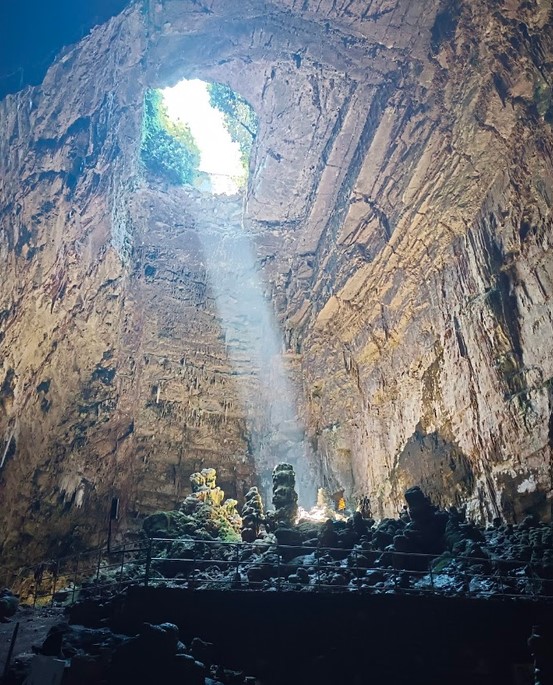
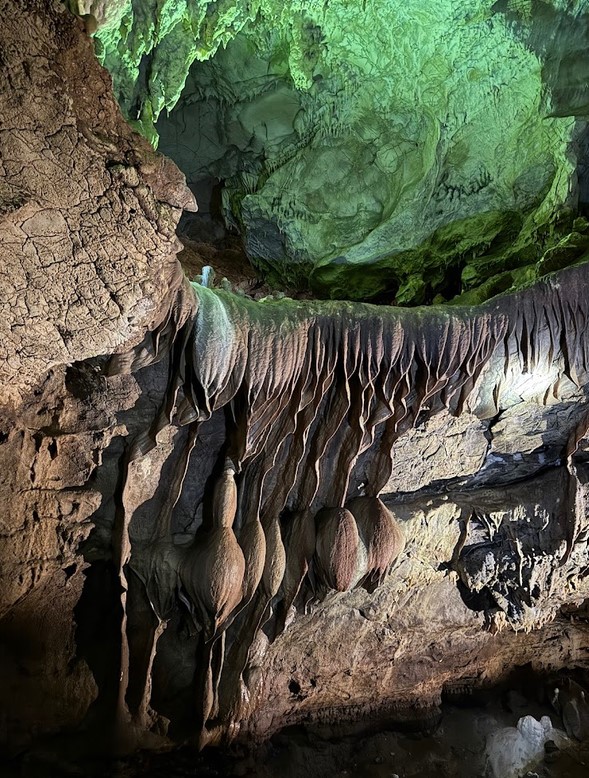
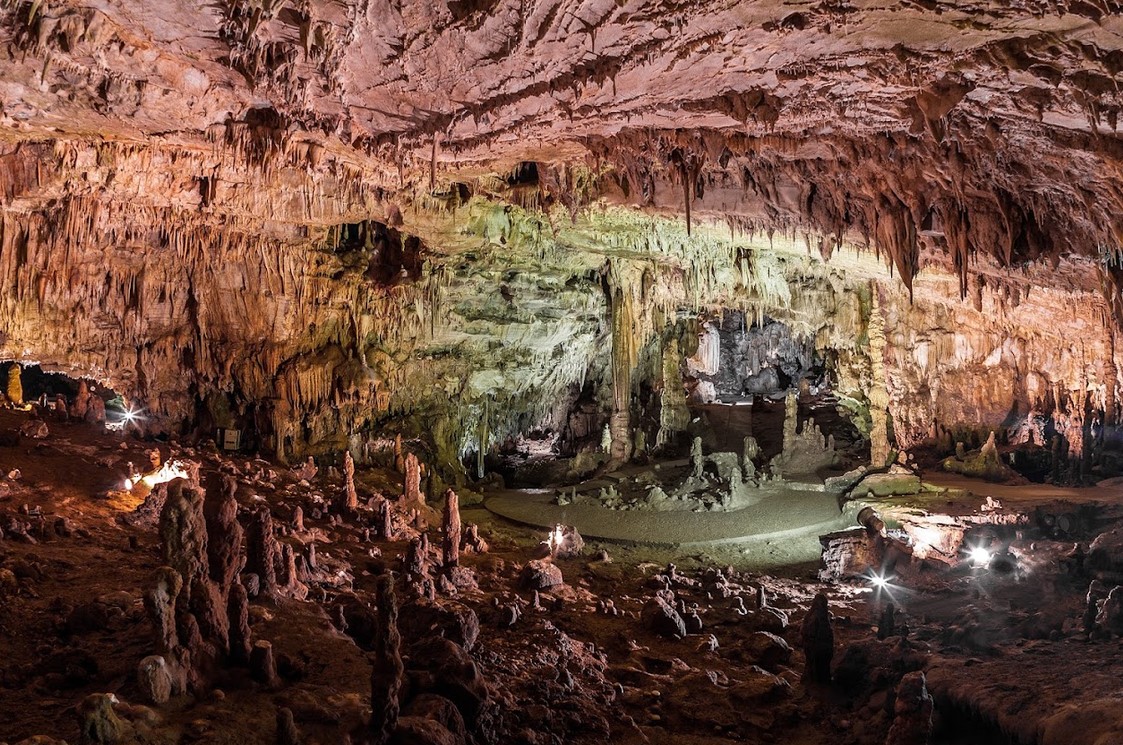
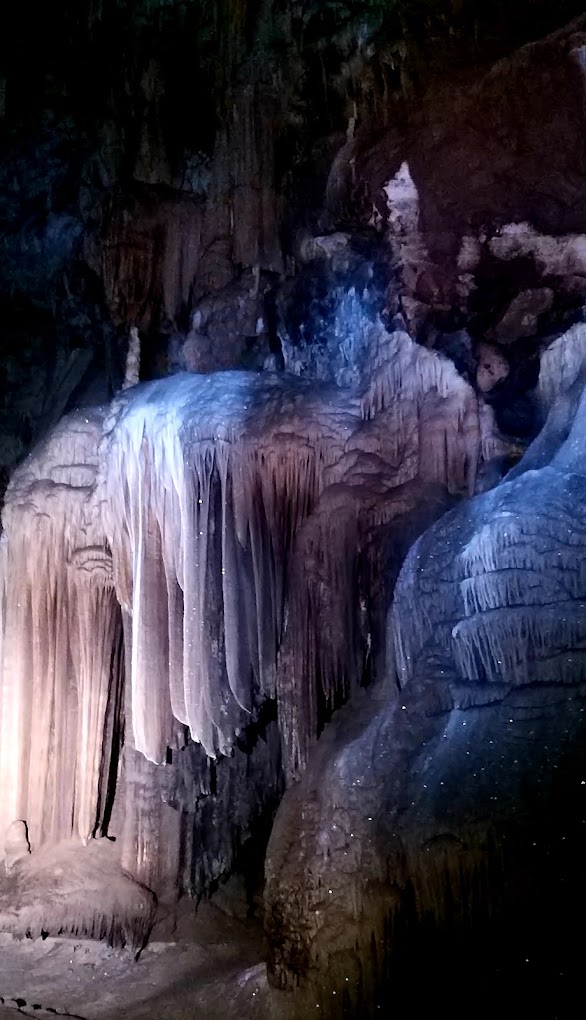
The Castelcivita Caves, with a total length of approximately 4,800 meters, constitute one of the most extensive speleological complexes in southern Italy. The system of underground cavities opens at an altitude of 94 meters, immediately revealing a striking landscape of galleries, wide spaces, and narrow passages carved by millennia of karst erosion. They develop along a single main branch, from which short secondary offshoots branch off at several points. Passing through spectacular concretion-filled chambers adorned with imposing and eccentric limestone formations, one reaches a large water basin known as "Lago Sifone" and, at the end of the cave, another lake called Terminale.
Neanderthal vs Homo sapiens in the Castelcivita Caves
The Castelcivita Caves are important because they were chosen as a dwelling place by the first groups of Homo sapiens arriving from the African continent, who reached southern Europe and entered the Italian Peninsula. At the mouth of the cave, they preserve the most ancient traces of their arrival and documentation of the times and manners in which they replaced the last Neanderthals, an extinct population that had dominated Europe unchallenged between about 250,000 and 40,000 years ago. This particular evidence occurs in only a few Italian sites, mainly concentrated in southern Italy, two of which—Castelcivita and Caves at Marina di Camerota —are located in Cilento. In the caves, traces of Neanderthal occupation have been found, dating to a period between 47,000 and 43,000 years before present, as well as those of the first European Homo sapiens, dated to 43,000–42,000 years before present—a fact particularly interesting for the study of the causes that led to the replacement of Neanderthals by Sapiens. The finds attributed to Homo sapiens—lithic artifacts, ornamental objects made from marine shells, and remains of hunted and consumed animals—have been classified as Uluzzian and Proto-Aurignacian, among the oldest such evidence in Italy. In-depth studies have determined that these early peoples of the species Homo sapiens possessed remarkable skills in making bows and arrows, as well as in food processing, as testified by the discovery of a pestle for grinding wild cereals, dated to about 40,000 years ago—roughly 30,000 years before the period when Homo sapiens is believed to have begun practicing agriculture. Also significant is the discovery of settlement remains with hearths, stone artifacts, ornamental objects, and remains of animals captured and consumed by Paleolithic hunters—chub, trout, and eels—which have expanded our knowledge of their dietary habits. This information, combined with the reconstruction of the paleoenvironment in which these hominids lived, has allowed giant leaps forward in the understanding of prehistoric times and, above all, in clarifying the relationship between Neanderthals and Sapiens during the period when these two human species coexisted in Europe. According to the new reconstruction, modern humans and Neanderthals were uncomfortable neighbors for periods of time that varied from region to region, up to a maximum of nearly 5,400 years in southern Europe—more than enough time for cultural and genetic exchanges to take place. The last refuge of the final Neanderthals before extinction would have been France around 40,000 years ago, while there is no evidence confirming the presence of survivors beyond that time in the Iberian Peninsula.