Where did Neanderthals live along the Aniene River?
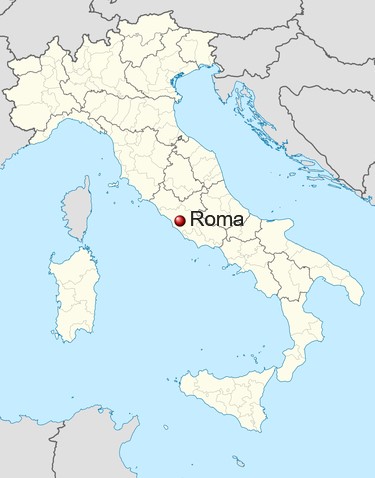
There are not many remains of Neanderthal man that have been brought to light in Italy compared to continental Europe, and all of them date back to the late Pleistocene. About twenty sites have yielded evidence of his presence. We have seen how these discoveries have allowed us to get to know him closely and to uncover several of his aspects, sometimes unimaginable. We know, for example, that he could become prey to the hyenas that inhabited the caves he frequented; that he used feathers of birds of prey and other birds along with eagle talons for symbolic and ornamental purposes on clothing, objects, or individuals; that he frequented caves together with his children but never shared them with the first Homo Sapiens arriving in Europe, because he disappeared before their arrival, and therefore there was no direct contact between them on the Italian Peninsula. Instead, in Northern Europe, Homo Sapiens began to have contact with Neanderthals earlier than previously believed, and in any case at least 2,000 years before its arrival in Italy.
The Roman Neanderthals
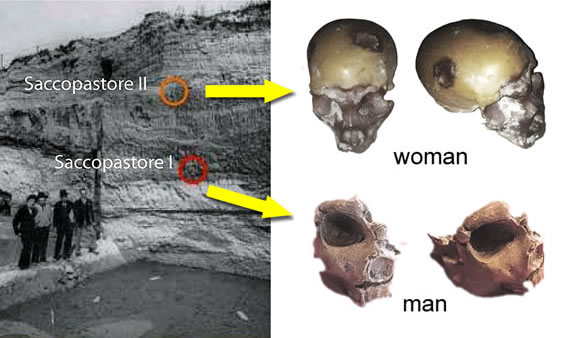
Their oldest paleoanthropological finds date back to the early twentieth century in the gravel quarry of Saccopastore, located in the Aniene valley on the outskirts of Rome. It was situated on a bend on the left bank of the Aniene River along the Via Nomentana, in an area that was not yet urbanized at the time, while today the street of the same name lies in the Monte Sacro district.
The fossils have been dated to about 250,000 years ago, representing one of the oldest direct testimonies of the presence of this species in Europe. They were found close to each other in space and time: the skull of a young woman, missing the lower part of the face, at a depth of 6 meters, and the base of a skull and part of the face of an adult man at only 3 meters depth. Not far away, various lithic tools that they used for hunting and other functions were discovered, along with remains of elephants, hippopotamuses, and rhinoceroses, animals that lived hundreds of thousands of years ago and bear witness to the great geological and climatic changes of our planet.
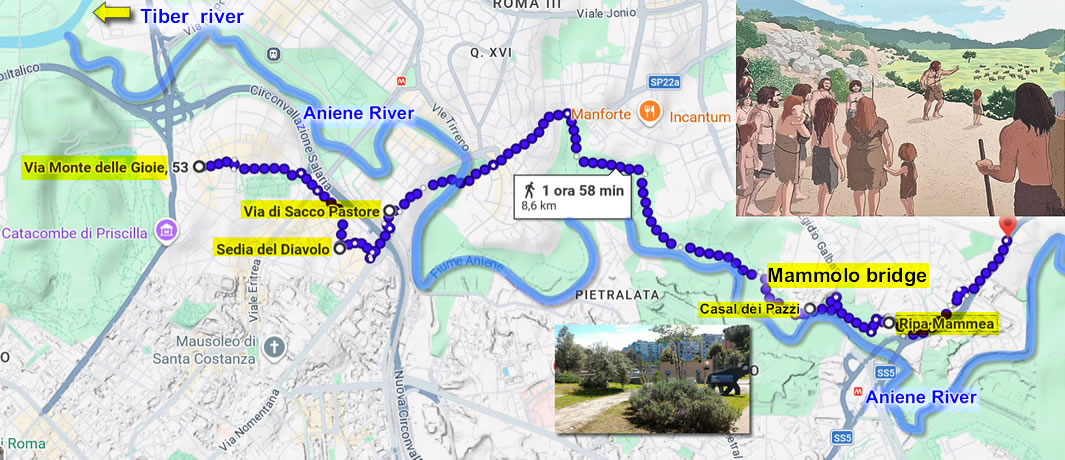
Subsequently, other Paleolithic settlements were identified along the course of the Aniene, such as Casal de' Pazzi, where a museum has been established, and in other areas, including Ponte Mammolo, Ripa Mammea, Sedia del Diavolo, and Monte delle Gioie, now disappeared due to intense human activity, where fragments of human bones and flint tools were found.
The large gravel deposits, such as that of Saccopastore, represent the geological evidence of ancient glaciations. In fact, the transport of gravel by the Tiber and its tributaries requires exceptional hydrological conditions, which occur only at the end of glaciations, when the sudden melting of glaciers takes place. This caused a massive increase in river flow, leading to violent floods that carried large quantities of pebbles derived from mountain erosion all the way to the coast.
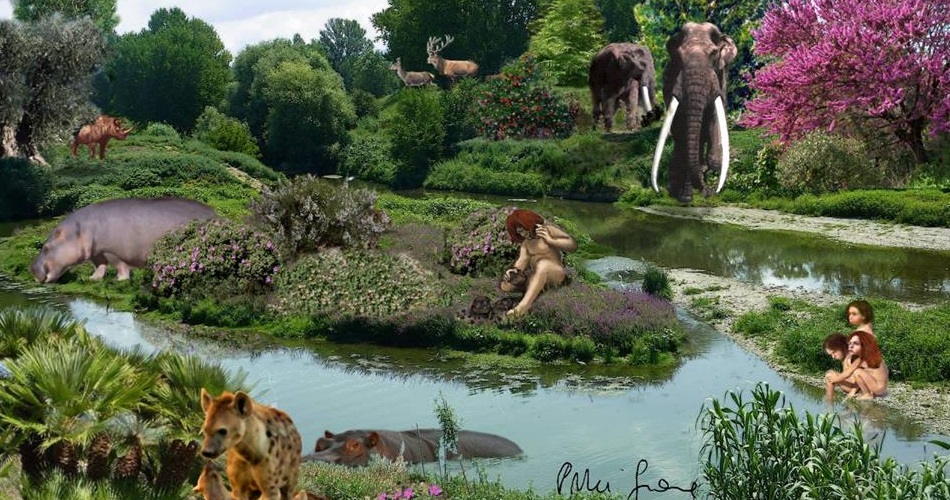
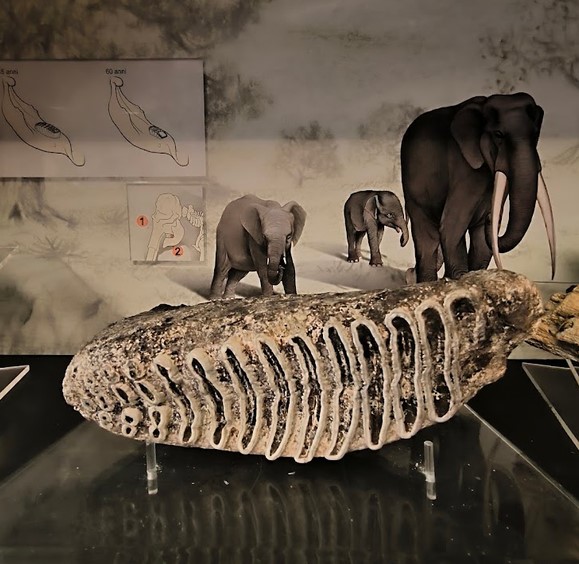
At that time, the climate over much of Europe became similar to present-day Africa, as testified by the fossils of elephants, hippopotamuses, and rhinoceroses that, during the Pleistocene, lived along the banks of the Aniene River alongside Neanderthal communities.
All these findings demonstrate that the appearance of Neanderthal Man was almost simultaneous throughout the European continent, but at the same time they challenge the hypotheses formulated on the migratory flows by which Neanderthals would have spread, based essentially on the differentiation from the preceding species, Homo heidelbergensis, which would have occurred in the territories of northern Europe, whereas in Italy we have encountered it in various places such as Isernia and Foresta, between 600,000 and 350,000 years ago.
Casal dei Pazzi
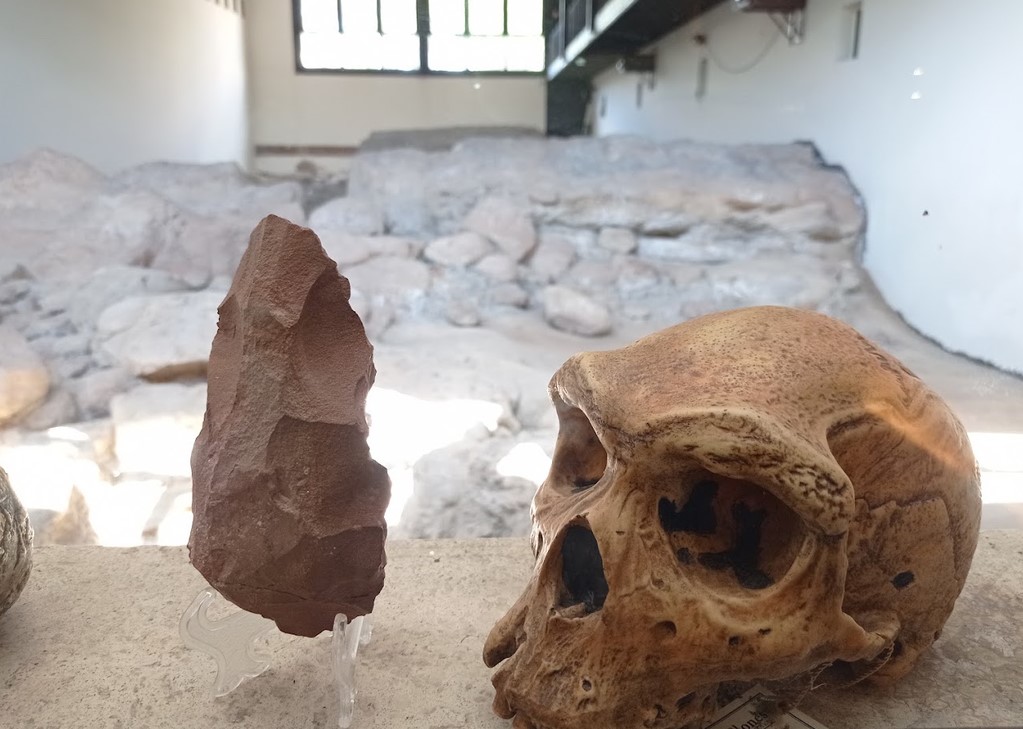
The city of Rome is the outcome of a millennia-long process of historical stratification. Its urban fabric rests upon an enormous quantity of archaeological evidence from prehistory onward: tombs and necropolises, roadways, remains of temples, palaces and villas, kilns, aqueduct conduits, cisterns, and pools. For two centuries, whenever construction work is undertaken, the past re-emerges in the form of chance finds, more or less significant but always such as to require in-depth investigations, major modifications to original plans, or immediate halting of worksites. This also happened in the early 1980s during the urbanization works in the Casal de' Pazzi area: a vast Pleistocene deposit was discovered, interpreted as a portion of the bed of an ancient river, over an area of more than 1,200 square meters. Overall, about 2,200 animal bone remains from animals that lived 300,000 years ago were found, along with over 1,700 lithic tools. The abundant lithic industry found is almost entirely made from flint pebbles, both from the same river deposit and from outcrops as far as 50 km from the site. Many different tools are represented, but the majority are typical Middle Paleolithic tools, such as scrapers, denticulates, and notches.
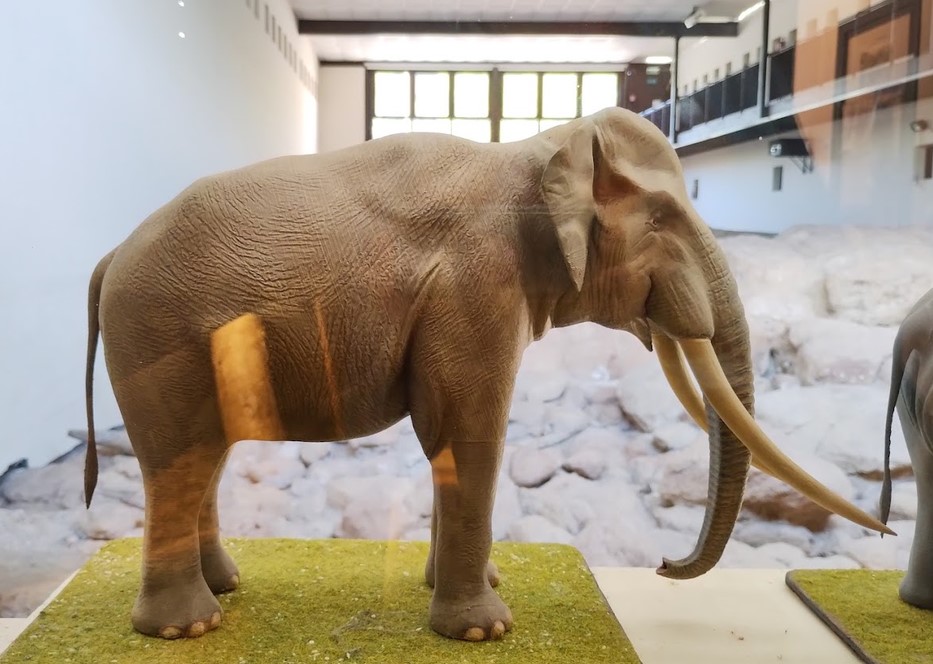
The site, located on the right bank of the Aniene at an elevation of 32 m a.s.l., was characterized by layers of gravels and pyroclastic sands (i.e., originating from volcanic rocks) in which lithic industry and fossil bones were found, with uneven distribution. The bones belonged mainly to large mammals (in particular Elephas Palaeoloxodon antiquus, Hippopotamus amphibius, Bos primigenius, Cervus elaphus, Dicerorhinus sp.) and water birds. In the lowest level, almost at the bottom of the river basin, a fragment of human parietal bone was found.
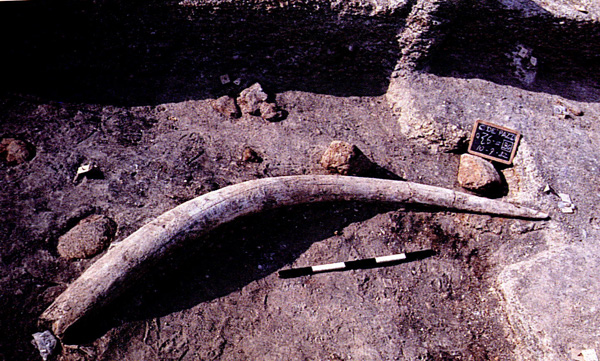
In the extensive deposit, the infillings that filled the riverbed were removed until reaching one of the riverbanks. A natural barrier formed by the substrate of 'lithoid tuff,' a rock produced by the Albano Volcano about 360,000 years ago and later rounded by water, had caused an accumulation of large faunal remains at a specific point along the river course; in particular, tusks (25 whole and about fifty fragmented), molars (60 whole, 120 fragmented), pelvic and cranial fragments, and long bones of Elephas Palaeoloxodon antiquus had become wedged between the cliffs and tuff blocks. This has become the symbolic animal species of the site both for the number of finds and for their size.