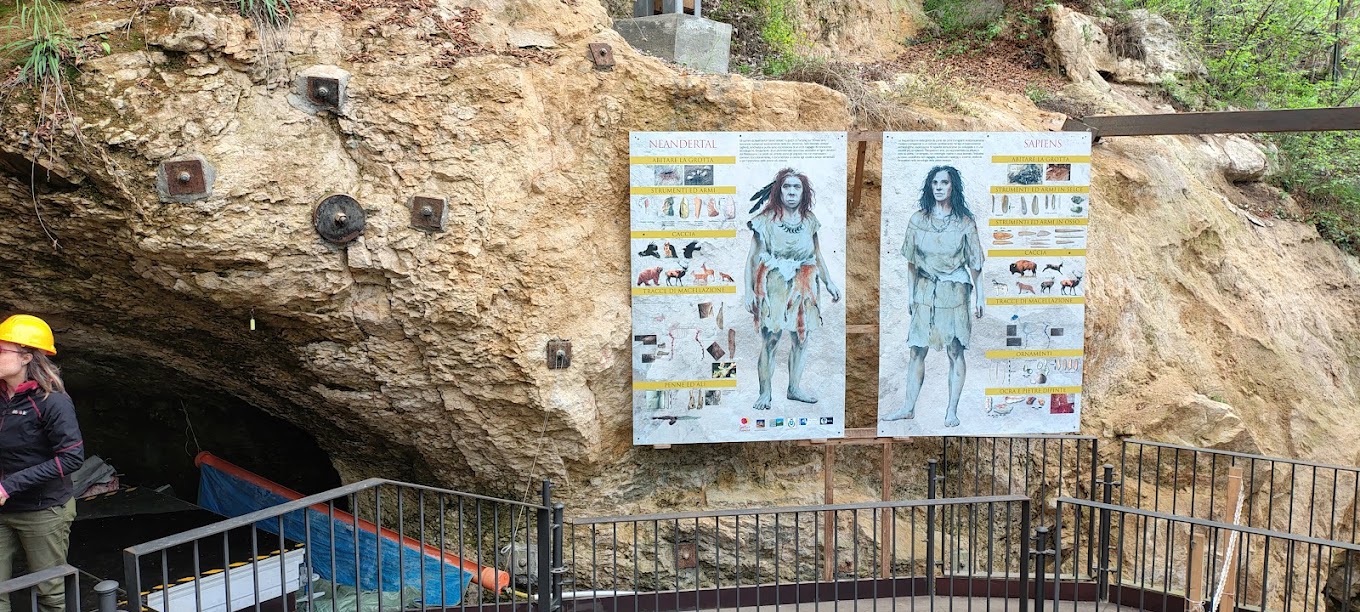
What makes the Fumane Cave a unique window into Paleolithic Europe?
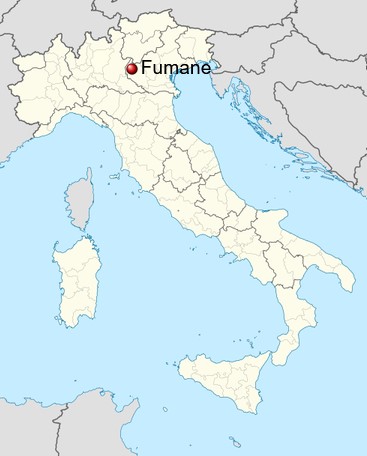
The Fumane Cave, also known as the Solinas Rock Shelter, is one of the most significant prehistoric sites in Europe. Inhabited for an extraordinarily long span of time, from roughly 90,000 to 25,000 years ago, it witnessed a succession of human occupations that saw groups of Homo neanderthalensis, the first European Homo sapiens, and, albeit more ephemerally, cultures of the Gravettian period, take turns within its walls. These peoples used the cavity as a hunting shelter and seasonal settlement, making the site a key to understanding the dynamics of the peopling of Europe.
The Climatic Context and the Succession of Cultures
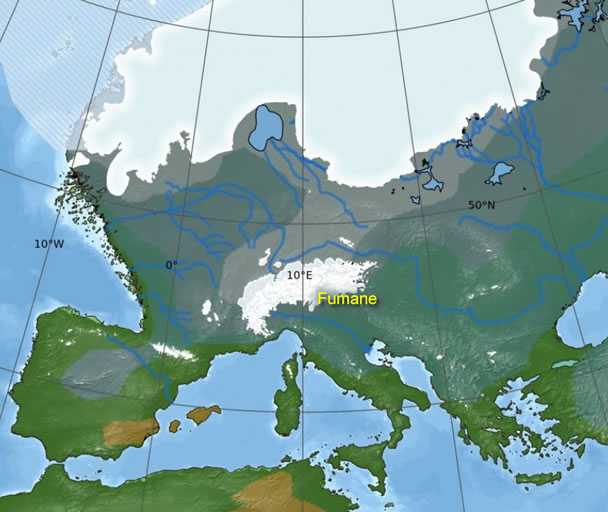
To understand the sequence of occupation of the cave, it is necessary to place it within the changing climate of the Paleolithic. After the Riss glaciation (200,000–125,000 years ago), which had seen Neanderthals settled in Europe and Western Asia, a milder interglacial period followed. It was then the advent of the Würm glaciation (70,000–15,000 years ago), during which the worldwide spread of Sapiens sapiens also occurred, that provided the backdrop for the four main phases of the cave's occupation:
1. Mousterian Period (90,000–45,000 years ago): Associated with Neanderthal man, this period saw the climate become particularly harsh, especially around 60,000 years ago. The surrounding environment was characterized by tundra and conifers, and consequently the cave was less frequented.
2. Uluzzian Period (45,000–40,000 years ago).
3. Aurignacian Period (40,000–35,000 years ago).
4. Gravettian Period (35,000–25,000 years ago): This final phase, corresponding to the Last Glacial Maximum, saw the return of cold climates. Access to the cave was eventually blocked by a landslide, and human use became sporadic, limited to brief hunting trips.
The long sequence of occupation makes the Fumane Cave a crucial site not only for studying the lifestyle, economy, technology, and spirituality of the peoples who inhabited it for over 65,000 years, but also for understanding the mechanisms that led to the establishment of Homo sapiens in Europe.
A Sealed Site and its Rediscovery
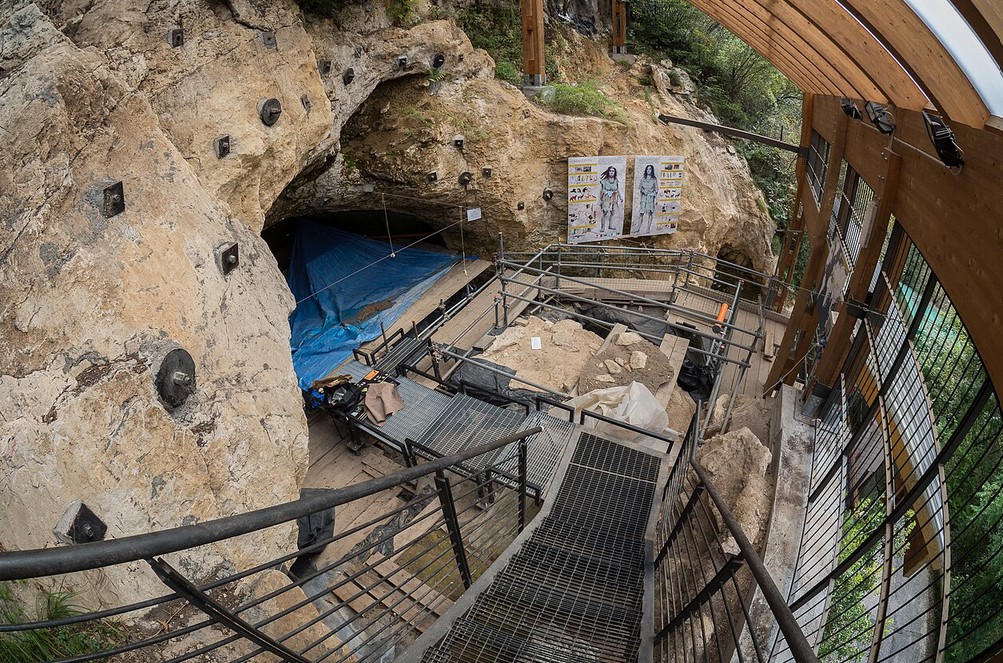
The cave opens on the left flank of the Vajo di Manune, at the base of a limestone wall dating back 190-180 million years. Its south-facing opening, proximity to a stream, and the spaciousness of its entrance favored its use as a settlement. However, about 25,000 years ago, a landslide definitively sealed its entrance, hiding it from view until the early 1960s, when the Verona Natural History Museum promoted its first exploration. Unfortunately, as is often the case, the discovery also attracted illegal excavators.
Once cleared of debris, the entrance area of the cave revealed three galleries. The largest, 13 meters long, preserves in its innermost part a concentration of large bones, not yet fully studied, which formed after the site was abandoned by humans, when the cave became a hyena den.
The Memory of Climate in the Sediments
The study of climatic and environmental changes draws valuable information from marine sediments, continental ice cores, and, as in the case of Fumane, cave deposits. Several types of sediment contributed to the formation of the rich stratified deposit at Fumane, which archaeologists have been able to distinguish into layers differentiated by their characteristics and intensity of traces of human occupation:
• Sands: Derived from the corrosion of the limestone rock in which the cave is carved, they led to the concentration of dolomite crystals.
• Dusts: Lifted and transported by wind in conditions of cold and arid climates, when arboreal vegetation was scarce.
• Rock fragments and boulders: Fallen from the ceiling and walls of the cave due to freeze-thaw cycles that widened rock fissures, forming so-called breccias.
Homo neanderthalensis: First Inhabitant and Hunter
The cave was a campsite of varying types and durations for Homo neanderthalensis. It is hypothesized that during the coldest climatic phases, groups were smaller and came to these areas only for brief hunting trips. Conversely, during periods of more favorable climate, when the Lessini mountains offered greater resources, groups were larger and occupation extended for an entire season.
The clearest evidence of the intensity of Neanderthal occupation is the abundant number of animal bones intentionally fractured to extract marrow. On many of these, the striations left by the flint flakes used to butcher the prey—to skin, disarticulate, and remove the meat—are clearly visible. Hunting was primarily directed at deer and ibex (mainly young adults and adults), but also at roe deer, giant deer, chamois, and bison, and more rarely at horses and wild boar. The local fauna also included hyenas, brown bears, and cave bears, while wolves and foxes were more common. Among the smaller animals, remains of alpine hare and marmot, which dug its own burrows in the cave, have been found. Bird remains testify to the presence of black grouse, quail, and alpine chough.
Among the tools, scrapers of unusually large size, made from flint flakes and used for working leather (both wet and dry) and wood to make javelins, have been discovered.

The Surprise of Feathers: Neanderthal Symbolism
A surprising discovery has recently revolutionized our image of Neanderthals. A study conducted on bone remains of various bird species (vultures, eagles, hawks, choughs) revealed microscopic cut marks, made with stone flakes, on wing bones such as the distal humerus, ulna, and carpometacarpus. The distribution of these cuts, sometimes around the quill knobs, suggests that the feathers were forcibly removed.
The bones belong to large raptors (such as the bearded vulture, cinereous vulture, and cuckoo falcon) and other birds (alpine chough and wood pigeon), and come from portions of little alimentary interest. Extracting the feathers required cutting tools to overcome the resistance of the attachments. This practice, which ethnography and archaeology attest to only from 15,000 years ago onwards, is backdated by tens of thousands of years and attributed to Neanderthals, who used the feathers ornamentally. Their use for fletching arrows or javelins is excluded, as these were tools exclusively used by Sapiens. Rather, the feathers (of various shapes and colors), along with eagle claws, point to a symbolic and ornamental use on clothing, objects, or individuals, similar to that documented in more recent historical periods.
This evidence, together with the use of ornamental objects and colorants, completes the picture of Neanderthals' symbolic behaviors, suggesting a marked cultural evolution in the last populations before their extinction. These late Neanderthal cultures (such as the Châtelperronian and the Uluzzian) are at the center of an intense debate to understand whether they developed independently or whether they were influenced, "acculturated," by Homo sapiens who were migrating into Europe.
The Arrival of Homo sapiens and the Aurignacian Culture
Homo sapiens, differentiated from the Homo erectus population in Africa about 150,000 years ago, reached the Near and Middle East and, around 45,000 years ago, Europe. Its spread across the continent, probably through Transcaucasia and the Balkans along the Danube and Don valleys, is archaeologically documented by the Aurignacian. The few human skeletal remains associated with this culture in Europe all fall within the variability of Homo sapiens. They differ from Neanderthals in both physical appearance and genetic heritage, so much so that today they are considered two distinct species. An equally profound differentiation concerns the behaviors reconstructable through archaeology, and the Fumane Cave offers particularly significant evidence in this regard.
The Lifestyle of the First Sapiens at Fumane
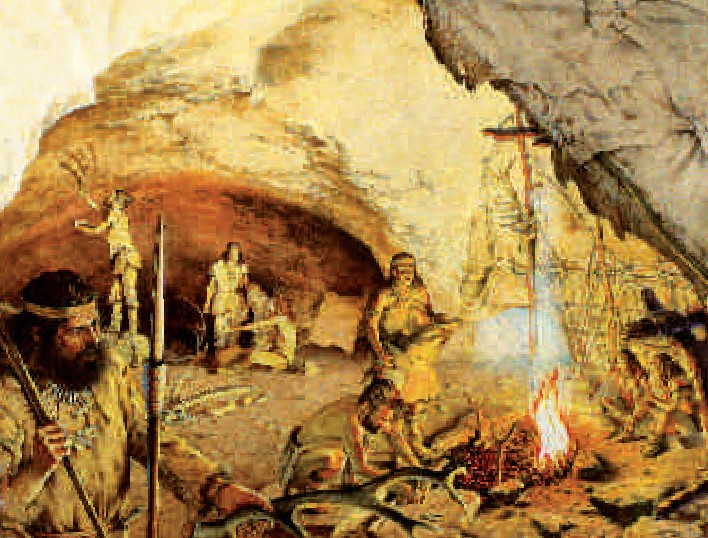
Radiocarbon dating suggests that groups of Sapiens frequented the cave for at least 2000-3000 years, starting from about 41,000 years ago, with greater intensity in the early times. The analysis of the remains of hunted mammals, particularly sections of deer and ibex teeth that reveal the season of the kill, indicates that the cave was inhabited between the end of spring and the end of autumn, and rarely during winter. It is therefore hypothesized that the hunters who managed the territory of the western Lessini Mountains practiced a system of seasonal migration, moving to more southern and milder locations during the cold season.
The choice of the cave as a summer residence was dictated by its strategic position, at the boundary between the alpine grassland and the coniferous forests. This proximity to different environments allowed, in a single day, access to both the open and rocky terrain where ibex and chamois were hunted, and the forests populated by deer and roe deer, not forgetting the marshy areas of the high plain for duck hunting.
Prey was brought into the cave whole, where it was butchered. This is evidenced by bones fractured for marrow, cut marks for removing meat, and burned bones. Among the faunal remains are also carnivores such as wolves, hyenas, foxes, bears, and felines, some of which were hunted for their pelts. Hunting weapons consisted of spears with bone points (zagaglie) and perhaps arrows with flint or antler points.
The Settlement and Artifacts
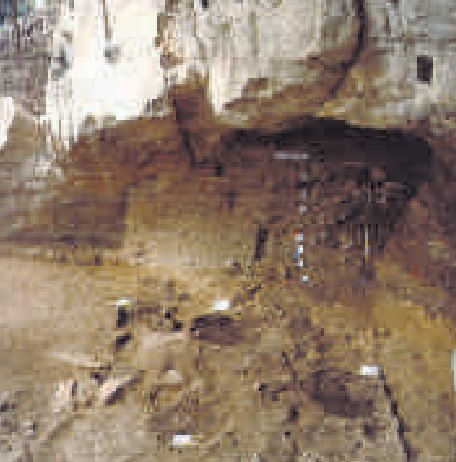
The inhabited area, which probably extended for about a hundred square meters, was leveled to obtain a walking surface. On it lie the hearths, circular pits filled with ash and charcoal, and smaller post-holes suggesting the presence of covering structures. The presence of well-defined areas for waste, hearths, and specific activities indicates a more organized division of space compared to the Neanderthals.
The set of stone (flint), bone, and antler tools used by the first Sapiens in Europe is called "Aurignacian." The Fumane Cave has yielded one of the richest assemblages in Europe, with tens of thousands of flint artifacts. Their distribution suggests the presence of areas dedicated to specific activities: leather working (with scrapers) and incisions (with burins) took place in distinct sectors. The over 2600 retouched blades, called "armatures," were inserted into wooden shafts to form weapons. From deer antlers, split-base points, characteristic of the oldest Aurignacian, and spatulas were obtained; from bone, awls and needles.

Art, Spirituality, and Symbolism of the Sapiens
The use of ornamental objects of symbolic significance is widely documented by the discovery of nearly a thousand marine shells, belonging to over 50 different species, selected for their vibrant coloration. Most have a hole for hanging or sewing onto clothing. The discovery, in a small area, of a group of whole, unperforated shells suggests the existence of a reserve, perhaps kept in a container.
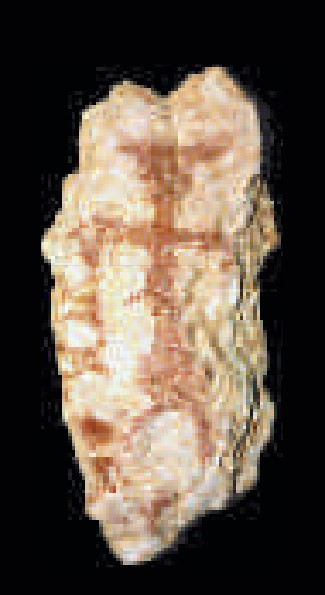
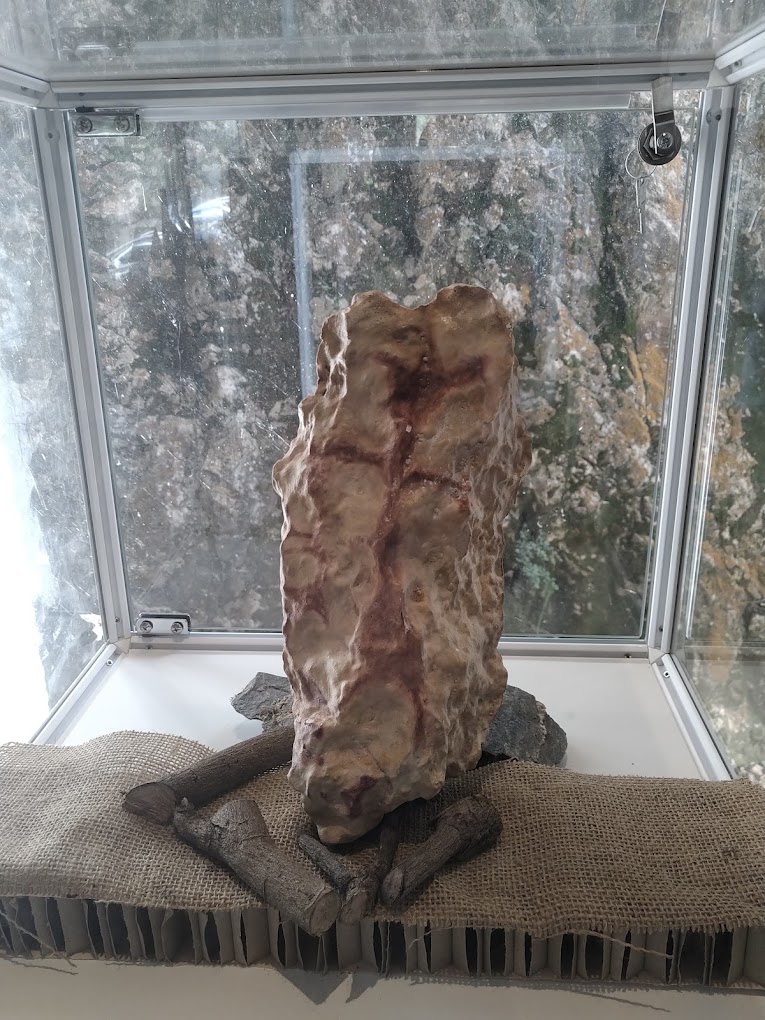
But the most extraordinary evidence of the creative and symbolic capacity of the Sapiens of Fumane is represented by stone fragments that fell from the ceiling, bearing drawings in red ochre dated to about 35,000 years ago. Among the oldest examples of Paleolithic art in the world, the five identified fragments depict scenes of extraordinary interest. One represents a human figure wearing a triangular mask with horns and with arms outstretched. Interpretations are open and debated: it could be a shaman, a ritual operator, a symbolic figure merging human and animal, or a hunting scene. Another drawing depicts an animal, perhaps a feline or a mustelid. In addition to the paintings, about 50 small ochre crayons and two areas with sediments reddened by a high concentration of this pigment have been found, used also in body painting, on decorated objects, and in burials.