Was Veja a prehistoric flint factory ?
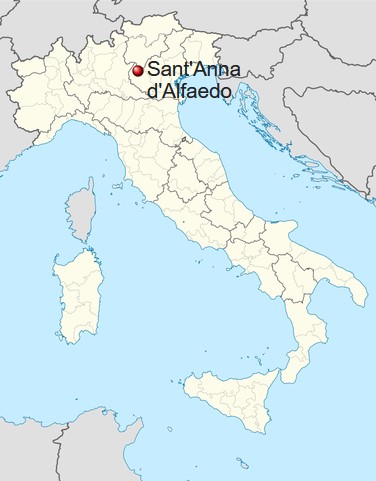
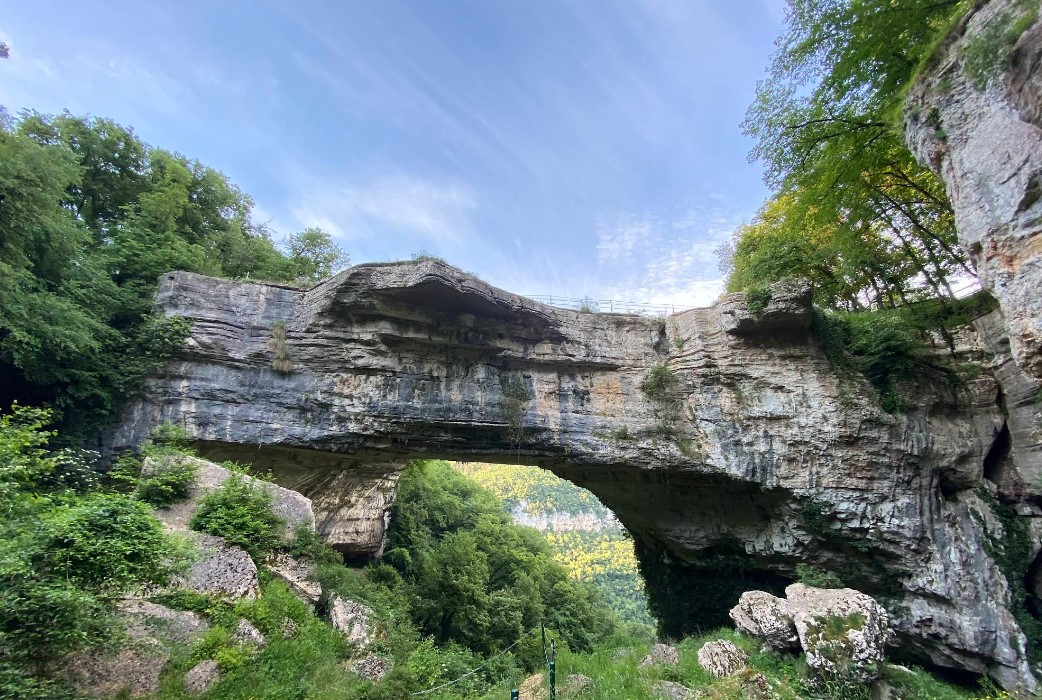
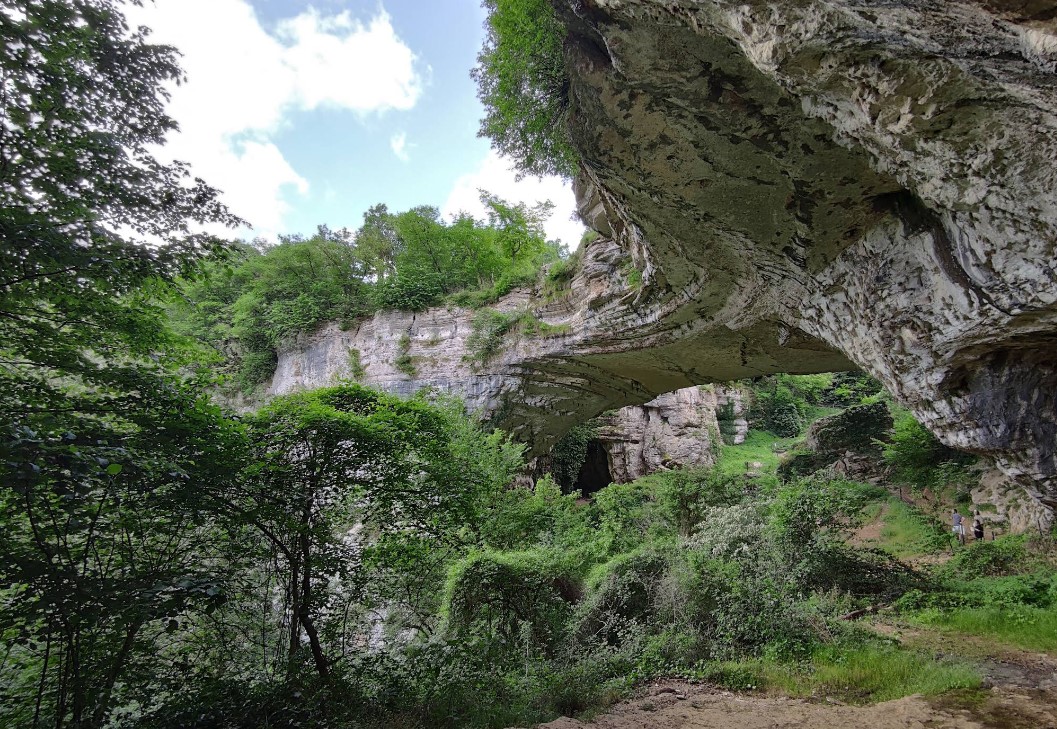
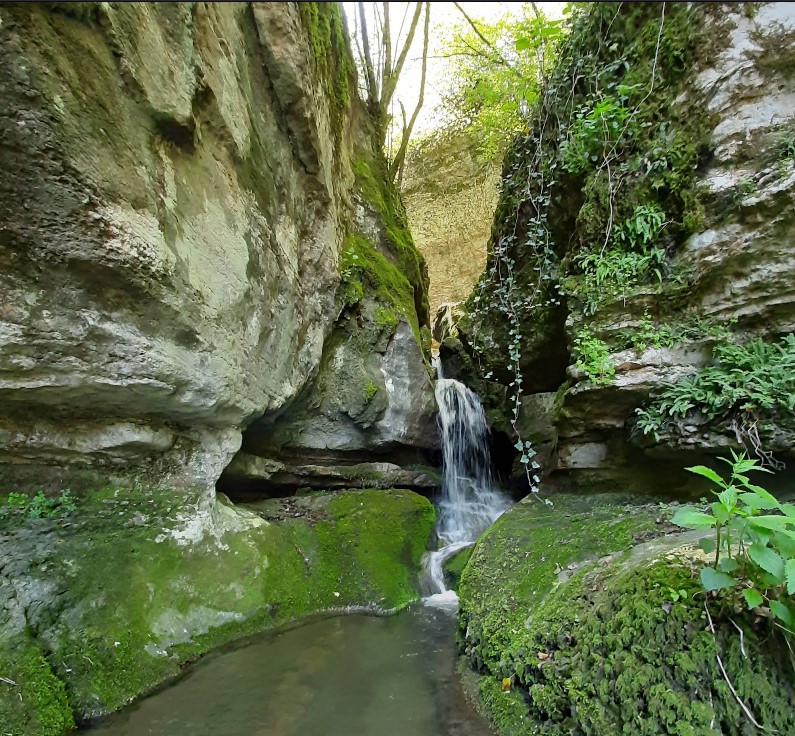
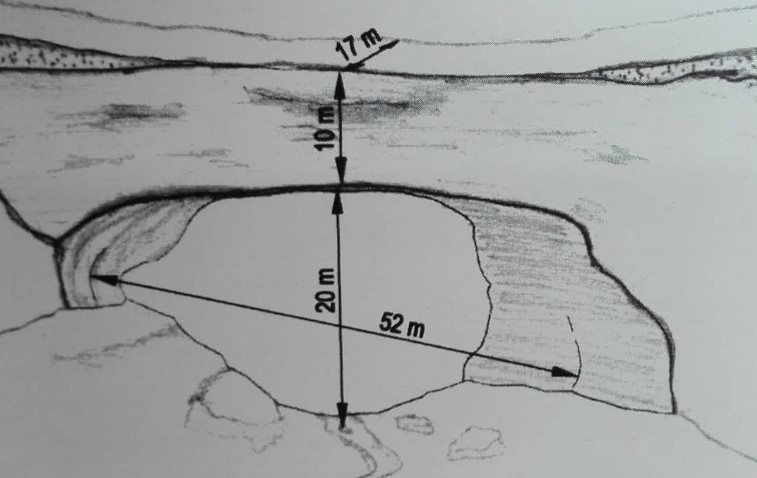
The Veja Bridge (Sant'Anna d'Alfaedo, Verona, Veneto) is a natural stone bridge, the remnant of slow erosion that ate away the back of a cavern. It presents itself as a natural arch with a span roughly 30 meters high and 50 meters wide. Over time, torrential waters that once flowed over the arch, forming a waterfall, caused parts of the karst cave to collapse in ancient times, leaving only the upper lintel, which indeed gives it the shape of a true bridge. Today, the stream runs below, among the large fallen boulders, near which prehistoric traces of human presence have been found.
Beneath the collapse debris, the oldest deposits have been identified, dating to the last interglacial period. These contain the remains of a hearth and a few atypical flakes from the Lower Paleolithic.
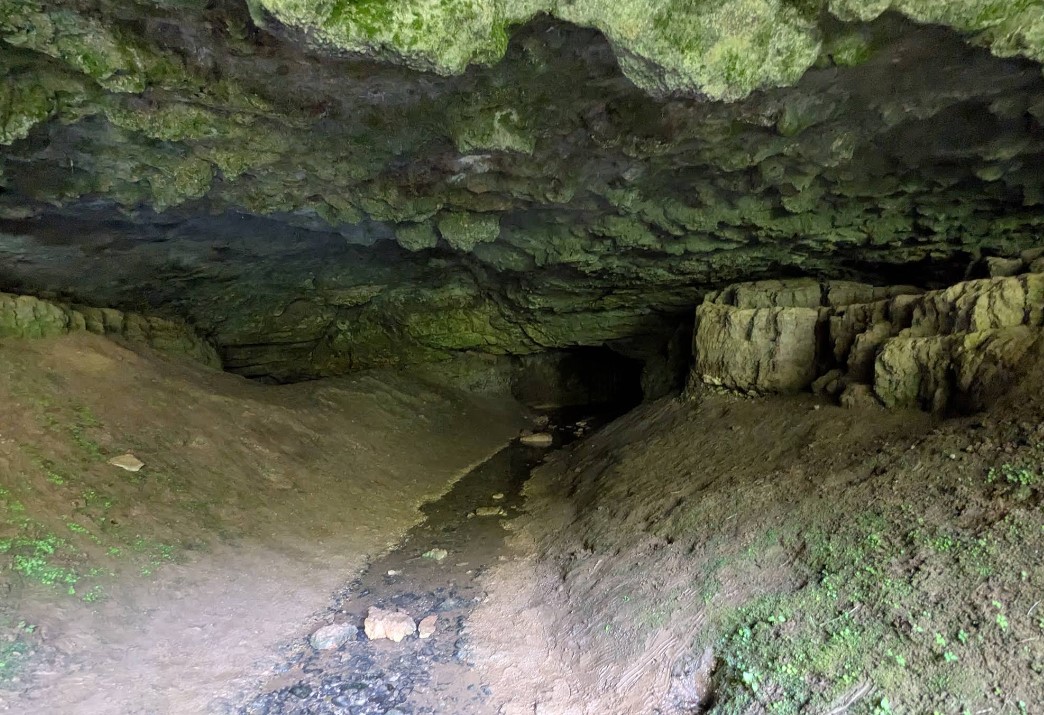
The area is rich in prehistoric sites inhabited since the Paleolithic; only here, at the foot of the bridge, are there five caves (A–E), the study and excavation of which began in 1932.
• In Cave A, industries dating between the Mousterian and the Epigravettian (Middle Paleolithic) have been identified.
• Cave C, in addition to lower deposits correlatable with those found outside beneath the collapse, features middle levels with Epigravettian industry, while the upper levels show industry of the Campignan technique.
• Cave E presents Epigravettian artifacts in its lower levels, while the upper levels again feature industry of the Campignan technique.
Sporadic artifacts of the Campignan technique have also been found in the rock shelters surrounding the bridge. Areas for extracting flint, zones for the initial rough-shaping of flint cores, and areas for producing finished flint tools have also been identified.
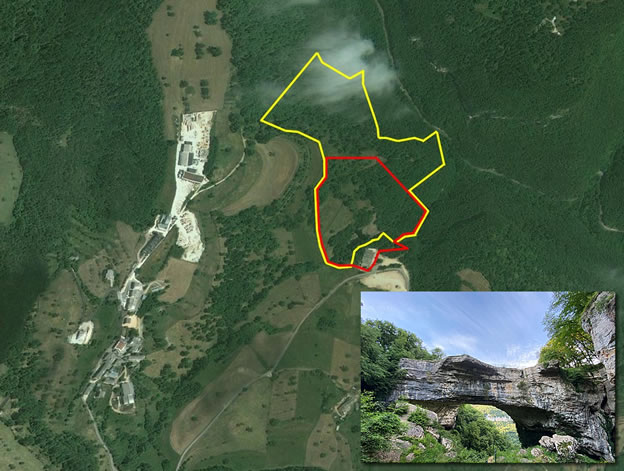
Many of the finds consist of artifacts testifying to a lithic industry based on flint knapping, with flint abundantly present in the outcropping rocks of the area. Estimates of human presence begin in the Upper Paleolithic and go back as far as 100,000 years ago; habitation is believed to have lasted until the end of the second millennium B.C., a period of probable decline for the flint extractors due to the spread of metals in sufficient quantities for making tools that were previously crafted from flint.
The inhabitants near the bridge must have been skilled flint-knapping artisans, crafting arrows, needles, and points. As with other communities in the area, their artifacts have been found in many parts of Europe, from northern France to Poland.
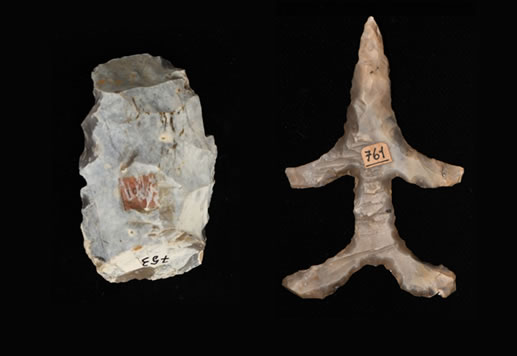
Their renown was such that in the second half of the 19th century, fake lithic artifacts were fraudulently introduced into archaeological deposits or otherwise attributed to the assemblage of finds, with the intent of deceiving scholars who purchased objects from local diggers. These are nicknamed the "strange flints of Breonio."
The Veja Bridge in Art

Popular tradition has it that Dante Alighieri, following papal persecutions, was forced into exile. He found refuge in 1313 at the court of Cangrande della Scala, who had long been affiliated with the Ghibelline faction. It was precisely from the Veja Bridge that the poet drew inspiration for the Malebolge, the eighth circle of Hell in the Divine Comedy, where the fraudulent reside.

The bridge, with its unusual structure, has always attracted artists. Probably the most famous was Andrea Mantegna, who reproduced it in Mantua in the Palazzo Ducale within the frescoes of the Camera degli Sposi. Squarcione's pupil, having traveled to Verona at the end of the 1450s to finalize the commission contract for the San Zeno Altarpiece with Abbot Gregorio Correr, decided not to stay in the historical center but instead to visit the Lessinia region. Upon arriving in Sant'Anna d'Alfaedo, he set out in search of the monumental natural arch that had fascinated Dante Alighieri a century earlier.