What killed the Young Prince of the White Sands?

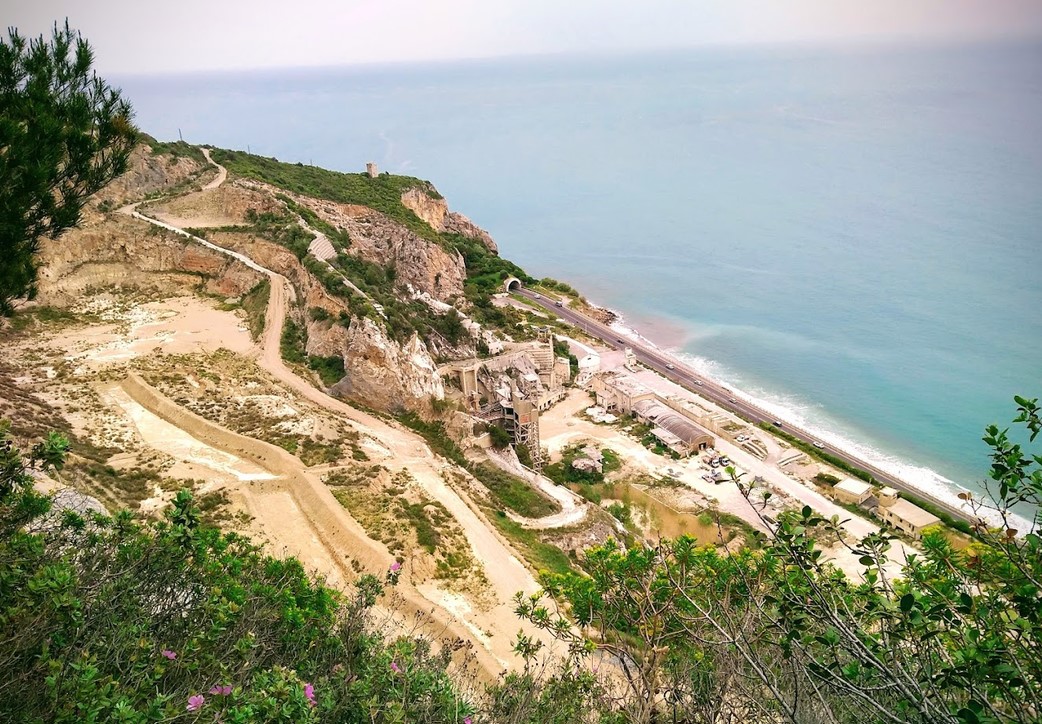
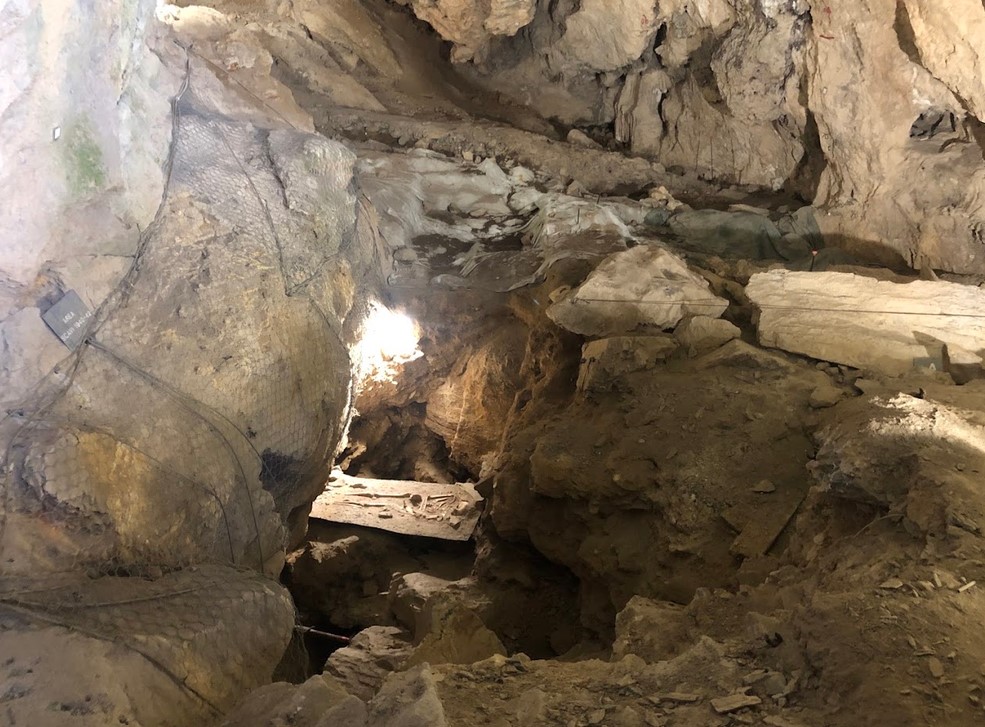
The name candide (white) of the vast cavern derives from the presence nearby of a white quartzose dune that the winds of the last glaciation had piled up against the promontory until the early 1900s. The dune has almost completely disappeared, largely due to the intense activity of the nearby quarry, which closed in 2007.
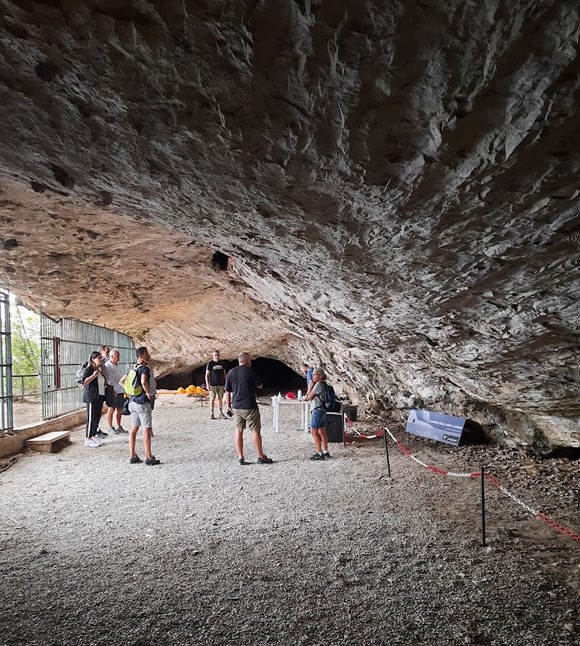
The cavity now opens at about 90 meters above sea level and was the subject of explorations starting in the late 19th century. More than 150 years after the first investigations, the excavations carried out so far have never reached the bottom of the cavern (which some, with good reason, place several meters below the maximum depth reached), and it is therefore possible that the site of the White Sands still preserves within it traces even more significant than those that have emerged to date
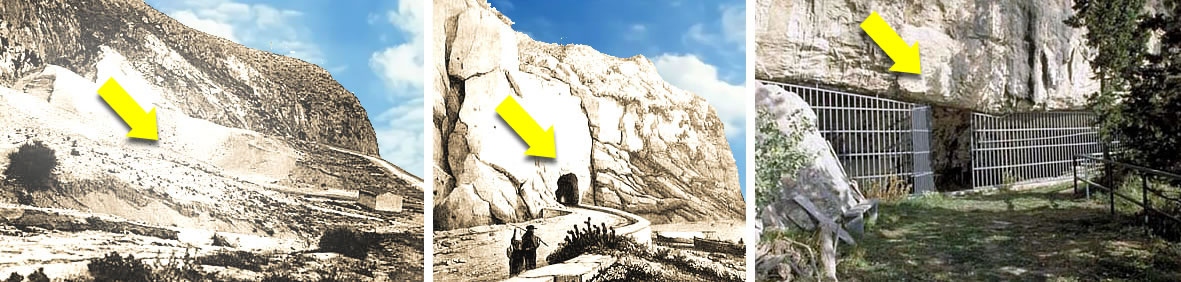
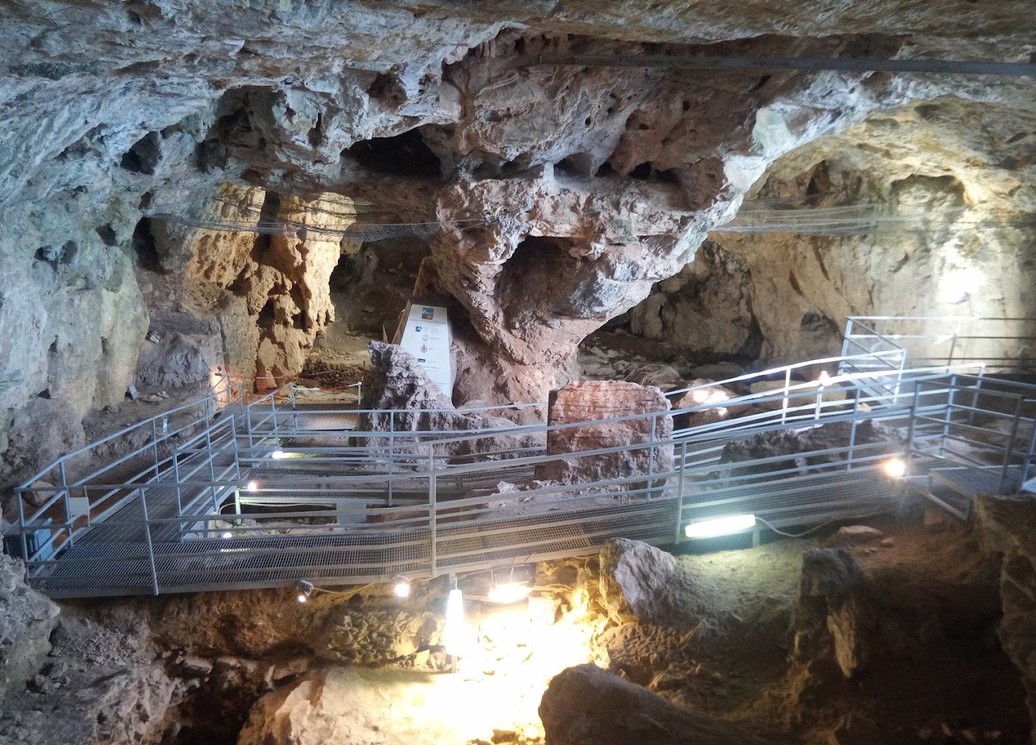
The interior is divided into three zones:
• The one on the left, the Sala Morelli (Morelli Hall), is circular in shape, from which short tunnels branch off; one of these leads to a large hall, the "Sala Solari" (Solari Hall).
• The central zone, longer and narrower, is called the Camera Issel (Issel Chamber).
• The one on the right, the Sala Gandolfi (Gandolfi Hall), is smaller in size, with its entrance marked by a rocky pillar; it is rich in concretions and stalagmites and is difficult to access.
Today, the cavern represents the most complete and best-investigated archaeological stratigraphy in the western Mediterranean: in about 10 meters of sediments lie traces of human presence spanning more than 30,000 years (from approximately 32,000 BC up to the 6th–7th century AD). It was used for different purposes depending on the period:
• In the Upper Paleolithic, as a burial site;
• During the Neolithic, as a dwelling with spaces for sheltering animals and as a burial site;
• In Roman and Byzantine times, for productive activities and for the storage of provisions.
In the sequence of Upper Paleolithic levels, we find:
• In levels M (approximately 12,000 to 10,000 years ago), numerous finds of lithic and bone industry, and more than 20 burials of individuals—so many as to suggest a veritable necropolis. These are located in an inner area of the cave, in a layer dated to about 11,600 years ago. The bodies are for the most part laid out supine in a pit, and ochre is present in abundance. Stones are often found above or below the deceased; the orientation of the head follows no fixed rule, and the deposition was instead carried out in a completely variable manner, mostly away from the walls of the cavity. The grave goods are generally rich and consist of ornaments made of marine shells and bone, a few flint artifacts, ochre blocks, and limbs and other body parts of small mammals and birds. In total, there are 10 adult males, 3 adult females (in secondary deposition), and as many as 8 children ranging in age from newborns (or even fetuses) to 10–12 years old.
• In levels P (approximately 25,000 to 15,000 years ago), a burial of a male adolescent, about 15 years old, known as the 'Young Prince'. In reality, he was not a prince; he was nicknamed thus for the extraordinary richness of his funerary equipment.
The fauna found is represented by remains of Red Deer, Wild Boar, Roe Deer, Ibex, Elk, and Chamois in levels M. In levels P, the Ibex dominates, but very fragmented remains of Mammoth and Woolly Rhinoceros are also found.
After 10,000 BP, the early phases of the Holocene mark a period of non-occupation. Shortly after 7000 BP, in an environment greener than today's, with forests rich in oaks, the cavity began to be frequented by groups with a Neolithic economy, bearers of the Impressed Ware Culture. The Neolithic is thus attested from its earliest phases. Around 6000 BP, the Square-Mouthed Vessel Culture spread, and until about 5700 BP, there was intensive occupation. Animal husbandry increased, and some areas of the cave were used as stables. In the strata corresponding to this period, numerous individual stone-cist tombs have been found, with skeletons in a crouched position. Around 5400–5300 BP, the Chassey Culture emerged, and the site's occupation became more regular. The cave continued to be occupied during the Copper Age, whose earliest radiocarbon dating falls around 4,700 years ago. It was frequented sporadically during the Bronze and Iron Ages. Finally, the surface layer contained finds from the Roman era.

The Young Prince
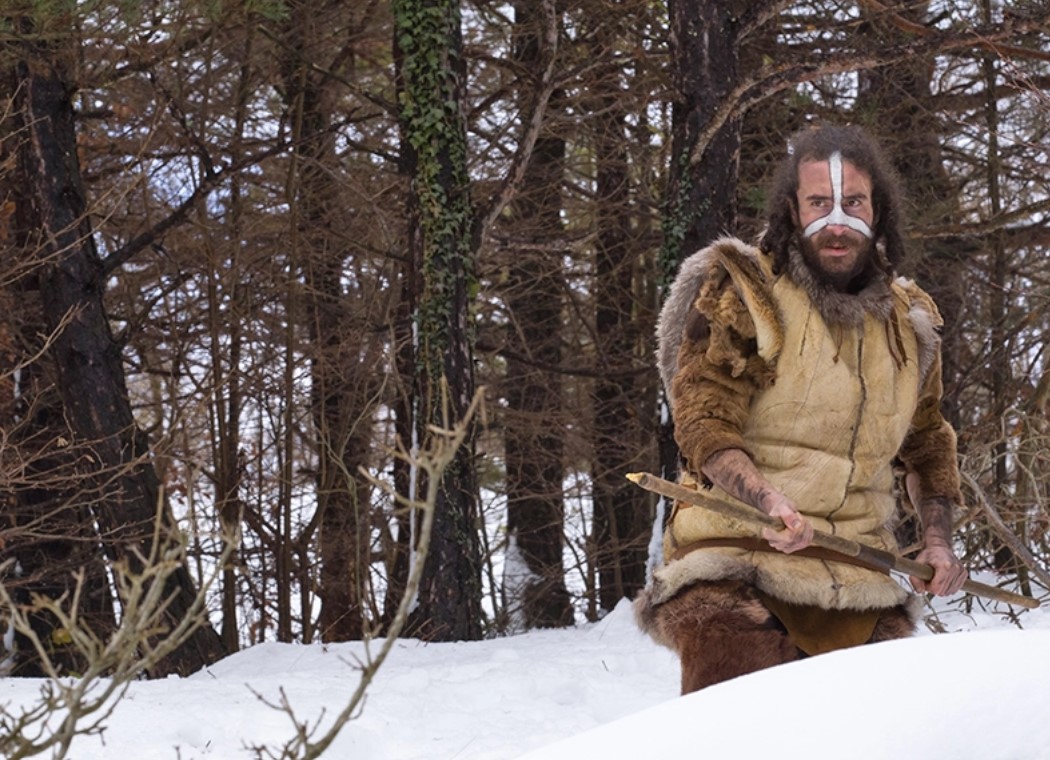
The young prince, a "warrior with a headdress of shells," was found beneath a series of superimposed hearths in a stratigraphic level where pottery was sharply decreasing, almost rare, as were mollusk shells, while the bones of very rare birds and wild fauna increased considerably. He belonged to the Gravettian culture, present throughout the European continent (from Russia to Portugal), which derived from a population that came from Africa via the Mediterranean Near East.
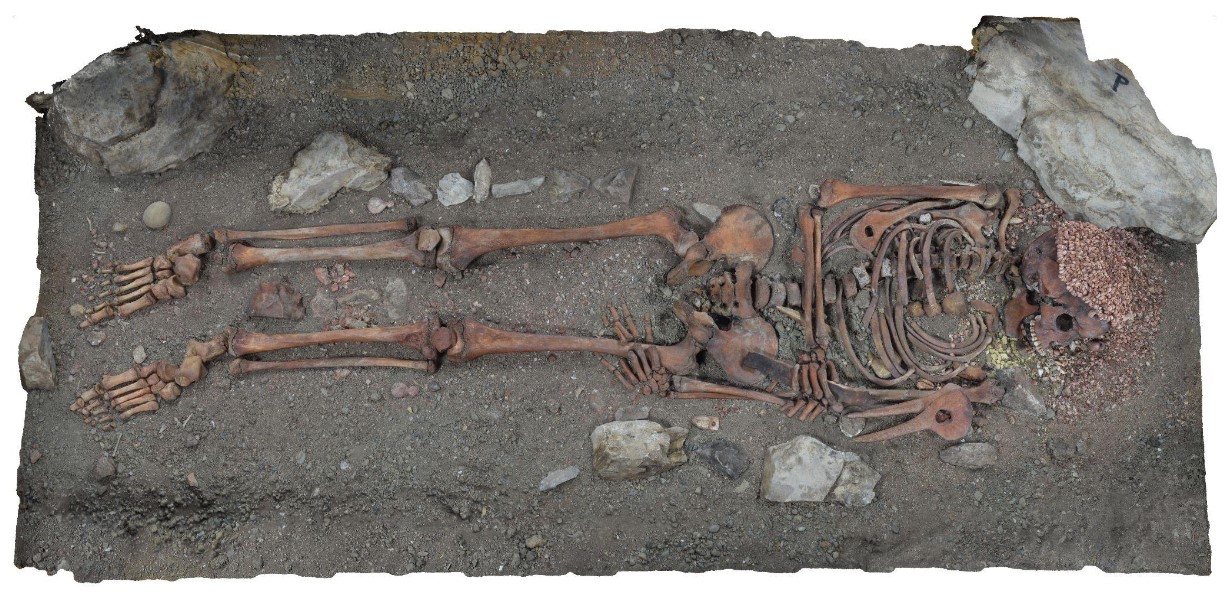
The boy is 1.70 m tall, and as an adult he would likely have exceeded 1.80 m, a value consistent with those typical of Gravettian populations and also attributed to the quality of a diet with a good protein component. For the "Prince" in particular, stable isotope analysis suggests dietary information: about one-quarter of the protein in the young man's diet during the last year of his life came from marine sources. He has a robust and powerful build; his right arm shows signs of the use of spears, and the muscles of his legs are exceptionally developed, suited for walking and running in the snow, even on steep and rugged slopes.
He was laid out in an extended position against the rocky wall and was entirely covered in ochre. Ochre was used in Paleolithic funerary rituals to sprinkle the deceased and the burial pit. The individual was buried supine with several stones intentionally placed over his hands and feet—now no longer visible—according to a ritual that recurs in various other burials of the period across the European continent, from England to Italy, from Portugal to Russia.
The burial contains a rich assemblage of grave goods consisting of: two figure-eight-shaped ivory pendants; a bracelet with a pendant composed of small perforated shells and a perforated mammoth ivory pendant; a flint blade; four perforated bone rods (so-called "command staffs") placed on the shoulders, on the chest, and along the left side, made from elk antlers; a net-like headdress formed by hundreds of perforated shells (Nassa shells), two deer canines, an ivory pendant, and a Cypraea shell; a lump of yellow ochre found in the area of the mandible, as if to plug the large gap where it was missing.
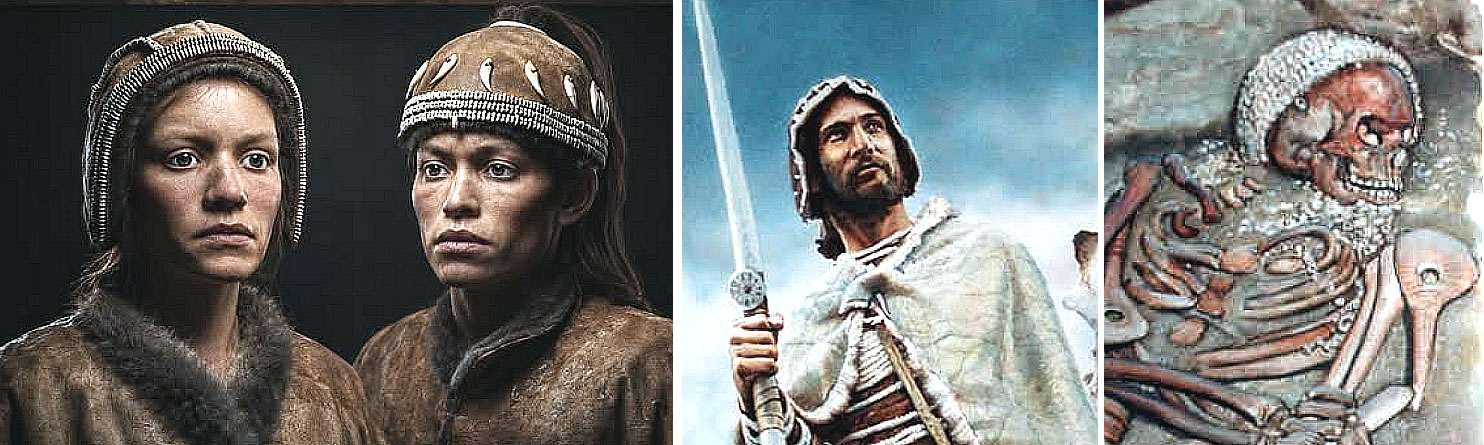
The prince's headdress was similar to the pearl-ornamented ones from 34,000 years ago found at Sunghir, belonging to two young children with physical disabilities buried with an unimaginable treasure, and to a man. In this Russian locality northeast of Moscow, on the outskirts of the village of Vladimir, on the left bank of the Klyazma River, lie the most sumptuous tombs of Ice Age hunters. They testify to the cultural level reached by these peoples at a time when the land was gripped by ice.
Certainly those headdresses attest to a practice of Gravettian culture. It is surprising how this 'fashion,' despite the thousands of years that elapsed, the immense distances, and the geo-climatic differences, also spread to Italy. Here we have found it as well in the three famous Homo sapiens women from Paglicci (Apulia, 24,000 years ago), Caviglione (Liguria, 28,000 years ago), and Ostuni (Apulia, 28,000 years ago).
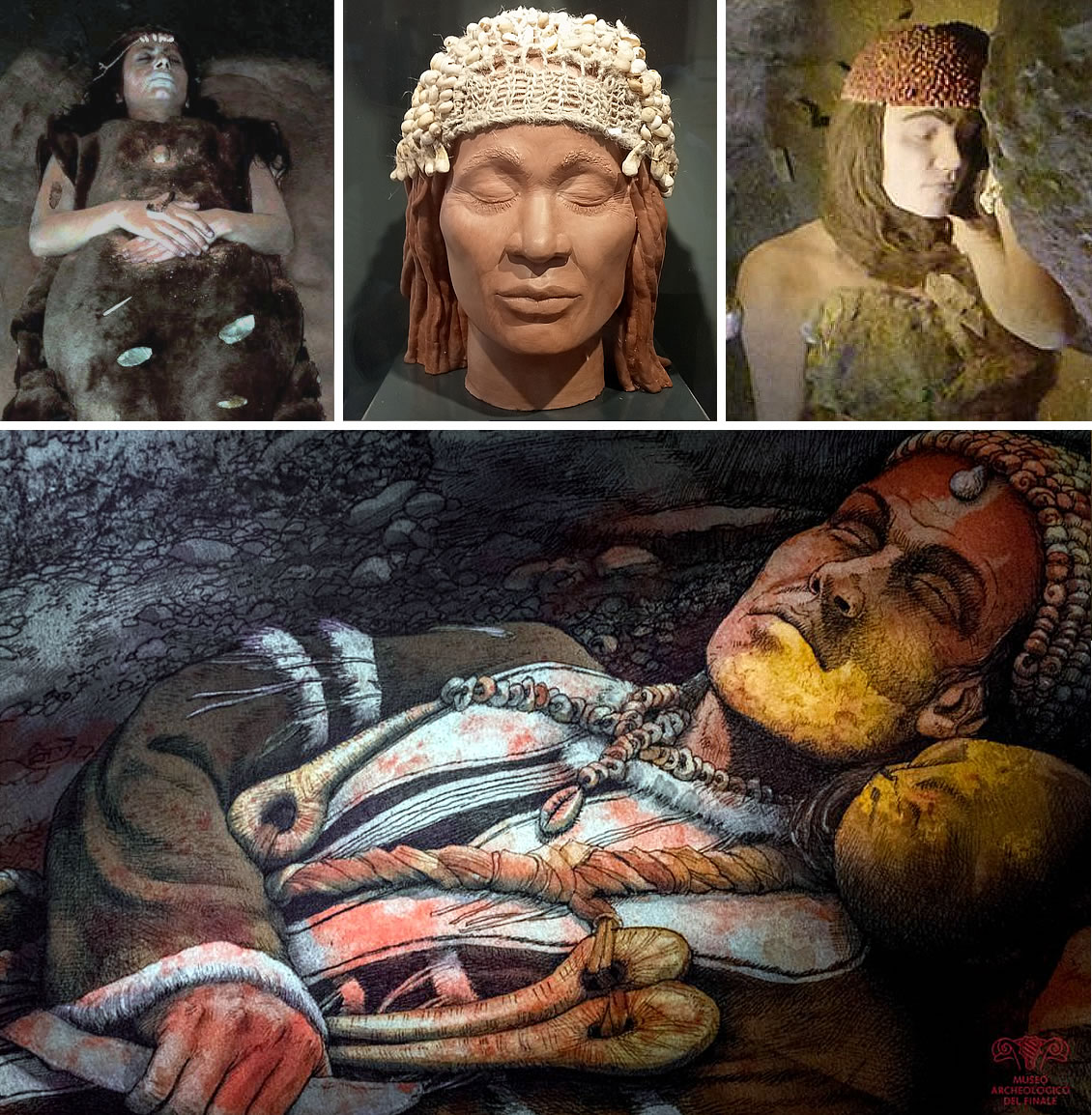
Research on the exceptional burial of the prince has never ceased since 1942, the year of its discovery, and as recently as 2022, analyses and studies conducted by paleoanthropologists revealed new details of his story. The burial dates back to 23,440 years ago, and one particular aspect concerns the causes of the boy's death. At the time of discovery, it was noted that part of the mandible was missing and the bones of the left shoulder were severely damaged. The void left by the laceration of the face had been filled with a mass of pure yellow ochre, which came into contact with the fractured surfaces of the bone. It gave the impression that the mass of ochre had been an attempt to plug or mask the enormous wound that certainly caused the death of the young and robust individual. It is plausible that this occurred during a hunting episode.
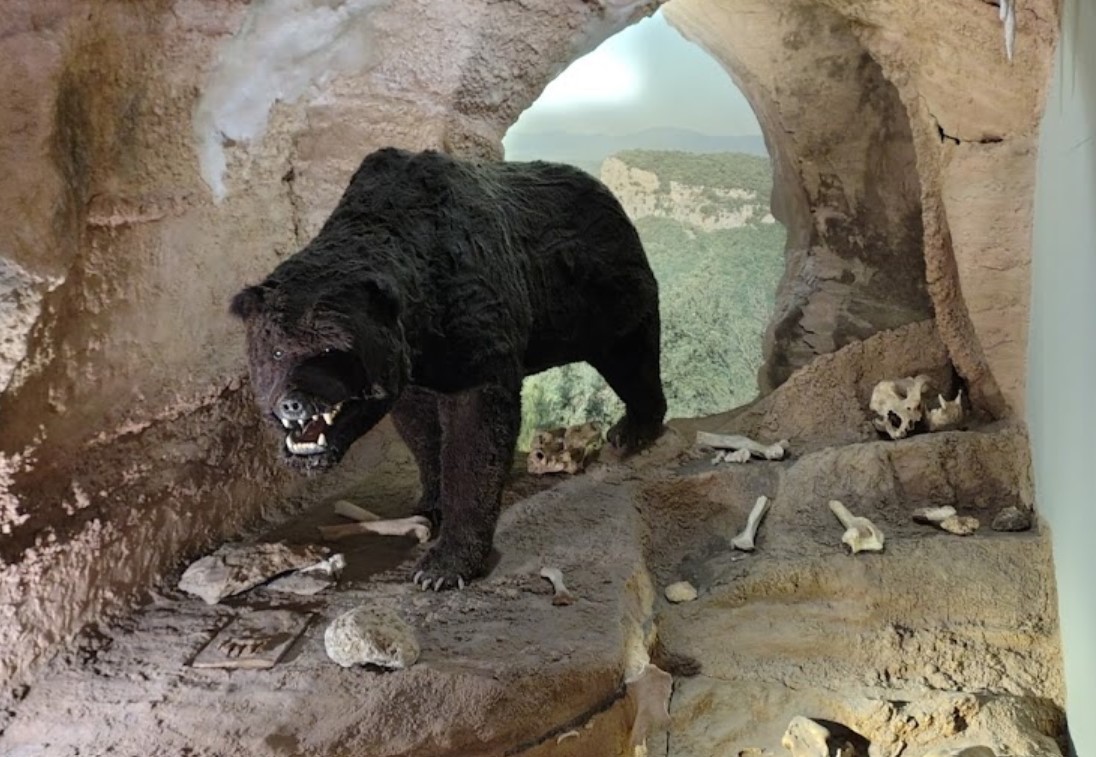
Recent studies show that the cause of his death can be attributed to a violent attack by a large carnivore, probably a brown bear or a cave bear. This is evidenced by crushing fractures to the cervical vertebrae consistent with violent compression of the neck; a series of traumas—such as injuries to the skull, face, and shoulder, with loss of the left half of the mandible and part of the clavicle—signs of a bite on the right fibula, and a linear incision on the skull (left parietal), potentially compatible with a claw strike. Traces of an initial inflammatory response in the spongy bones suggest that the young man survived 48–72 hours after the attack. The Prince also shows signs of recent injuries to the foot—a fracture of the little toe and a cartilage lesion in the ankle—which confirm a poor life expectancy among Paleolithic hunter-gatherers after suffering lower-limb trauma.
His survival for a few days after suffering such devastating injuries may have deeply affected the band of hunter-gatherers to which the young man belonged, and the extraordinary richness of the burial may reflect the necessity in Gravettian societies to ritualize traumatic events or exceptional deaths, rather than the social rank of the individual—as was the case with the two physically disabled children from Sunghir, or the woman from Paglicci buried with a void beside her right femur interpreted as a possible space for a newborn, or the woman from Ostuni buried with a fetus in her womb.
The rarity, richness, and value of the objects found next to the skeleton suggest that the boy may have held a prominent role within his group, or that such regard may be attributable to the particular circumstances of his death. His Gravettian burial is one of the most iconic examples in Europe. The rich funerary deposition, comprising hundreds of shells, ivory pendants, and an imposing flint blade, has been on display for decades at the Museo di Archeologia Ligure in Genoa Pegli. The manufacture of each object in the grave goods must have required many hours of work before the group of this young hunter laid them beside his body, where they are still found today.