Who Was the Pregnant Woman of Ostuni?
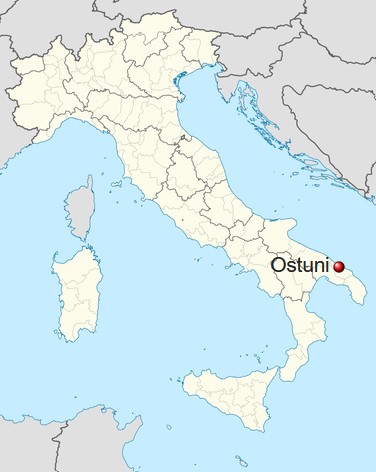
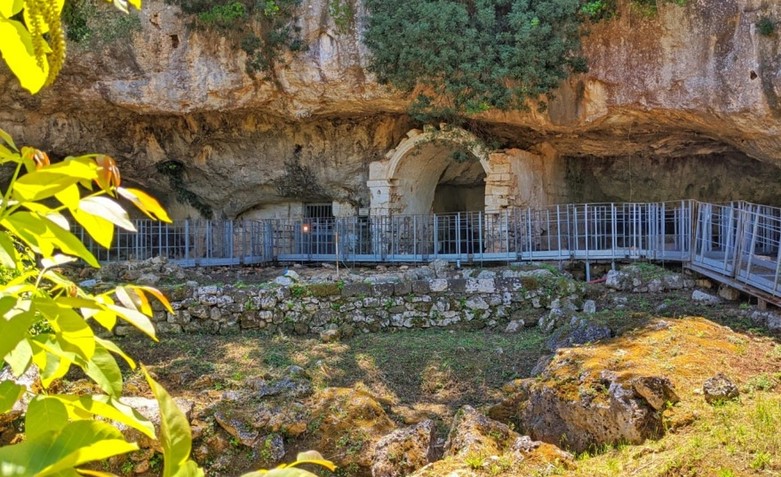
Located approximately 2 kilometers from Ostuni in Puglia, the Santa Maria di Agnano Archaeological and Natural Park safeguards a Gravettian burial ground dating back roughly 30,000 years. In 1991, paleoethnologist Donato Coppola, while crawling through a natural cavity within the Santa Maria di Agnano cave, discovered two nearby burials. One belongs to a pregnant twenty-year-old woman (dated to between 27,810 and 27,430 years ago), who has been somewhat imprecisely dubbed "the world's oldest mother"—though another woman from Egypt actually predates her in age. The second burial consists of a poorly preserved skeleton of undeterminable sex (dated to 28,200–27,568 BCE). A few months later, following a painstaking recovery operation, the first specimen was transferred, along with the rock block enclosing it, from the cave to the premises of the civic museum in this Apulian town.
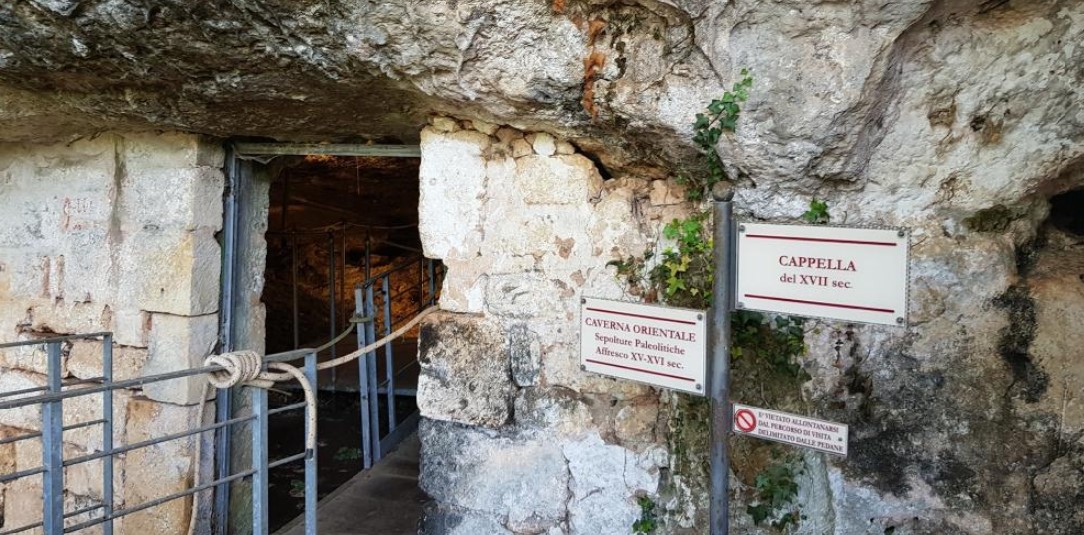
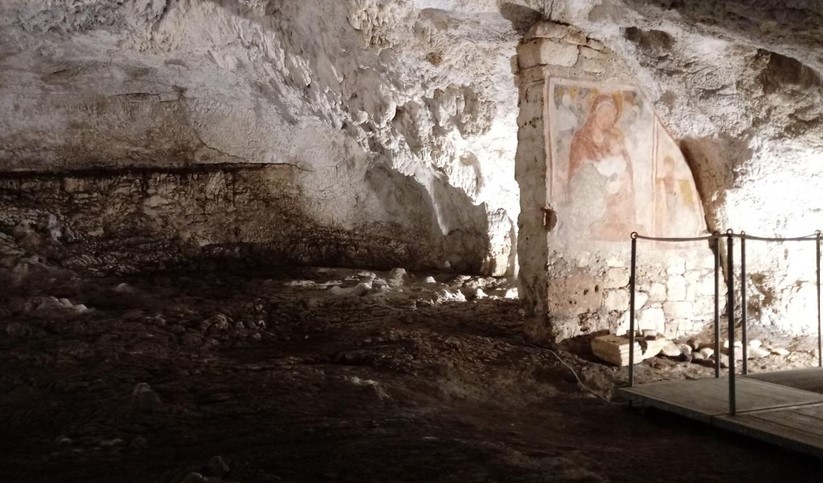
The ritual use of the cavity continued through the Neolithic, the Bronze Age, and the Messapic period, with evidence of a large sanctuary dedicated to the cult of Demeter. This sacred tradition persisted into the Christian era, as testified by a 15th–16th-century fresco of the Madonna and Child housed within a 17th-century chapel inside the grotto.
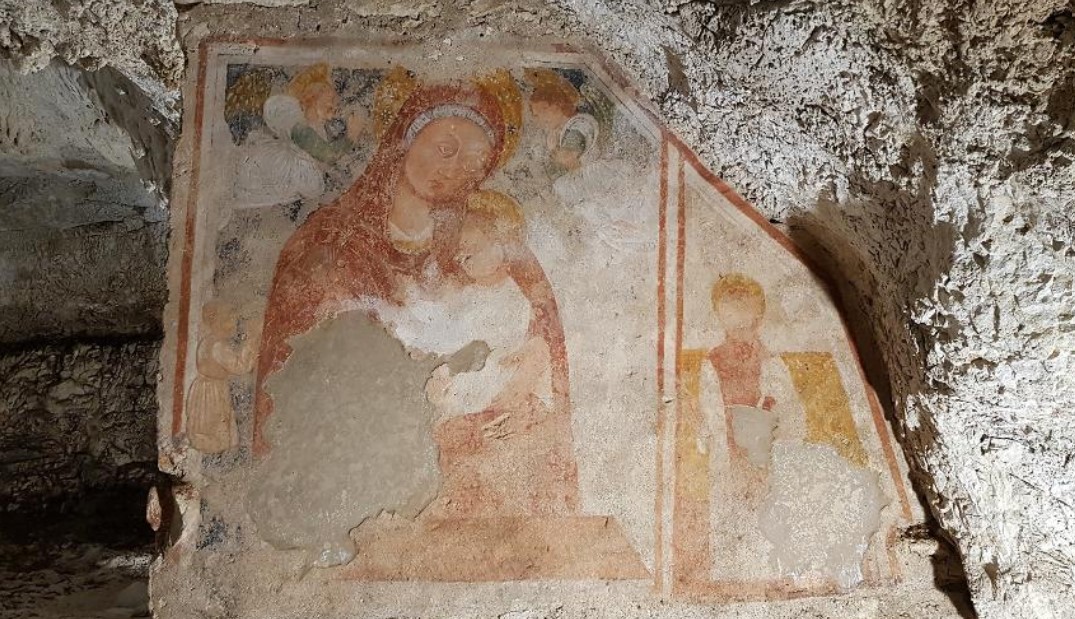
The fresco, set within an asymmetrical lunette, features the Virgin in a red mantle at its center, clasping the Child. In the lower section, a roof is depicted, while two angels in flight appear above. On the left side of the fresco, a kneeling figure is clearly identifiable as the unknown patron; to the right of the main panel, separated by a red frame, another figure appears to be a monk—though this remains a hypothesis, as the subject is difficult to interpret. The figure is depicted with either a halo or the hood of a cassock, possibly belonging to the Dominican order. An altar, now lost but whose traces remain evident, once stood at the base of the entire fresco.
The Pregnant Woman of Ostuni and Her Unborn Child
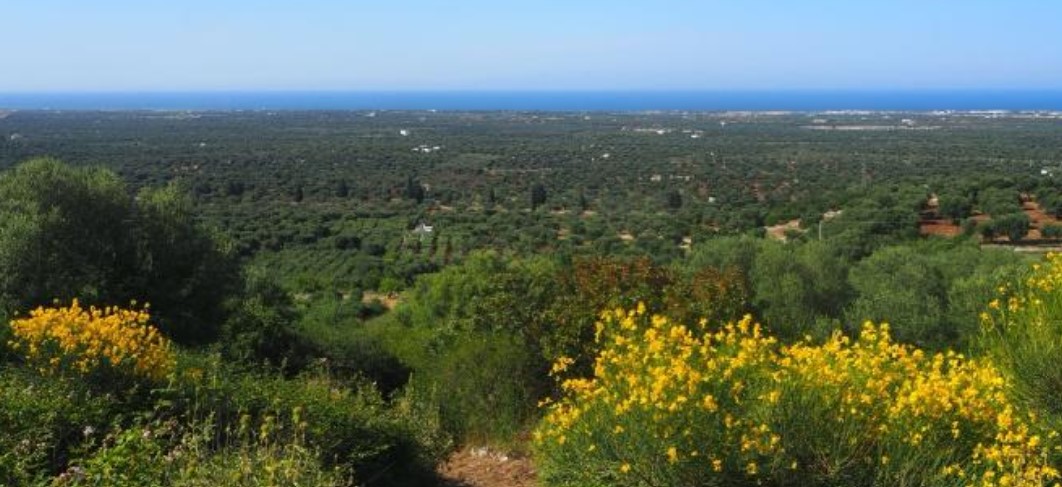
This area of Apulia, now dominated by olive groves, was once covered by vast grasslands. Fossil finds of its primordial fauna—deer, horses, bison, and other large mammals—suggest the presence of considerable vegetation cover. The pregnant woman of Ostuni lived here during the geological phase known as the Upper Pleistocene, characterized by glaciations. The study of fauna indicates that the dominant animals hunted in the surrounding environment were the horse (Equus caballus), accounting for about 70%, and the aurochs (Bos primigenius), the wild ancestor of domestic cattle, present at 30%. The Agnano gorge was likely chosen as a more or less stable campsite precisely because it offered the advantage of controlling mammal movements between the inland pastures and the grassland and ravine landscape. The Agnano hunter-gatherer group probably numbered no more than a few dozen individuals and used the large natural shelter of the cavity as a more or less permanent dwelling.
The Ostuni woman, who like us belongs to the species Homo sapiens, lived during what paleontologists define as the Gravettian phase. Her most famous contemporary was Cro-Magnon man, whose name derives from the first specimen of this type, discovered in the Dordogne in 1868, which subsequently became the so-called index fossil. Cro-Magnon humans—the Apulian tribe of Delia, as well as other hunter clans living in what is now Czechoslovakia—can be considered the first "Europeans," as they already exhibited ecumenical cultural traits characteristic of the civilization of the region. Awareness of death and the yearning for immortality through burial are signs that spiritual life was beginning to develop among prehistoric peoples. Along with it came the capacity for abstraction and the first artistic stirrings: indeed, the oldest cave paintings, essentially zoomorphic images whose symbolic function was often tied to social and religious life, date back to the Upper Paleolithic.
The pregnant woman was about twenty years old, stood 170 cm tall, and was slender and muscular. She belonged to a hunter clan and, like them, had long, robust legs suited for chasing wild horses grazing on the prairie. She died while attempting to give birth, and for her tribe, it was as though a link in the chain that allowed the species to perpetuate itself had been broken. Her pregnant body was carried into the vast cavern that offered shelter to the hunters during the harsh season. Her right hand, adorned with a bracelet, was placed upon her womb, as if to imitate a gesture of prehistoric, maternal tenderness. That hand, seemingly protecting an unborn child, along with the cult of the dead, reveals a profound sense of piety among Cro-Magnon people.
The cause of death is unknown, but it is hypothesized that she, eight months pregnant, died from a severe pregnancy complication—eclampsia. In the two and a half months preceding her death, the woman had experienced significant health issues; however, malnutrition seems unlikely, considering that the area where she was found was, at the time, rich in plant products and game.
The analysis of the infant's skeleton proved to be an exceptional opportunity to study prenatal development during the Paleolithic, given that the discovery of such a well-preserved fetus from this prehistoric period is an extremely rare event. Examinations have made it possible to determine with near certainty a gestational period of between 31 and 33 weeks. The growth rings, totaling 108, revealed fetal distress and three stress episodes distributed over the last two and a half months of gestation. The cause of this distress, still unknown, was with high probability the reason for the death of both mother and child. The bone structure of the fetus at 33 weeks of gestation suggests that fetal development in the Paleolithic was faster than in modern times, although it is not ruled out that the three recorded stress episodes may have accelerated the child's development or delayed the formation of the dental growth rings; in the latter case, the estimated gestational period of 33 weeks may have been underestimated.
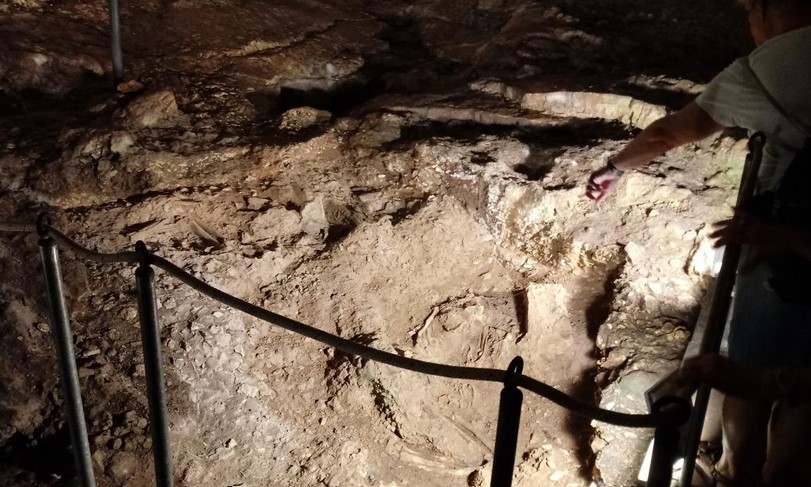
The woman, in the terminal stage of pregnancy, had been carefully laid to rest within the sinkhole that opens on the slopes of the hill overlooking Ostuni.
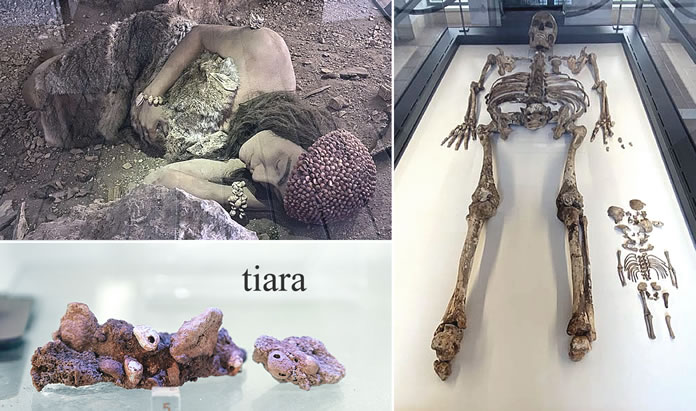
The body of the deceased, covered with stones, was adorned with her belongings—such as a diadem and shell bracelets—and was placed on a pebbly bed within a pit, in a fetal position on her left side; her arm on that side was folded under her head, and her right arm rested on her abdomen, almost as if to protect her unborn child.
Her head was sprinkled with red ochre, in an attempt at revitalizing the deceased. A block of stone was placed as a boundary marker, while an aurochs skull fragment was positioned to the right of the deceased's head, testifying to her belonging to the hunter group. The composition of the burial denotes an uncommon pietas, likely widespread among the Cro-Magnon populations of the area.
The female burial was surrounded and covered by numerous bone and lithic artifacts; shell bracelets adorned her right wrist and forearms. Over six hundred perforated marine shells of Cyclope neritea, encrusted and mixed with red ochre, adorned her head, while four shells of Hinia mutabilis and one Cypraea lurida with traces of red ochre were placed in the rear area of the skull. In the same area were eight perforated deer canines, one of which was placed under her left hand, while a ninth was positioned vertically between two adjacent Cyclope neritea shells.
The skeleton is preserved at the Museum of Preclassical Civilizations of the Southern Murgia.
The woman wore a headdress consisting of one deer canine for every 80 marine shells, all mixed with ochre. The diadem/cap, the use of ochre, the ornamental elements, and the bone remains found near or above the deposition have been interpreted as part of a complex ritual aimed at deifying the deceased and, specifically in the case of the pregnant woman, her unfulfilled maternity—carrying a powerful symbolic value possibly linked to the survival needs of the entire group to which she belonged.
The shells and teeth composing the artifact encircled the woman's cranium, found in the eastern cavity of the Santa Maria di Agnano karst complex near Ostuni.
The cap is similar to contemporary ones found associated with the Woman of Paglicci (Apulia, 24,000 years ago), the Woman of Caviglione (Liguria, 28,000 years ago), and the so-called Prince of Arene Candide (Liguria, c. 23,000 ya), as well as some small statuettes (e.g., the so-called Lady of Brassempouy). This has led to the hypothesis that these caps were not used solely as funerary objects but as actual headdresses worn during life.