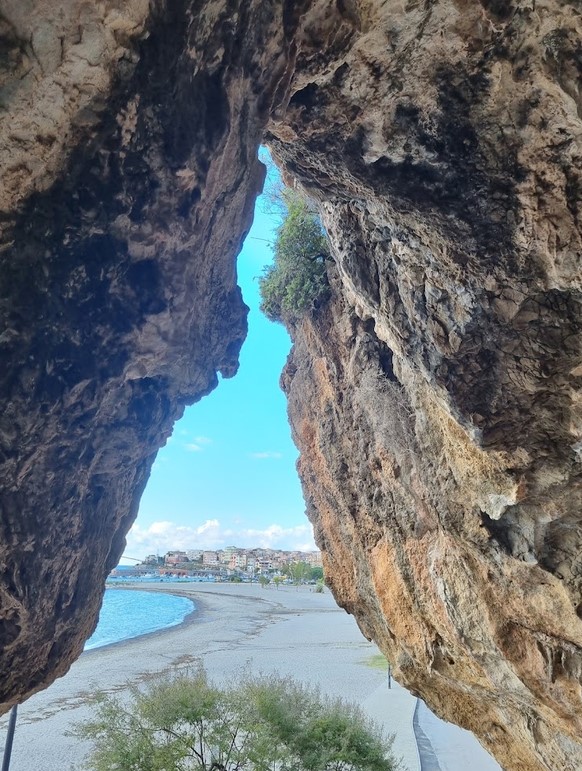
Which caves contain the remains of one of the oldest Neanderthals in southern Italy?
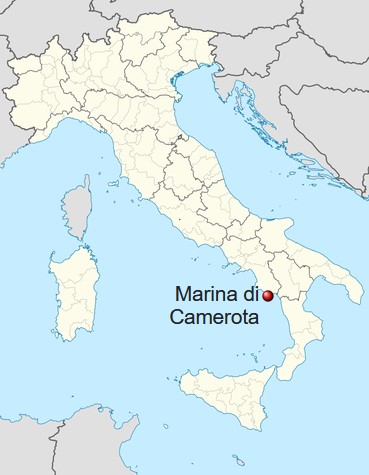
The Caves of Marina di Camerota are located along the coast of Cilento in Campania, within the Alburni National Park, a UNESCO World Heritage site. These prehistoric caves are of great archaeological and speleological interest, bearing witness to human presence from the Late Paleolithic to the Copper Age, and housing the remains of one of the oldest Neanderthals in southern Italy.
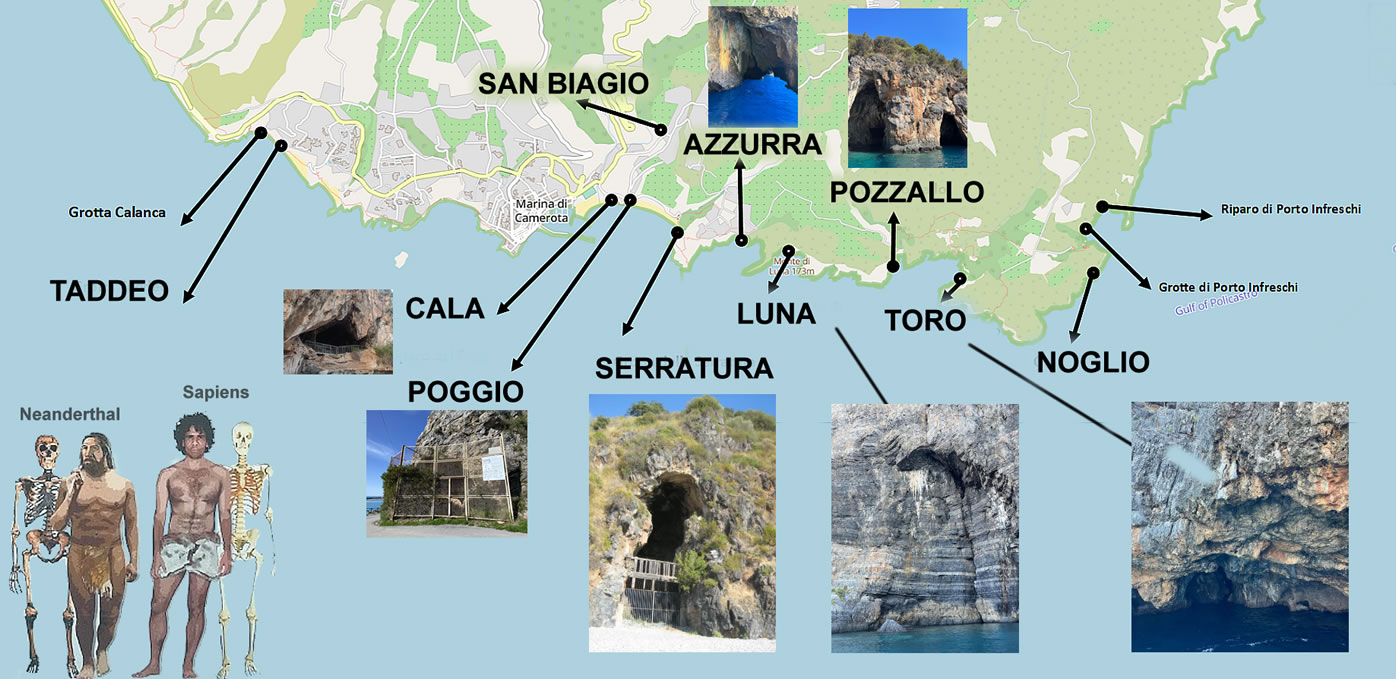
Many of the caves open directly onto the sea and are therefore only reachable by boat from Marina di Camerota. Others lie inland, nestled among Mediterranean vegetation, and can be accessed via hiking trails:
• By sea and land: Grotta della Cala, Grotta del Poggio.
• By sea only: Grotta della Serratura, Cala Monte di Luna, Grotta di Pozzallo, Grotta Taddeo, Grotta del Toro, and Grotta Azzurra (occasionally accessible by land).
• By land only: Grotta di San Biagio.
This caves system developed in connection with Late Quaternary sea-level fluctuations, shaped over thousands of years by the gradual erosion of Mesozoic limestone through water and marine action..
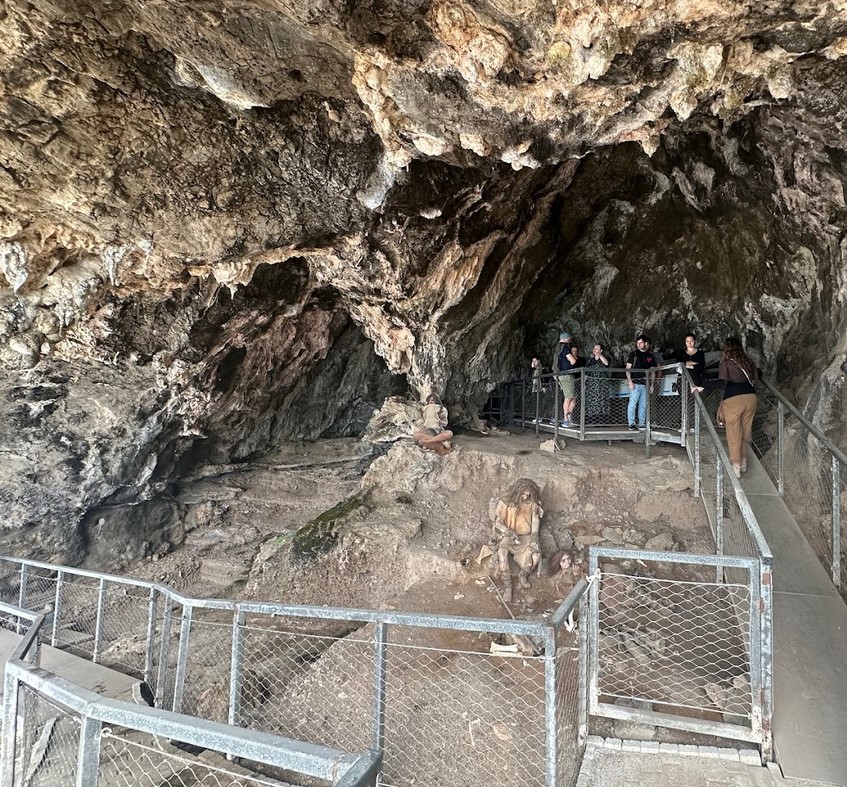
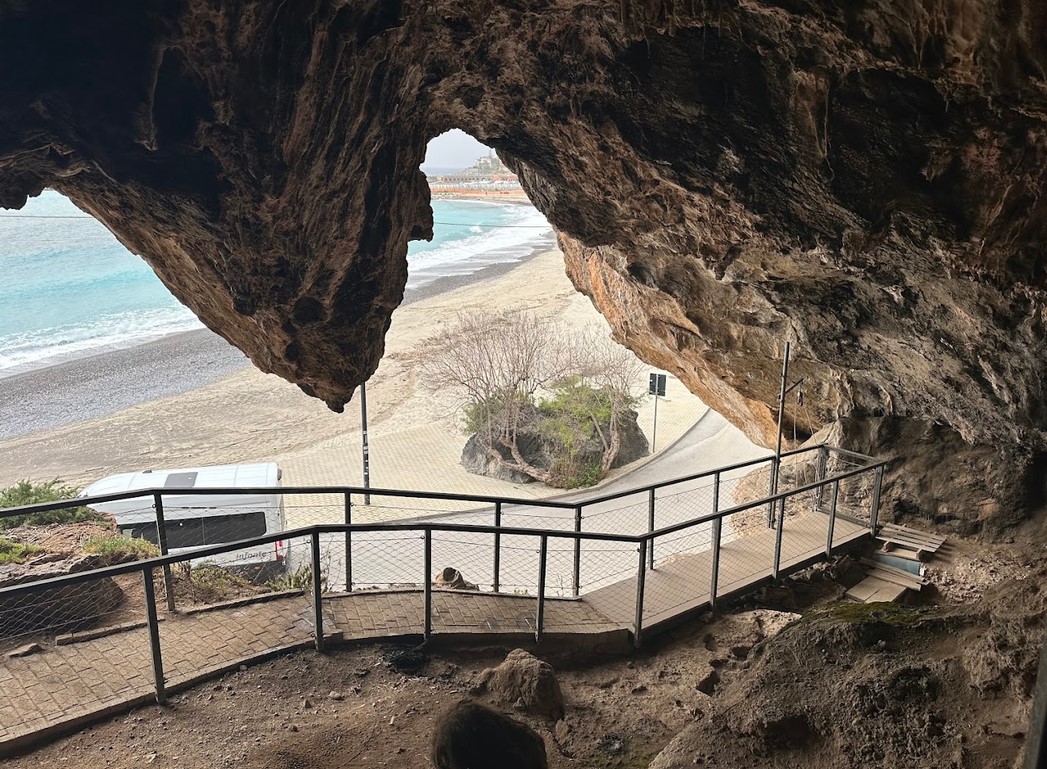
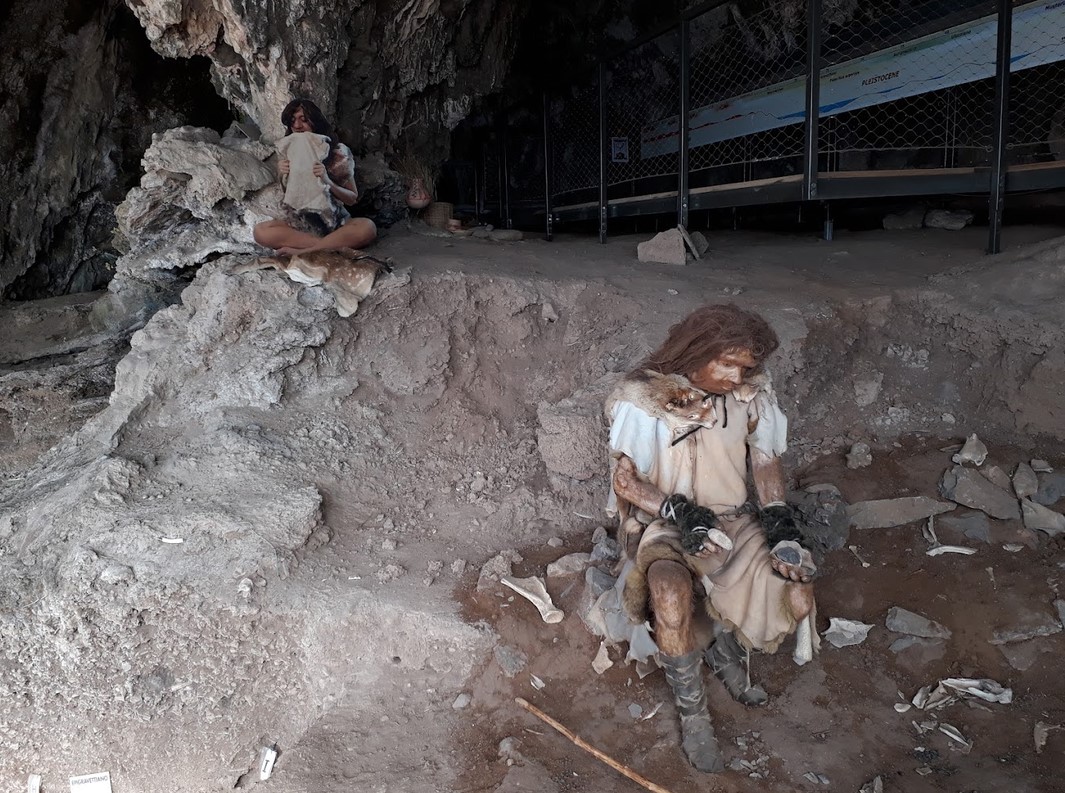
• Grotta della Cala: One of the most important archaeological caves in Marina di Camerota, located just a few meters from the sea. It was frequently occupied by Neanderthals (who left behind pebbles and bone tools) and later by Homo sapiens (who produced stone tools such as scrapers and blades associated with hunting and food preparation). From the Mesolithic period (around 7500–6600 BCE) come a hearth, a grinding stone covered with red ochre, a painted pebble, and numerous terrestrial and marine faunal remains. From the Neolithic period, several shells show evidence of piercing and ochre traces, suggesting their use as personal ornaments. Faunal remains from layer O are dominated by red deer, along with wild boar, roe deer, aurochs, and caprines, indicating hunting focused on ungulates in predominantly forested environments with some open habitats.
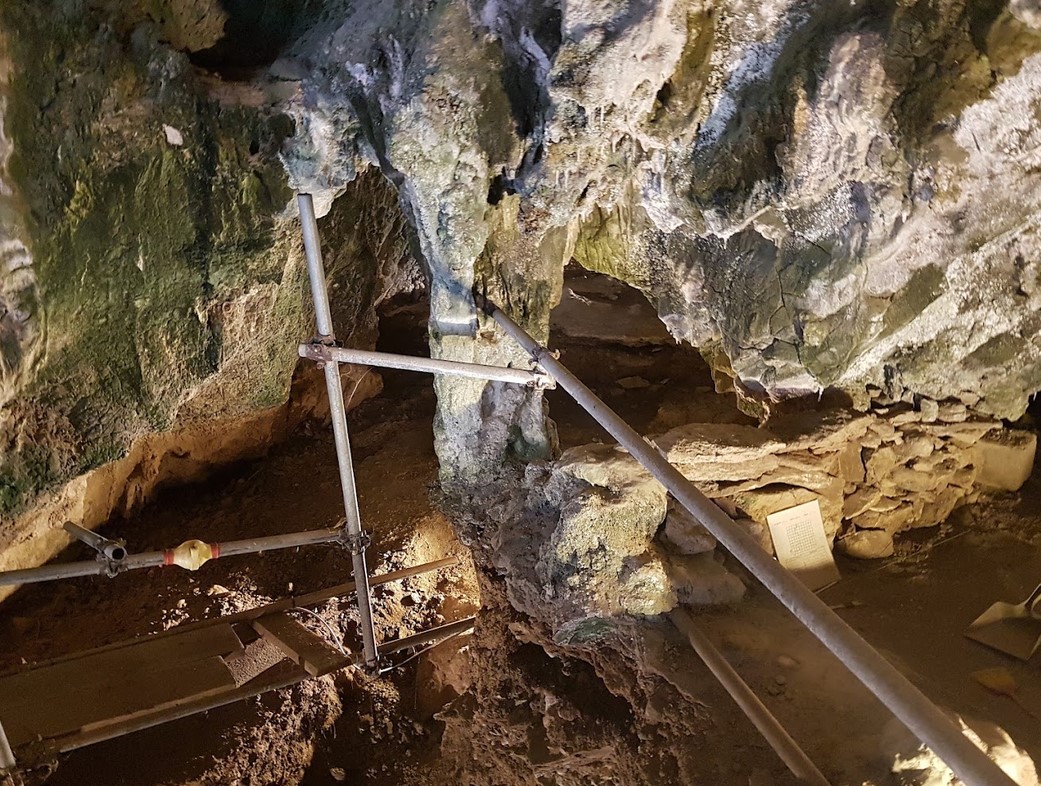
• Grotta del Poggio: Frequentied by Neanderthals approximately 200,000 to 140,000 years ago. Faunal remains of large mammals and rhinoceroses, human remains, and lithic artifacts have been discovered here.
• Grotta della Serratura (named for the shape of its opening): Continuously used from the Paleolithic to the Neolithic. Excavations have unearthed Neolithic human remains along with bone tools, decorated shells, and numerous hearths indicating controlled use of fire. Painted pebbles adorned with red ochre have also been found, suggesting symbolic or ritual practices. Faunal remains within the cave indicate a broad subsistence strategy, including consumption of terrestrial animals, birds, mollusks, and marine fish such as eels, sea bream, and pagellus.
• Cala Monte di Luna: A natural rock arch said to evoke a crescent moon; it was used as a shelter and storage space up until the Roman era.
• Grotta di Pozzallo: A small cave opening directly onto the sea, with a natural freshwater spring at its entrance. No archaeological excavations have been reported in this cave.
• Grotta di San Biagio: Located at an altitude of about 40 meters above sea level, this cave houses a small chapel carved into the rock, featuring 16th-century wall paintings depicting the Madonna and Child, Saint Barbara, Saint Biagio, Saint Anthony, and a penitent woman. According to local tradition, the sanctuary was built by monks between the 10th and 11th centuries, possibly fleeing Byzantine iconoclasm. A legend tells of a woman devoted to Saint Biagio, who was saved from a falling boulder after invoking the saint's name.
• Grotta Taddeo: Situated on the beach just a few meters above sea level, it takes its name from stalactites and stalagmites resembling Saint Thaddeus. Local legend tells of a fisherman who, after three days of unsuccessful fishing despite praying to the saint, struck and deformed the figure with an oar. This cave was used as a short-term Paleolithic Middle refuge by Neanderthal groups for hunting or temporary occupation, rather than as a permanent settlement. Three teeth belonging to Neanderthals were found, while a fourth shows mixed traits within Neanderthal variation. The same layer contained faunal remains attributed to hippopotamuses, rhinoceroses, red deer, roe deer, ibex, wild boar, aurochs, and horses, reflecting a mixed landscape of open grassland and freshwater habitats.
• Grotta del Noglio: Located 3 meters above sea level and not open to the public; it was used as a temporary shelter or fishing station during the Late Stone Age.
• Grotta del Toro Named for a rock formation inside that resembles a bull's head. The cave opens directly onto the sea and is accessible only by boat, as there is no land entrance.
• Grotta Azzurra Named for the blue reflections created when sunlight enters its chambers and illuminates the water. It is primarily accessible by boat because the coastal entrance is difficult to reach on foot.