Who could be the last common ancestor between Neanderthals and our own species?
The Liri Valley
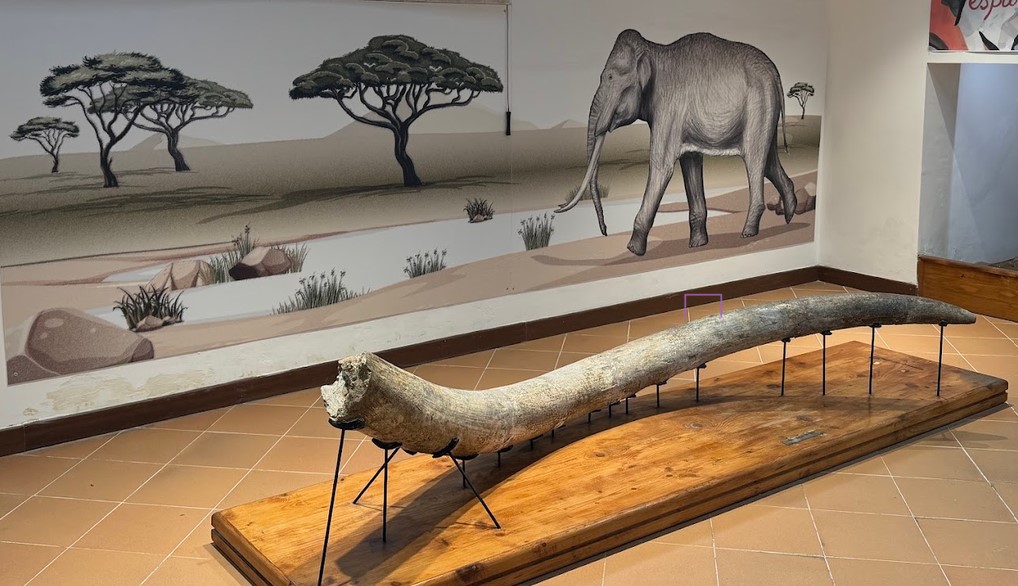
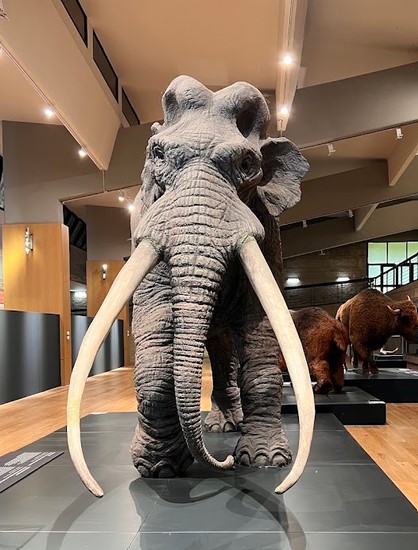
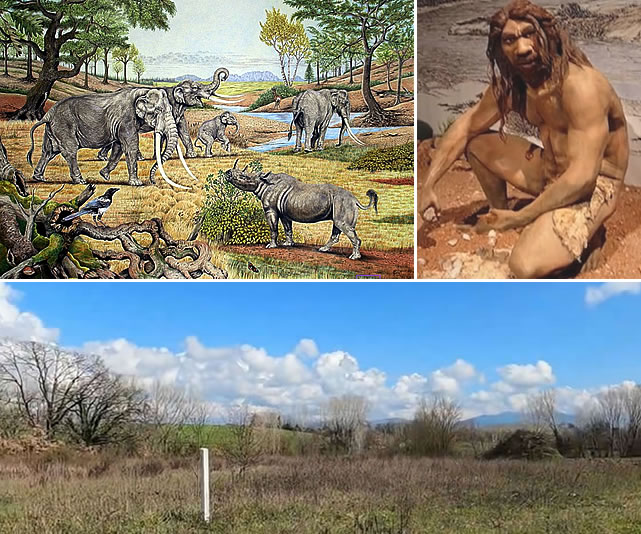
600,000 years ago, the entire Liri Valley was submerged under water. It was the so-called Lirino Lake, a majestic body of water that stretched for dozens of kilometers, surrounded by smoking volcanoes and inhabited by prehistoric elephants.
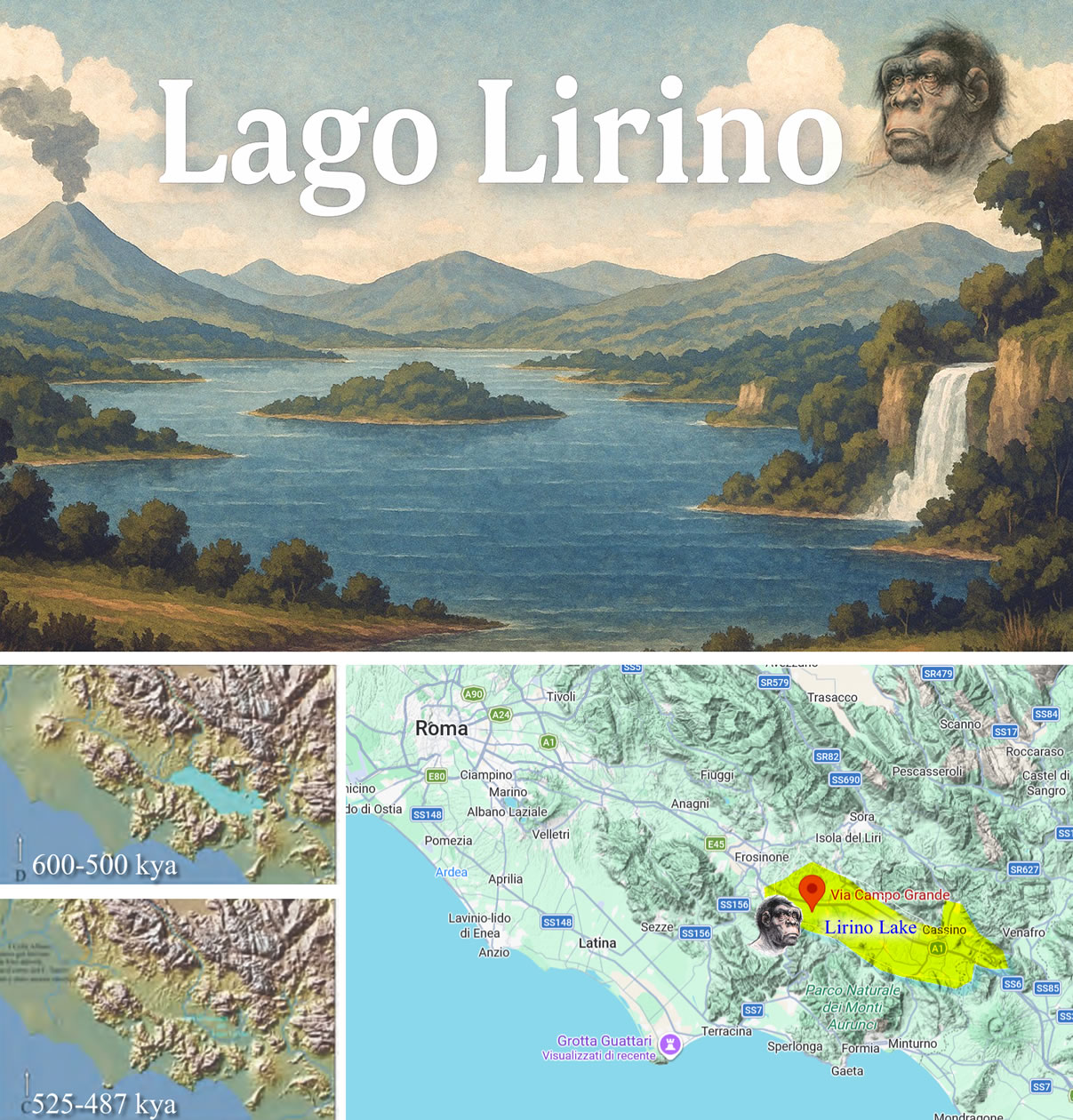
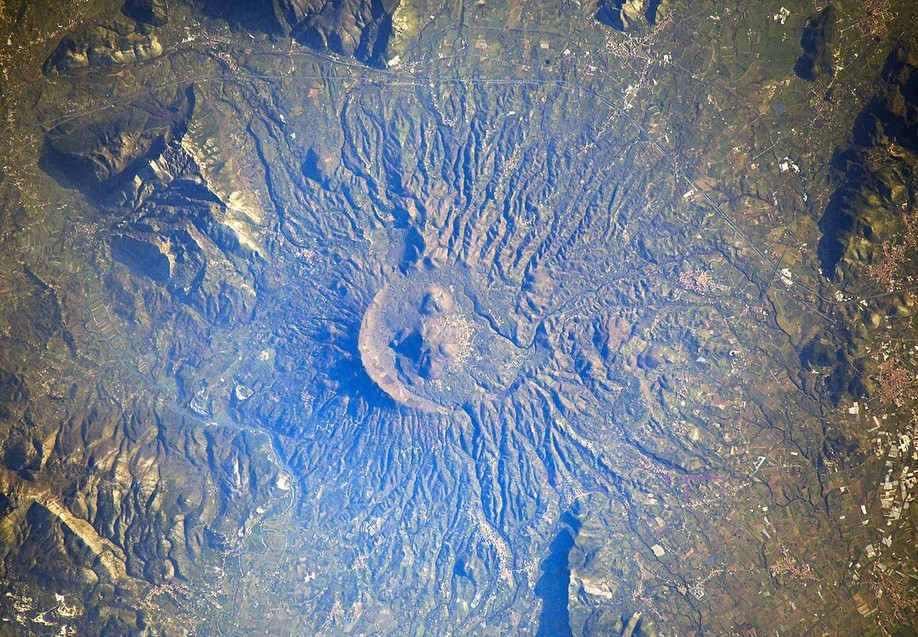
This basin formed during a phase of intense tectonic activity that lowered blocks of the Earth's crust, creating a natural depression where the waters of numerous waterways converged. Its formation, however, was set in motion by the catastrophic eruption of the Roccamonfina volcano, whose lava flows blocked the natural drainage of the Liri River, transforming the entire valley into a vast freshwater lake.
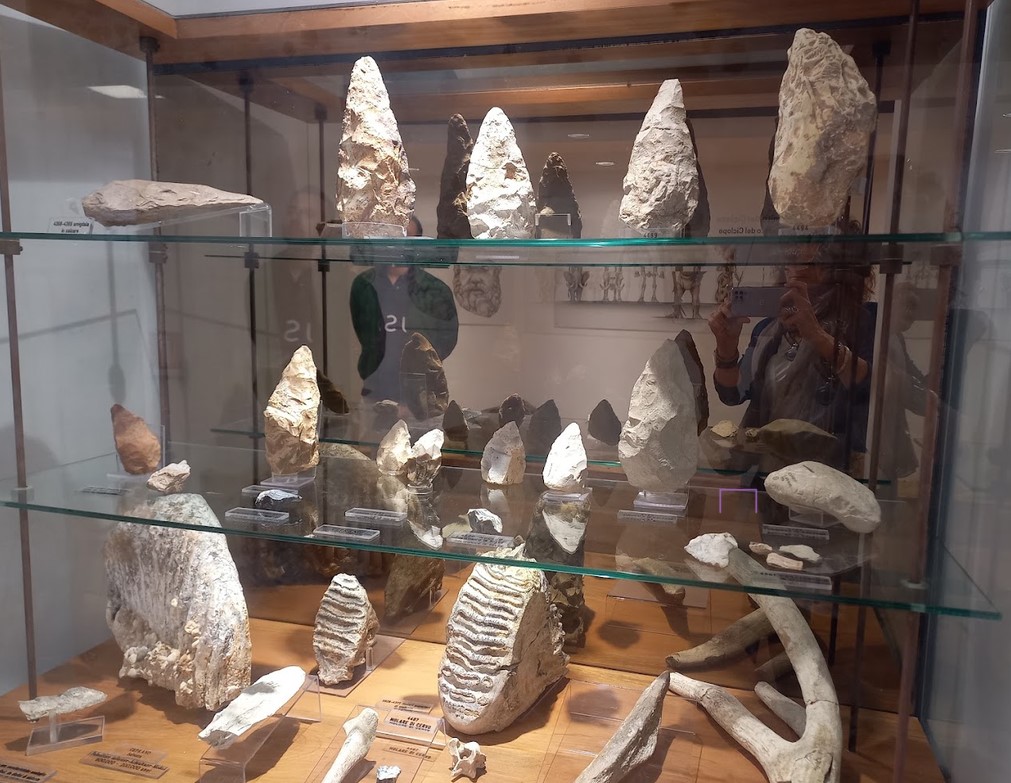
Today, the volcano appears as a large cone (about 25 km in circumference at its base). Its ancient volcanic activity, which ceased about 50,000 years ago, now continues only with seismic movements, gas emissions, and oligomineral thermal springs. The fertility of the soil has allowed the growth of dense chestnut forests and, in the past—on the volcano's slopes—the production of a wine considered among the best by the ancient Romans, Falernian. On the southwestern slope, some ancient lateral craters are still visible; at Fontanaradina (a hamlet of Sessa Aurunca), there are quarries of volcanic leucite. On the northeastern side, volcanic phenomena indirectly gave rise to the so-called Ciampate del Diavolo (Devil's Footprints), tracks left by Homo heidelbergensis dating between 385,000 and 325,000 years ago.
The disappearance of Lake Lirino occurred gradually between 500,000 and 350,000 years ago, when tectonic activity and erosion altered the valley's morphology, allowing the waters to flow again toward the sea through the primitive course of the Liri River, leaving behind a fertile and marshy plain.
As the lake dried up, prehistoric fossil remains began to surface. Alongside the vast quantity of mammal remains that lived along the shores of the great water basin (deer, oxen, bears, lions, large pachyderms such as elephants), stone artifacts were also found—evidence of the presence of Paleolithic humans on the shores before the arrival of Neolithic peoples.
The sediments of Lake Lirino, up to 130 meters thick, tell a fascinating story of climatic and environmental alternations: white calcareous silts rich in diatoms indicate periods of freshwater and temperate-cool climates, while intercalations of volcanic materials bear witness to the intense eruptive activity of the surrounding monogenic centers. The paleontological discoveries in the area of the ancient lake are extraordinary: from the famous remains of Elephas antiquus from Pignataro Interamna, which eventually ended up at the Museum of Natural History in New York, to the numerous fossils of mollusks, ostracods, and plant remains that document a thriving lacustrine ecosystem.
Homo cepranensis
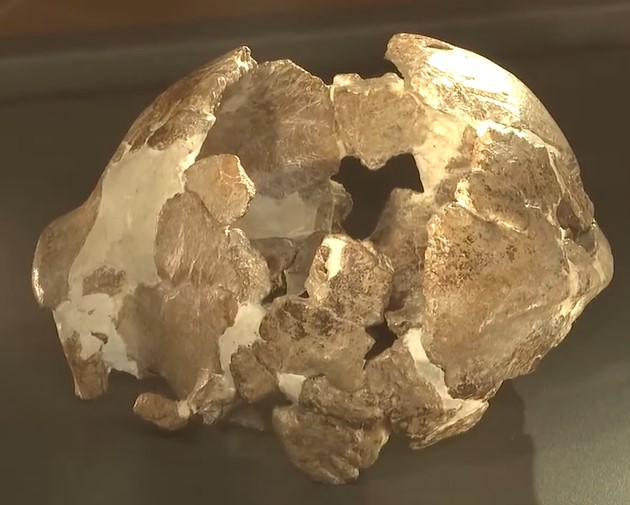
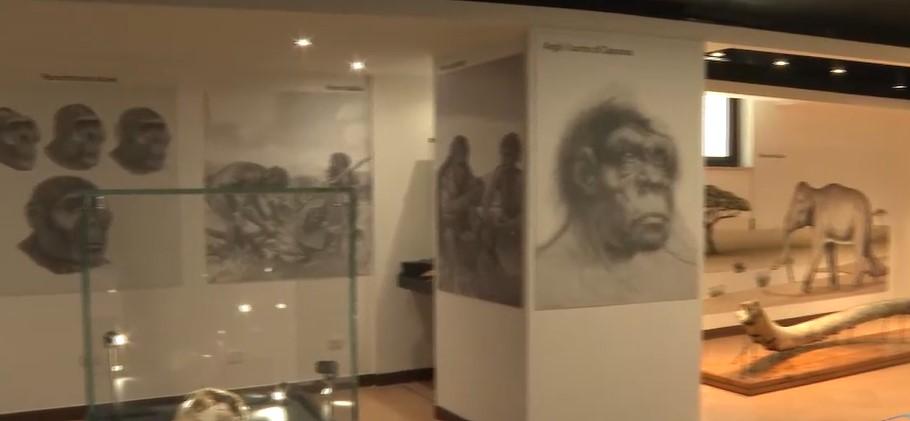
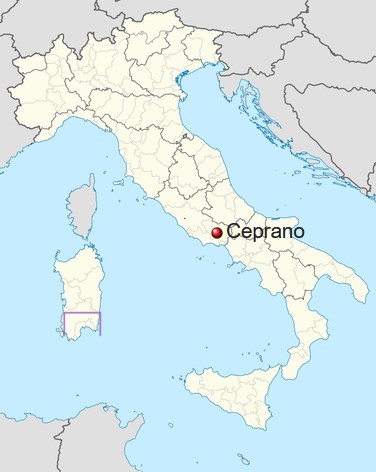
In 1994, a few kilometers from Ceprano in the Liri Valley (Campogrande, Frosinone, Lazio), a fossil skull was discovered during road construction work. It was not a chance find: Italo Bidittu, a former elementary school teacher and paleontologist by passion, while exploring construction sites in search of traces of the past in the soil disturbed by bulldozers and mechanical shovels, one day came across a skull cap broken into over 50 fragments. Its thickness and the powerful orbital arches, however, were unmistakable signs of antiquity. Some paleontologists nicknamed it Homo cepranensis or Argil to identify it.
The skull is fairly well preserved, although incomplete. Initially, it was attributed to late forms of Homo erectus, a species to which, until recently, all African, Asian, and European finds dating from 1.7 to 0.4 Ma were assigned. However, dating carried out on the soil from which the remains emerged gave a very different result—barely 400,000 years ago. At that point, it was thought that the skull, which was much older, had ended up in those sediments hundreds of thousands of years after the death of the Homo to which it had belonged.
The Ceprano Man was studied by Bidittu himself—who in the meantime was awarded an honorary degree and became a university professor—alongside some of the world's most prestigious paleoanthropologists. It was discovered that the Ceprano Man had died right where Italo Bidittu found him, thus ruling out the hypothesis that his remains had been transported into more recent sediments. Therefore, his age was indeed 400,000 years.
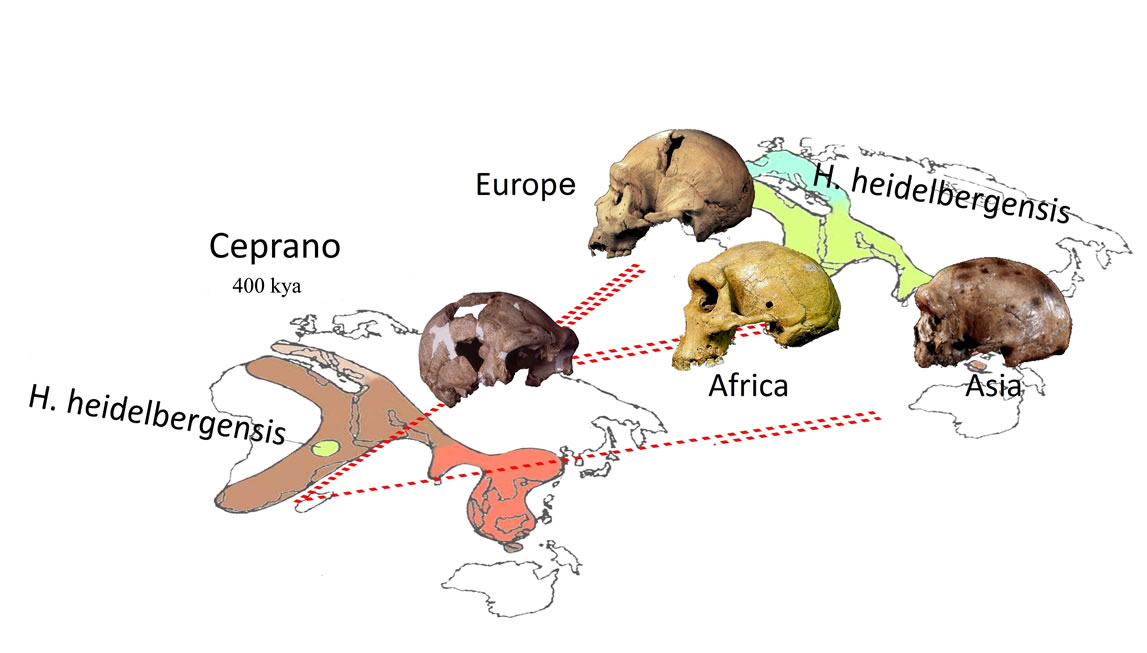
However, the apparent contradiction remains between a relatively recent era, shortly before the appearance of Homo sapiens and Neanderthals, and the archaic features that distinguish the skull. The most plausible explanation is that the Liri Valley, where he lived—enclosed toward the sea by the Monti Lepini, Ausoni, and Aurunci, and toward the interior by the pre-Apennine chains—was not only always rich in a precious resource like water but had also been populated by humans and animals since the most remote times. Hundreds of thousands of years ago, it was a very isolated place, whose inhabitants rarely came into contact with nearby populations. The consequence is that archaic-looking humans might have remained there while more modern species began to spread throughout the rest of Europe.
In 2017, thanks to high-resolution micro-computed tomography, it became possible to digitize and reassemble all the pieces that make up the fossil skull. Thus, according to the morphology of the Ceprano skull after its virtual reconstruction, we can state that it appears much more consistent with that of Homo heidelbergensis, considered ancestral to both the extinct species Homo neanderthalensis and our own species Homo sapiens, although affinities with Homo neanderthalensis remain. In practice, the Ceprano Man might perhaps be the last common ancestor between Neanderthals and our species.