A 10,000-year-old campsite: what can Tolentino tell us about the Mesolithic?

Tolentino
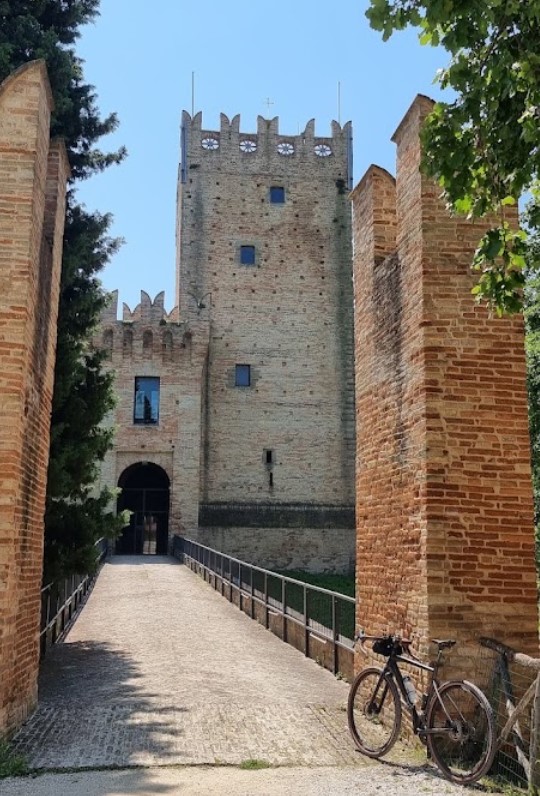
Tolentino is a medieval town in the Marche region that preserves works of art and monuments of considerable value. It is located in a geographically favorable position, which has always made it a site of human settlement, and over the centuries it has assumed an important historical, cultural, and economic role as a link between the coast and the mountainous area. The earliest evidence of life in the municipality's territory dates back to the Lower Paleolithic, up to the Picene civilization. The town of Tolentino lies in the center of the Chienti River valley, 60 km from the junction with the ancient Roman consular road Via Flaminia, heading toward Rome.
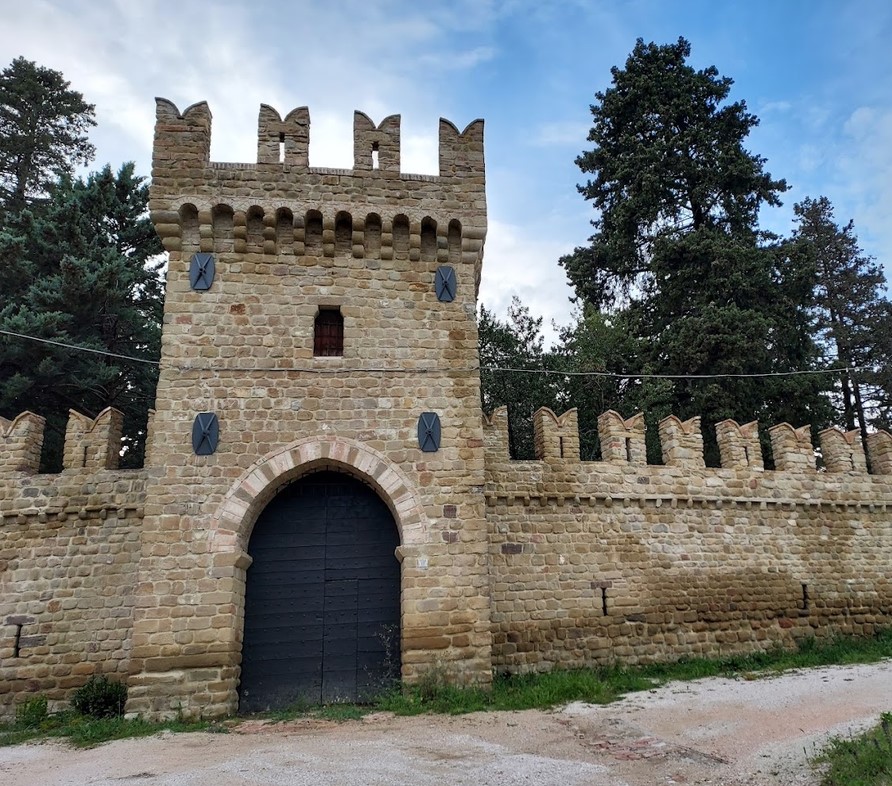
Tolentino – Mesolithic Settlement
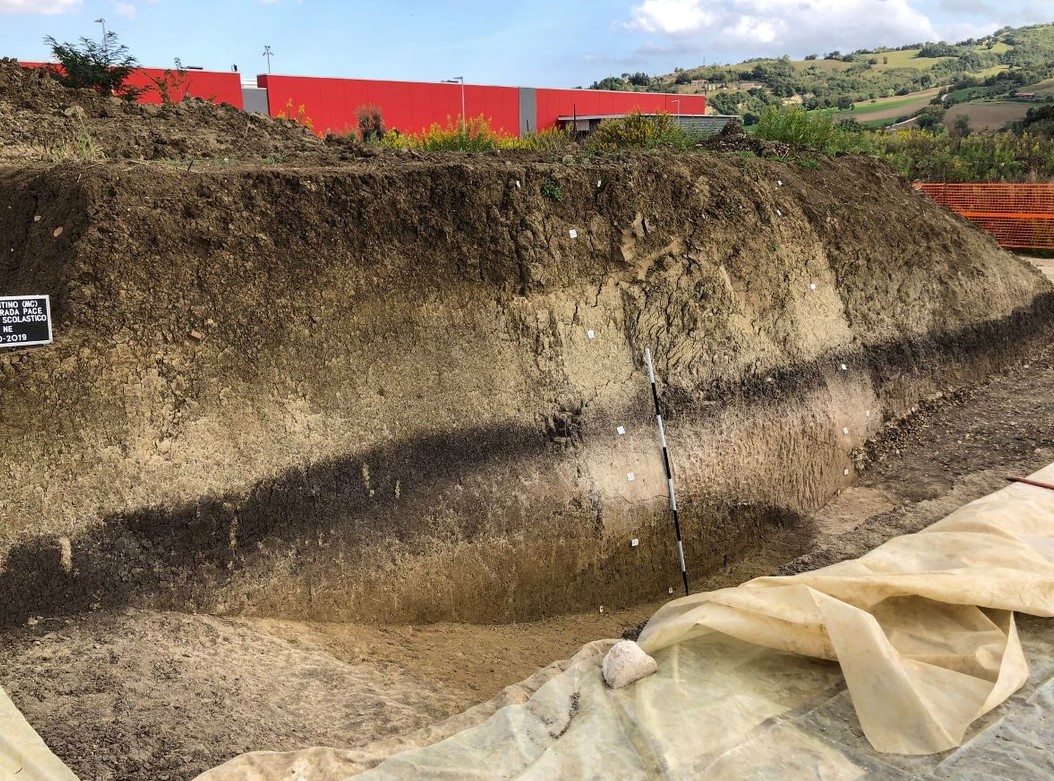
In 2019, on the outskirts of the city, in Contrada Pace, during excavation work for the construction of a new school, one of the technicians noticed that the soil at a certain depth showed a darker stripe and alerted the Superintendency. Preventive investigations were carried out by digging trenches; from the very first one, the very dark layer—the so-called paleosol—emerged, and in the second, a flake came to light. The archaeologists had to proceed with manual excavation, using mechanical means only for scarifying, working over an area of about 100 square meters. Within a few months, they would bring to light one of the most exceptional sites ever found in Europe, providing an immense amount of information about the Mesolithic—an era whose very existence was unknown until about a hundred years ago. I have defined it as exceptional because, since the area had not been disturbed by factors that could interfere with preservation, the finds were intact, neither damaged by tomb raiders seeking treasures nor by agricultural work.
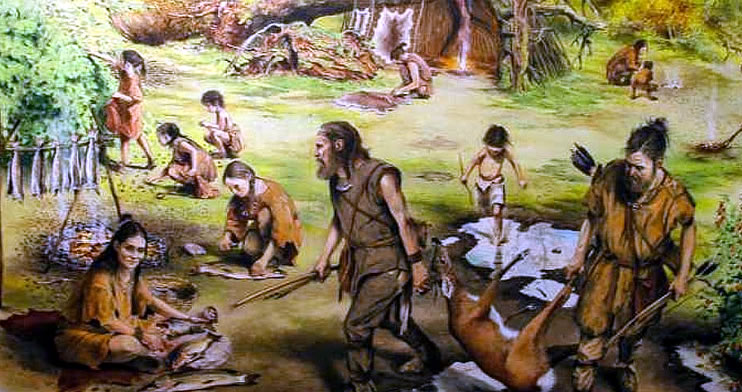
It was discovered that this settlement was an open-air site, a camp used by a group of hunters about 10,000 years ago for a few days, or a month at most. It was organized into three distinct areas, used for different purposes, with fire playing a central role in all three.
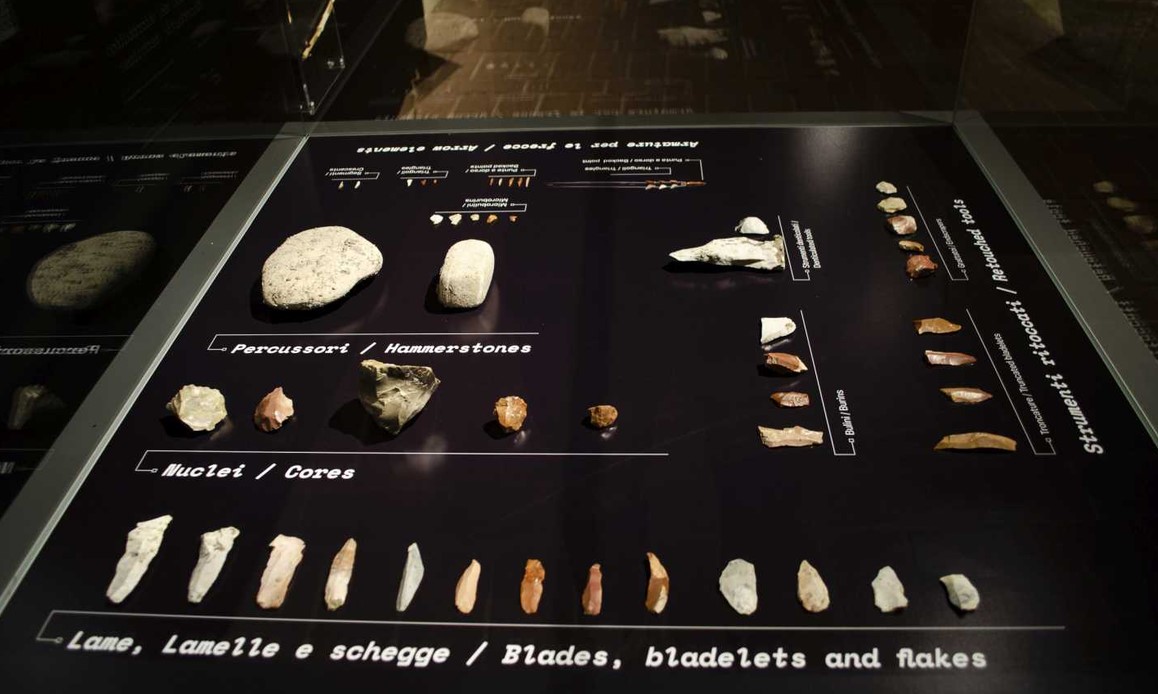
• First area – Around the first hearth, many lithic waste flakes were found, indicating that this was the place where stones were worked to create tools and weapons.
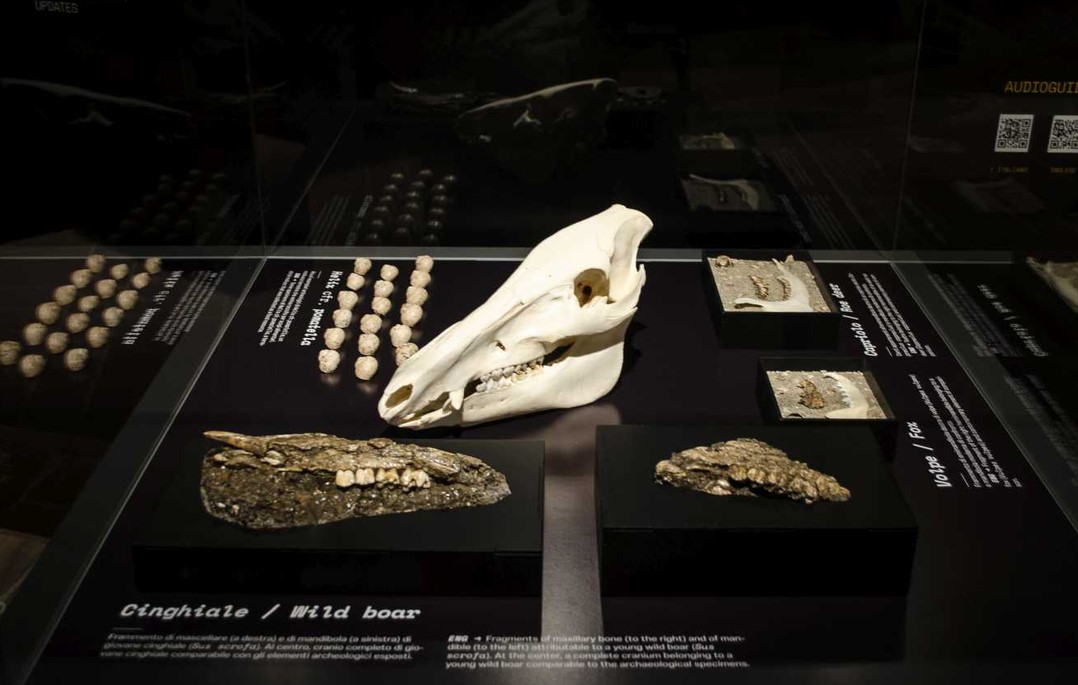
• Second area – Another area was rich in food remains, animal bones from deer, wild boar, roe deer, fox, etc., and a carpet of land snail shells: this was the area near the second fire where prey was butchered, meals were consumed, and waste was discarded.
• Third area – A third area was full of charcoal, with the remains of a raised hearth in the center; this was the place where the group had built a hut or some sort of tent, set against a hollow formed by a stump—that is, fallen trees that had created a natural shelter, like a wall.
The prehistoric camp dates to the Early Mesolithic (11,550 – 8,400 years ago). This is the period following the Paleolithic, the era of the great glaciations, and preceding the Neolithic, when there was a transition to an economy based on agriculture and animal husbandry, leading to sedentism. This period represents a particularly significant moment in the most ancient history, as it is characterized by the final adaptation of the last groups of European hunter-gatherers to the climatic and environmental conditions that emerged at the end of the Last Glacial Maximum, as well as by important socio-economic and technological changes.
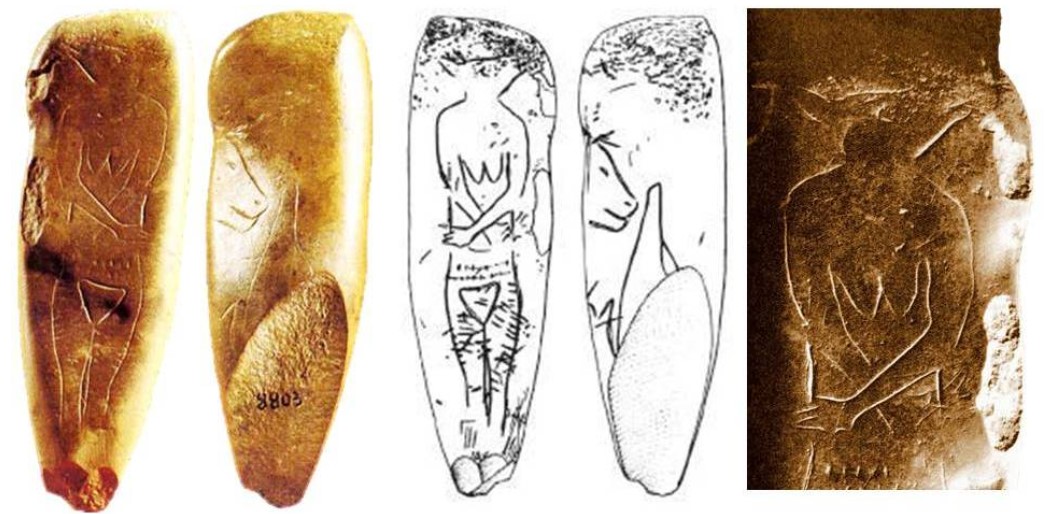
In 1884, the area of the Mesolithic settlement was owned by the family of Count Aristide Gentiloni Silverj, and during excavation work in one of his clay quarries, at a depth of about 3.5 meters, interesting objects were found, including the "Tolentino Pebble."
If prehistoric art in the Paleolithic period was mainly magical and propitiatory in purpose, later, in the Mesolithic and Neolithic, it also acquired ornamental and descriptive purposes. Humans were more confident in their abilities, managed to domesticate nature, and no longer felt the need to appease it. So they depicted new images on rock: no longer the typical Paleolithic representations of men hunting large mammals, drawn disproportionately larger than humans perhaps as a propitiatory sign, but more proportionate drawings of hunting and daily life. As we know, transitions from one historical phase to another do not occur simultaneously across the planet. Each place has its own adaptation times. This is precisely demonstrated by the Tolentino Pebble, which dates back to the Mesolithic but is artistically still linked to the Paleolithic.
It is an elongated pebble, 10,000 years old, made of calcareous-siliceous stone, sub-triangular in shape, bearing on its front face an anthropomorphic engraving: a female figure with a presumed herbivorous head (perhaps bovid or canid) turned to the left and facing upward, with an elongated snout and a clearly traced mouth opening; two ears develop at the back of the head; the body is well-drawn, with symmetrical breasts and a clearly visible pubic triangle. On the back face, there is an engraved image of another animal's snout and the branching of a deer antler. The artifact certainly represented a sort of talisman with ritual-religious significance, but some evident traces observable at the base of the object also reveal its function as a tool.
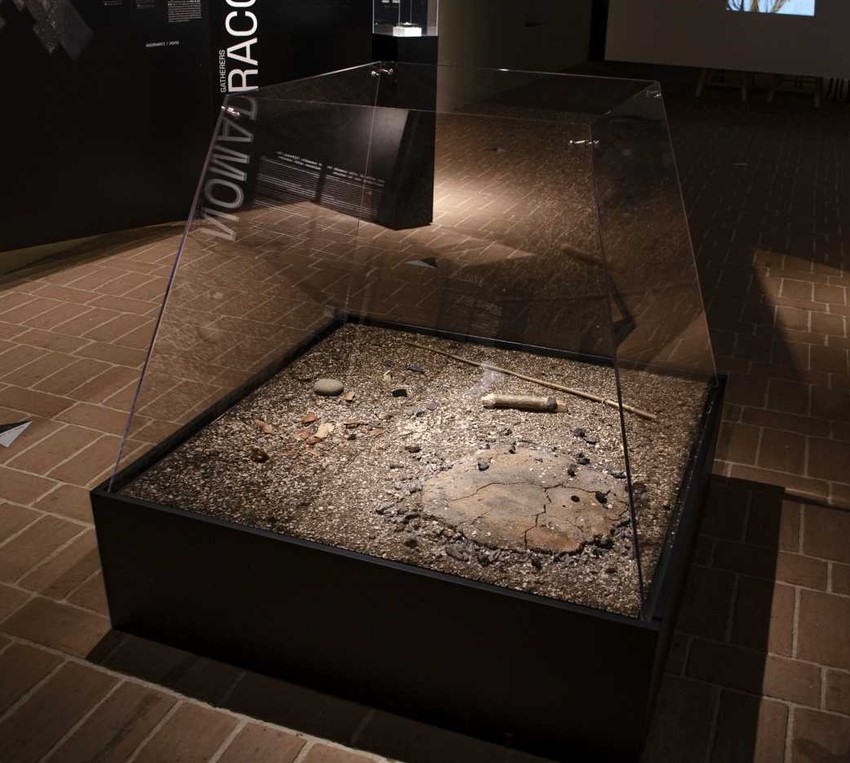
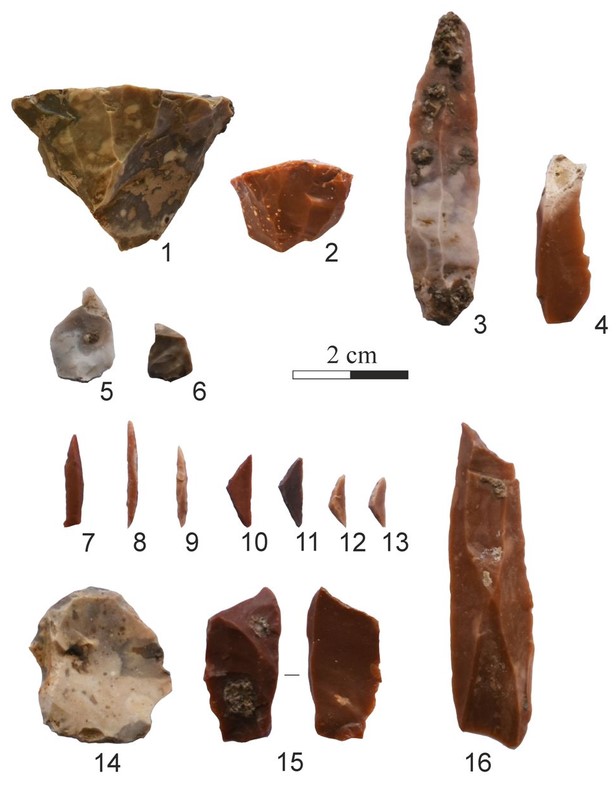
The site was perfectly preserved by the alluvial muds deposited by the Chienti River. Thanks to careful and meticulous excavation, it is possible to recognize, thousands of years later, the surface on which the Mesolithic hunters walked, the hearths they lit, and the spots where they carried out specific activities such as flint knapping to produce tools and hunting weapons, butchering prey, and working organic materials such as wood and bone. The excellent state of preservation and the great richness of the site in terms of recovered material (several thousand lithic artifacts and production waste) make it undoubtedly one of the most important and significant finds at both the Italian and European levels for reconstructing the lifeways of prehistoric peoples.
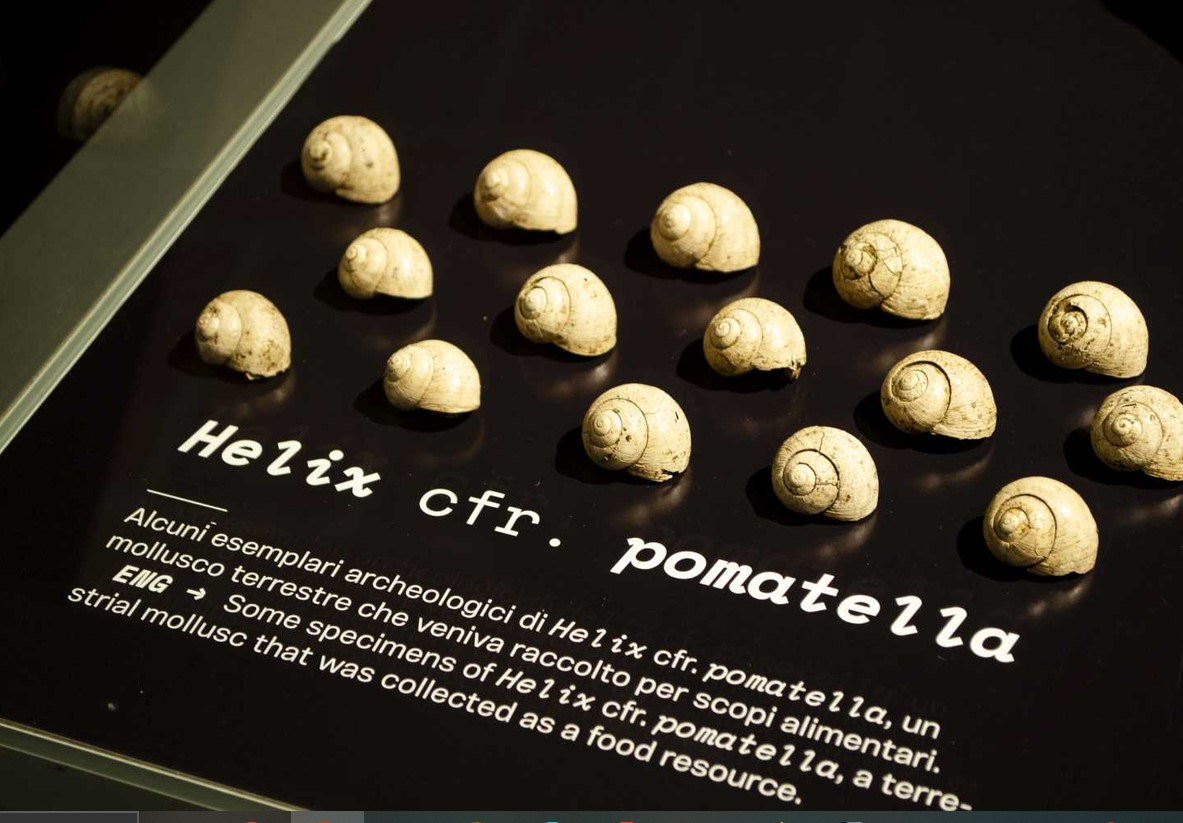
Furthermore, a significant shell accumulation was brought to light, consisting of several hundred shells of edible land gastropods (Helix pomatella) associated with abundant lithic artifacts, bone fragments, charcoal, fired clay lumps, and small limestone pebbles. Among these, the bone remains are particularly relevant, as they show a degree of preservation significantly better than that in other excavation areas. Their rapid burial protected them from the normal weathering phenomena that characterize the soil. The presence of significant elements such as teeth and mandibles, and generally of large bone fragments, will allow for a high rate of identification during the study phase, and thus the possibility of reconstructing in detail the hunting strategies of the Mesolithic groups that occupied the site.
Examples of escargotières (snail farming) dated between the Final Pleistocene and the Holocene are known from various archaeological contexts in the circum-Mediterranean area, particularly from sites in North Africa, the Iberian Peninsula, the Pyrenees, and the Near East. Despite this, similar evidence is by no means common in the Italian territory. Consequently, the shell layer identified represents an exceptionally significant discovery.
The Mesolithic prehistoric settlement becomes further evidence of how the Picene territory has been densely populated since remote times, foreshadowing a civilization that has left testimonies of absolute value. A Picene people still too little investigated who, according to our research, had created, before Rome, an economic empire over a large part of Europe, also influencing its language.
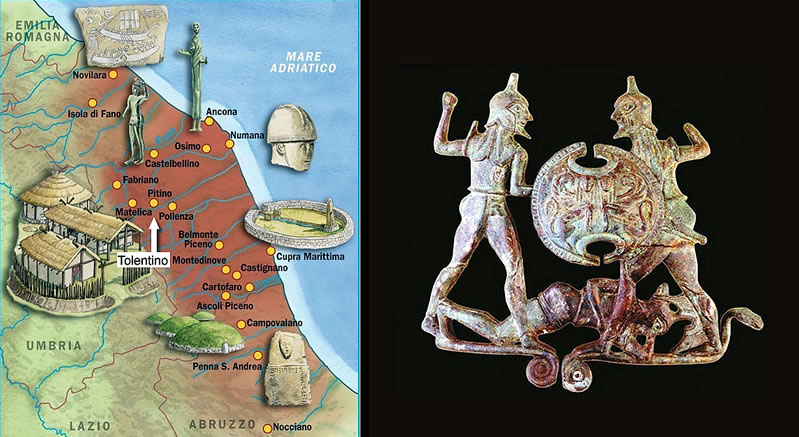
According to legend, the Piceni arrived in the Chienti valley through the "sacred spring," by which some young people migrated from Sabina beyond the Apennines to find new lands in which to settle. However, other studies have led to the hypothesis of the settlement of trans-Adriatic peoples who pushed considerably inland. These theories have not yet found a definitive solution to the open problem of Tolentino's origin; indeed, they increase it due to the consequent and not improbable distinction between Piceni and Picentes, the latter being later ascribed by the Romans to the Velina tribe. Even the name Tolentino finds scholars divided on its root: from those who derive it from the Greek thòlos (mound, referring to the alluvial hill where the city stands), to the more recent one that holds it derives from the root Tul meaning "limit" or, more precisely, "final border."
How Climate Affected Mesolithic Communities
The period between 13,000 and 8,000 BC is called, as we know, the Mesolithic Age. In human history, it was a rather brief phase, at least in those areas that were the first to adopt agriculture, thus transitioning to the phase that archaeologists call the Neolithic.
To prehistory scholars, the Mesolithic appears primarily as an intermediate period, a transitional phase characterized by the great climatic changes resulting from the end of the last glaciation. Around 10,000 BC, the last glacial period (called "Würm," after the river in Bavaria where traces were first found) came to an end. In the north, the so-called "bridges" that are supposed to have connected Siberia to Alaska across the Bering Sea disappeared. In the Mesolithic, stoneworking reached more refined forms, as revealed by the high number of various "microliths": small polished flint flakes, suitable for hafting onto bone handles (and less frequently wood) to build tools for hunting or plant gathering. Both of these activities became more selective. With climate warming, larger prey, such as reindeer, moved to the grasslands of northern Europe and Asia, and others, like mammoths, became extinct. Human groups that did not follow the reindeer herds and other large mammals northward had to contend with the changed conditions. Many hunter communities disappeared, and with them important cultural practices, such as the art of painting caves, were also lost.
In the Near East, in the so-called Fertile Crescent, the decline of hunting resources was particularly noticeable. Excessive culling caused a sharp decrease in the best prey, the gazelle, and humans had to make do with small game, such as hares and birds. To hunt them, it was necessary to use the bow, which spread precisely during this period. So they focused on smaller animals, which later also began to be raised and gradually domesticated (particularly sheep, goats, pigs, and later cattle). The domestication of the dog is also attested. To survive, it was also necessary to gather edible plants, such as wild cereals and legumes, which fortunately became much more abundant with the new climate. The Fertile Crescent thus seems to have been spared the population collapse that affected other areas, such as much of Europe. More stable and numerous settlements arose. People no longer lived in bands of a few dozen individuals, but in communities of one to two hundred or more people, which scholars call tribes, and which in the following millennia spread throughout the world. Like that of bands, the social system of the tribe was egalitarian, with very few differences in wealth.
The growing importance of wild plants in the diet stimulated technological advances in the areas of gathering, processing, and storage. Sickles with flint blades and bone handles, baskets for carrying the harvest home, mortars and pestles for removing chaff from grains, drying methods, and underground silos for preserving gathered plants longer were invented. Even though they were devised for wild cereals, these inventions would prove fundamental for the transition to agriculture.