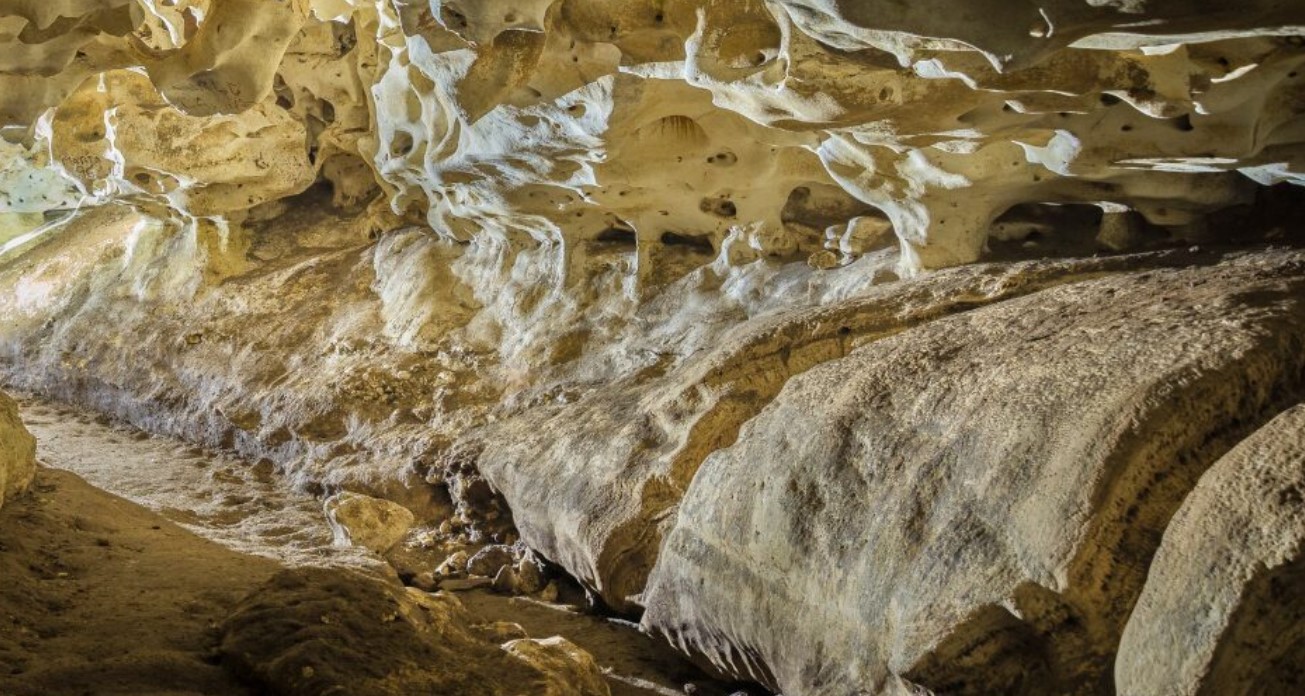
What Secrets Lie Within the Su Coloru Cave?
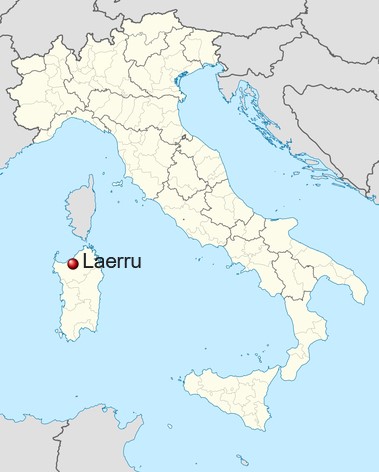
Laerru is a town of very ancient origins; its territory was already inhabited during the Lower Paleolithic, in pre-Nuragic and Nuragic times, and later during the Roman era. Numerous archaeological findings from these periods can be found here, including dolmens, Giants' tombs, domus de janas, nuraghes, Roman tombs, and the Su Coloru Cave.
This cave is a large and deep cavity that was inhabited starting from the Mesolithic period (about 9,000 years ago) by continental populations coming from the Tuscan Archipelago, who reached Sardinia and Corsica by sea using rudimentary boats.
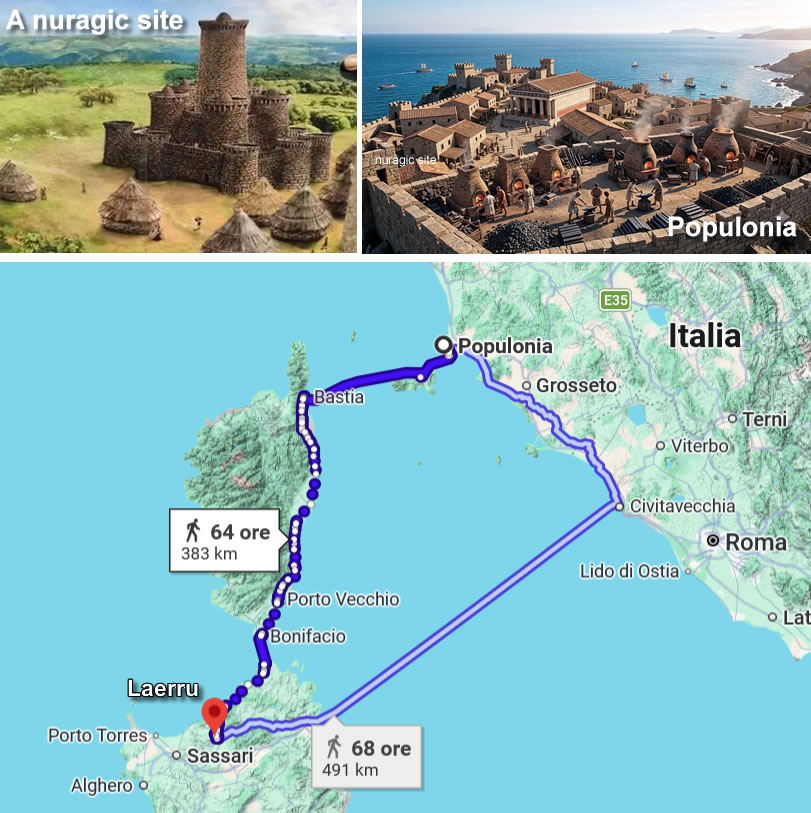
This Sardinia–Corsica–Tuscany connection continued for millennia, at least until Etruscan times, as evidenced by the tombs of Populonia, located in the Gulf of Baratti. Populonia was a major center for iron and metalworking, a hub of attraction for Mediterranean peoples, including Sardinian seafarers skilled in metallurgy. The Sardinian presence intertwined with Etruscan and Corsican-Elban influences from the very beginning, as proven by Nuragic-style artifacts and particular collective burial structures. Excavations and finds attest to intense exchanges and a probable high-ranking Sardinian component integrated into the social and economic fabric of Populonia.
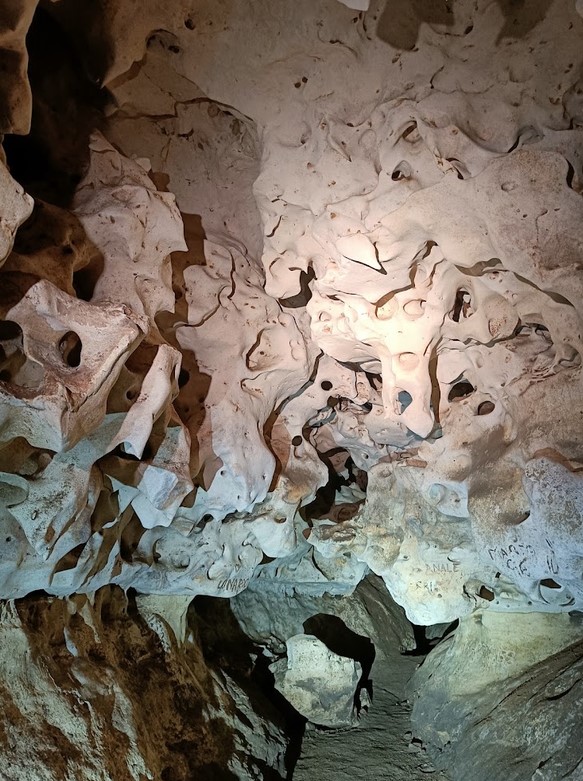
The cave is a karst cavity that developed underground on a plateau made of Miocene limestone rocks. The plateau is called Tanca Manna and lies at 340 meters above sea level.
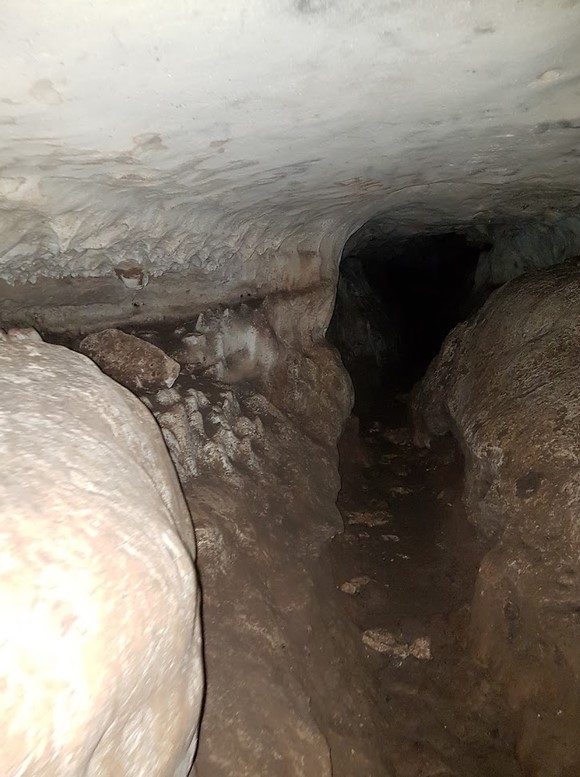
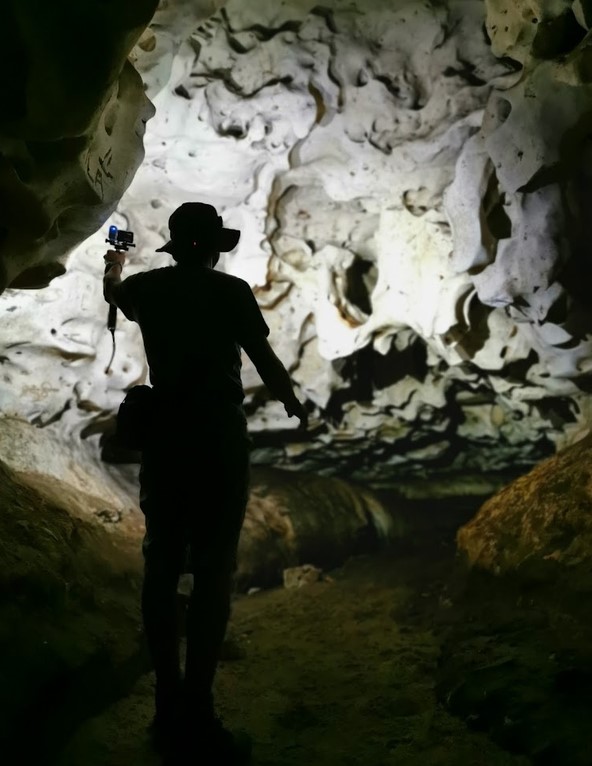
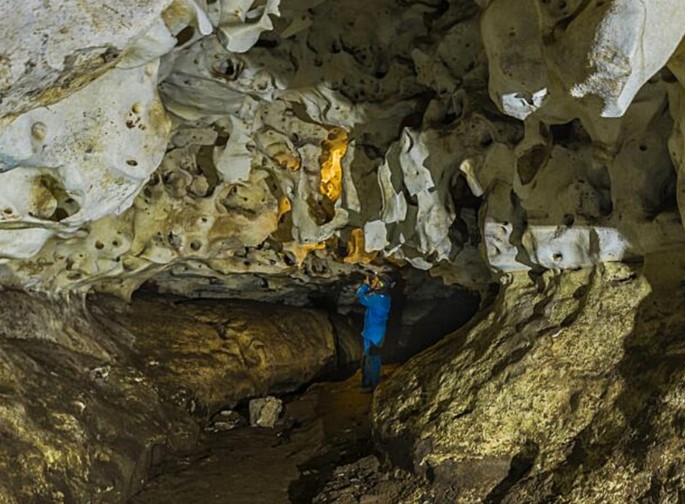
The cavity consists of a wide, winding main gallery 360 meters long, two long tunnels, and several side passages, for a total development of 640 meters. The cave has two entrances at opposite ends: the upper one, small and narrow, opens directly onto the plateau and descends steeply; the second, very large—30 meters wide and over 20 meters high—opens beneath a cliff at the head of a deep valley that originates right from the cave itself. A small stream is active only during the winter period of heavy rainfall; in the upper part of the limestone plateau, water seeps into a karst sinkhole. The water then flows through one of the cave's lateral branches, continues into the lower part of the main branch, and emerges from the large lower entrance, pouring into the valley below.
The cave is famous for having yielded human remains dating back to the Mesolithic period (about 9,000 years ago), a transitional phase between the Paleolithic and the Neolithic.