Who murdered the Iceman—and why?
Ötzi is a mummy, older than the Egyptian pyramids and Stonehenge, preserved to the present day through extraordinary circumstances. It derives its name from its discovery site in the Ötztal Alps.
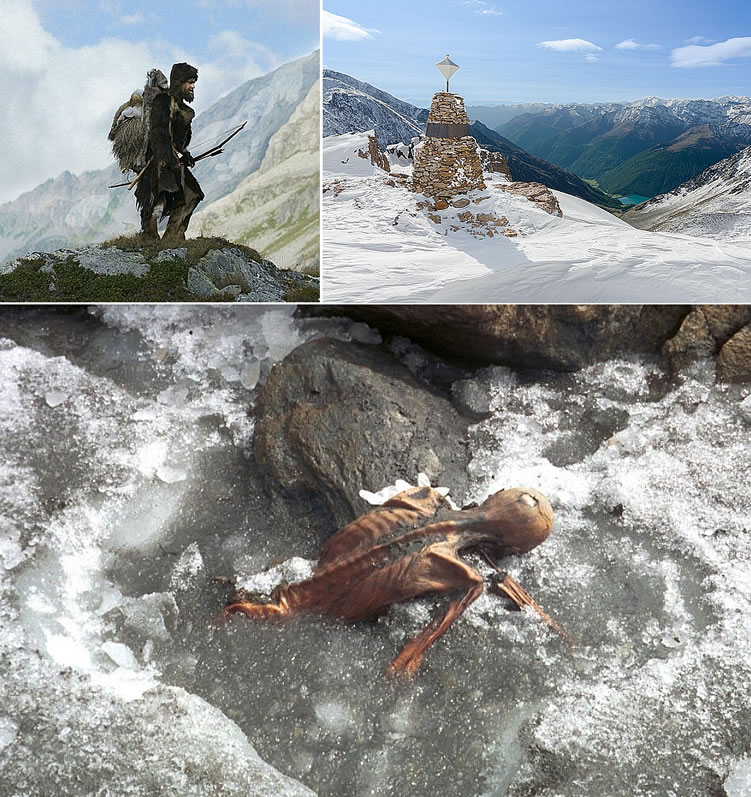
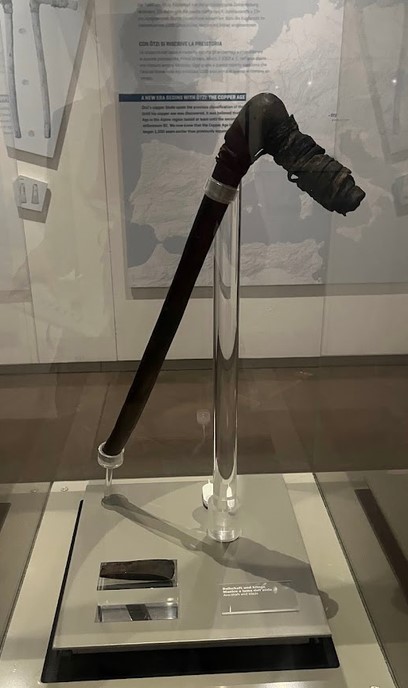
In 1991, during a mountain hike near the Tisa Pass in Val Senales, at an altitude of 3,210 m, German tourists Mr. and Mrs. Simon encountered a mummy emerging from the ice. Only the torso was visible, lying in a rocky hollow of approximately 3×7 metres that had shielded it from the destructive forces of the moving glacier. At the time of discovery, an unusually warm summer had caused substantial ice melt, leading to the torso's emergence from meltwater. The tourists promptly reported their find to the manager of the Similaun refuge, who in turn notified both the Austrian police and the Italian Carabinieri, as the site lay near the border. Initially presumed to be a recently deceased mountaineer, the Austrian gendarmerie was alerted. A recovery attempt the following day was thwarted by adverse weather, preventing the victim's extraction from the ice—only the axe was brought down to the valley.
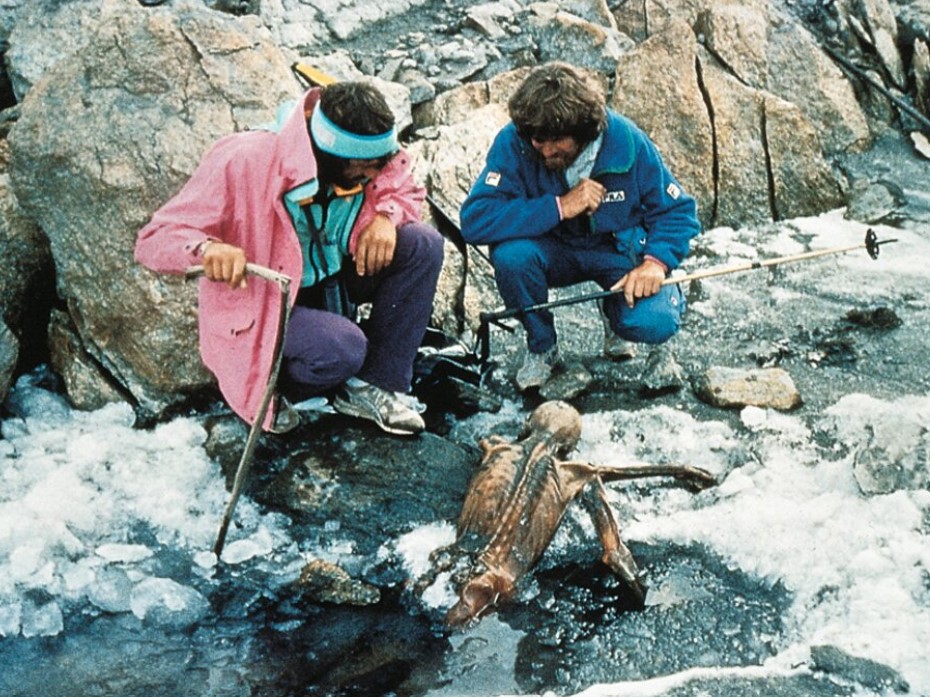
The next day, authorities tried again but lacked helicopter access; the refuge manager therefore went to the site to cover the body with a plastic sheet. In the meantime, the two renowned South Tyrolean mountaineers Hans Kammerlander and Reinhold Messner happened to pass by and examined the leather garments and birch-bark containers. Based on a sketch of the axe shown to them by the manager, Messner deduced that the deceased dated from a very ancient period. The mummy was eventually removed, but the recovery—conducted without special conservation measures—resulted in damage to body parts (external tissues, left femur seriously, and genitals) and equipment.
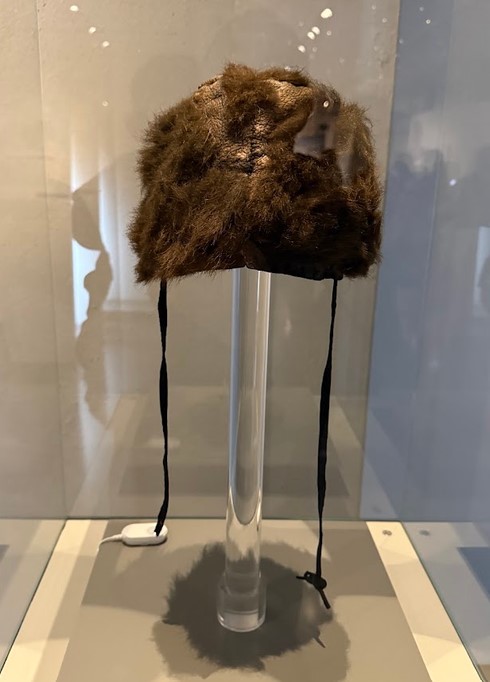
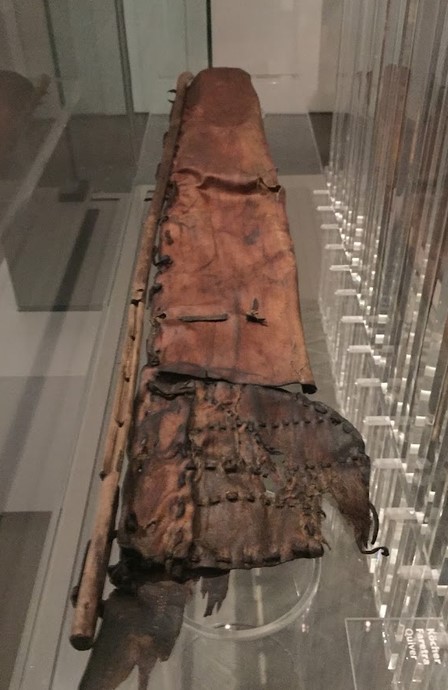
Through several archaeological excavations, the quiver with its contents, cords, fur remnants, birch bark, and pieces of a grass grid were recovered. During the summer months of 1992, archaeologists "excavated" in snow and ice using steam-jet tools to penetrate the thick layer, bringing to light a remarkably well-preserved fur cap.
The mummy
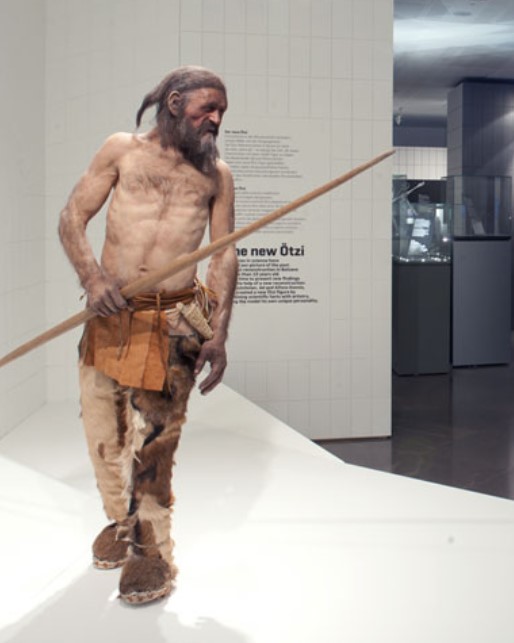
Ötzi's body was naturally preserved in the glacier for 5,300 years. The Iceman lived during the Copper Age (circa 3300–3100 BCE), a period classifiable within the final phase of the Neolithic. He still used stone tools but already possessed an innovative and precious copper axe. Technical knowledge regarding metal extraction and working had recently reached Europe from Asia Minor. Copper marked the beginning of the first Metal Age.
Having undergone a natural mummification process within the glacier, Ötzi is a so-called wet mummy. Prolonged entombment in snow and ice caused the body to dehydrate, losing most of its water content. The vast majority of surviving mummies were treated during burial rituals with preserving substances, often involving the removal of internal organs. In this context, the Iceman represents an absolute rarity, having been preserved virtually intact.
Ötzi's genome has been almost fully deciphered. His ancestors migrated approximately 8,000 years ago from the Fertile Crescent region (modern-day Anatolia). Today, only a few people still share a common ancestor with him; they live mainly on the islands of Sardinia and Corsica. The Iceman had dark hair, dark eyes, and medium-to-dark skin. Genetically, he was predisposed to cardiovascular disease. Like most people of his era, he was lactose intolerant and had blood type O positive.
Medical analyses provide extensive information on the Iceman's health::
• Ötzi was approximately 46 years old—a considerable age considering the low life expectancy 5,300 years ago;
• He stood about 1.60 m tall (whereas the mummy measures 1.54 m);
• He weighed around 50 kg (while the mummy weighs 13 kg);
• His shoe size today would correspond to a 38;;
• He had medium-length dark hair worn loose;
• His physique was average for the late Neolithic population, indicating a fit and athletic man;
• Recovered fingernails showed Beau's lines, symptoms of physical stress (suggesting that in the last two weeks before his death, Ötzi had been in mortal danger);
• He had fleas, ticks (which transmitted Borrelia bacteria), and whipworm eggs (a troublesome intestinal parasite);
• His dentition was heavily worn, and all wisdom teeth were missing;
•He sustained several injuries, including multiple rib fractures and a nasal bone fracture;
• His lungs were blackened from soot;
• His penultimate meal consisted of ibex meat, cereals, and berries—not deer meat as had been assumed until 2011. More recent Eurac research revealed it was actually ibex speck (cured meat).
Tattoos
Ötzi is the earliest known tattooed human, bearing 61 tattoos. Needles were not used; instead, small skin incisions were made and filled with charcoal. The Similaun man's tattoos consist of simple dots, lines, and crosses, located on the lower spine, behind the left knee, and around the right ankle. As radiological examinations identified arthritic changes at these sites, it is assumed these markings served a therapeutic or religious function to alleviate pain. Others have proposed that the tattoos were acupuncture points. Modern acupuncture pressure points—unchanged for millennia in China and Asia—differ little from his tattoos, leading to speculation that they may represent acupressure points; if so, their value would have been purely mnemonic for Ötzi, without "spiritual" or magical significance.
Cause of his death
Ötzi did not work with copper, as arsenic and copper traces in his hair had initially suggested. His killing may have been linked to a conflict that occurred days before his death. Furthermore, despite normal weight and high physical activity, the Iceman suffered from atherosclerosis.
Ten years after the mummy's discovery, further examinations identified a previously unnoticed flint arrowhead in Ötzi's left shoulder. Measuring 27 mm long and 18 mm wide, it was not removed by scientists and remains embedded in the Similaun man's body.
An arrow came from afar and unexpectedly. Shot from ambush, it shattered his shoulder and damaged the aorta. Ötzi soon died from haemorrhage. To leave no trace, the killer removed the arrow shaft and fled.
The presence of valuable items—such as the copper axe—at the crime scene suggests theft was not a credible motive. Rather, the ambush appears to have been a settling of scores.
In 2002, Bolzano scientists made another discovery: in the preceding days, Ötzi had sustained a defensive wound to his right hand in hand-to-hand combat. With no other injuries, it is plausible that he was the victor of that encounter. He did not feel threatened shortly before his death. The site's location—the Tisa Pass—suggests, in fact, a pause with a substantial meal.
The crime scene was soon buried under thick snow, and the crime likely went unpunished.
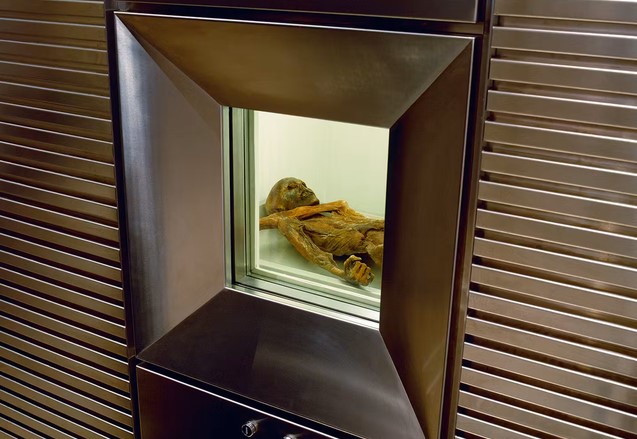
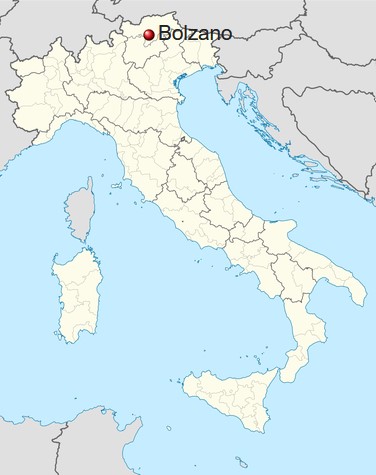
Today, a large stone pyramid marks the archaeological discovery site, while the mummy is kept in the South Tyrol Archaeological Museum in Bolzano, within a specially designed refrigerated cell replicating glacial conditions. The body—weighing approximately 13 kg and measuring 1.54 m—rests on a precision scale in an environment with a constant temperature of −6°C and 99% humidity, visible to the public through a small window. To counteract any moisture loss, the mummy is regularly sprayed with sterilised water.
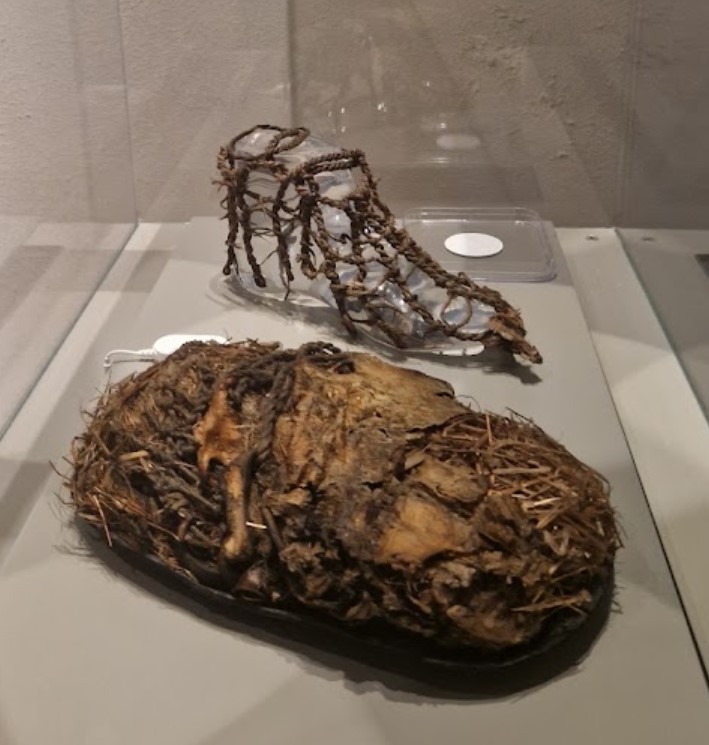
The numerous equipment items and garments, meticulously restored, inspire public wonder at their craftsmanship: a yew-wood bow, a quiver with two finished arrows and others in production from viburnum wood, a flint dagger, a flint retoucher, a copper axe from southern Tuscany (nearly 600 km away, confirming long-distance connections between distant Eneolithic cultures in Italy)—from which the Similaun man's medium-high social standing is inferred, as copper was a precious material at the time—a marble bead, tinder and fire striker, and a backpack to contain these items.
Two curiosities
• Since the mummy's discovery site lies in close proximity to the Italian-Austrian border, authorities in 1991 ordered an official remeasurement, establishing that Ötzi had been found only 92.56 m from the state border—specifically on the South Tyrolean side. This was also due to a curious coincidence. When the new border was drawn in 1922 after South Tyrol's annexation to Italy, heavy snow prevented precise identification of the watershed along which the boundary was to run. Consequently, the borderline was traced "erroneously"; nevertheless, its validity remains recognised under international law today. It was agreed, however, that the mummy would temporarily remain in Austria and that the University of Innsbruck would conduct archaeological excavations at the discovery site.
• Similarly to the so-called curse of Tutankhamun, some have seen a spell at work in the string of misfortunes that befell those involved in the discovery and study of the Similaun mummy:
- Günther Henn, the forensic pathologist who first examined the find, died in a car accident while on his way to a scientific conference on the mummy (one year after the discovery);
- Kurt Fritz, the mountaineer who helped transport the mummy to Bolzano, died after falling into a glacial crevasse (two years after the discovery);
- Rainer Hölzl, a cameraman for the Austrian broadcaster ORF who filmed and broadcast the event, died of a brain tumour;
- The German tourist Simon, who discovered the mummy, died after falling from a cliff during a hike (thirteen years after the discovery);
- Konrad Spindler, the German archaeologist who first studied Ötzi, died of an aggressive form of multiple sclerosis (fourteen years after the discovery);
- Tom Loy, the American molecular archaeologist and pathologist who first analysed its DNA, was found dead in his home under unclear circumstances (fourteen years after the discovery).