Where Was the Historic Battle of the Egadi Islands Really Fought?
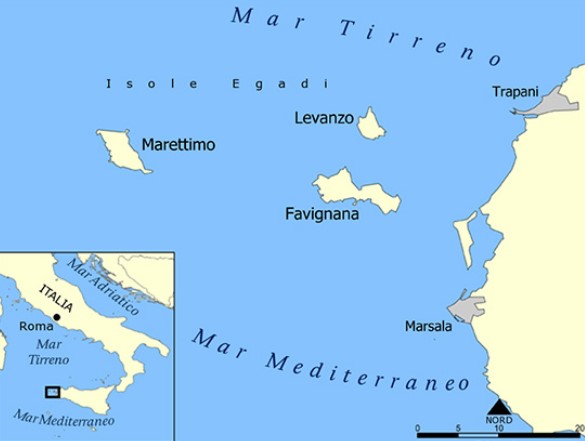
After twenty-three years of exhausting conflict, as the fateful date of March 10, 241 BC approached, the irreversible decline of Carthaginian dominance over the Mediterranean began in the waters of the Egadi Islands. In truth, it would take two more wars and over a century to completely erase Carthage from the Mediterranean stage, but that day marked the beginning of its inexorable and irreversible downfall—and certainly the start of Rome's unstoppable rise to become the hegemonic power of the ancient world for centuries to come.
Carthage, after years of naval and land engagements—even though it remained dominant at sea—had bled itself dry maintaining its fleet, and its trade had slowed. Rome, too, was beginning to struggle in demanding reinforcements from its allies and had incurred enormous expenses for naval battles and shipwrecks, to the point that it no longer had the funds to equip even a major fleet. Despite this, for the third time, Rome decided to return to the sea and try to settle the score with Carthage.
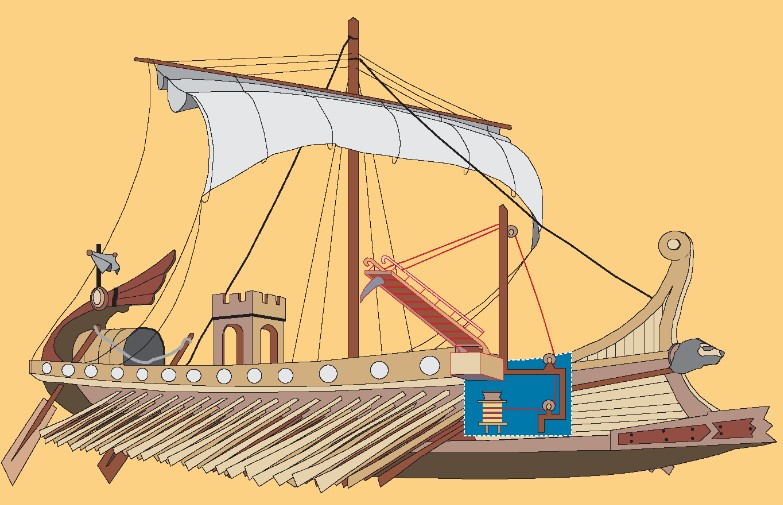
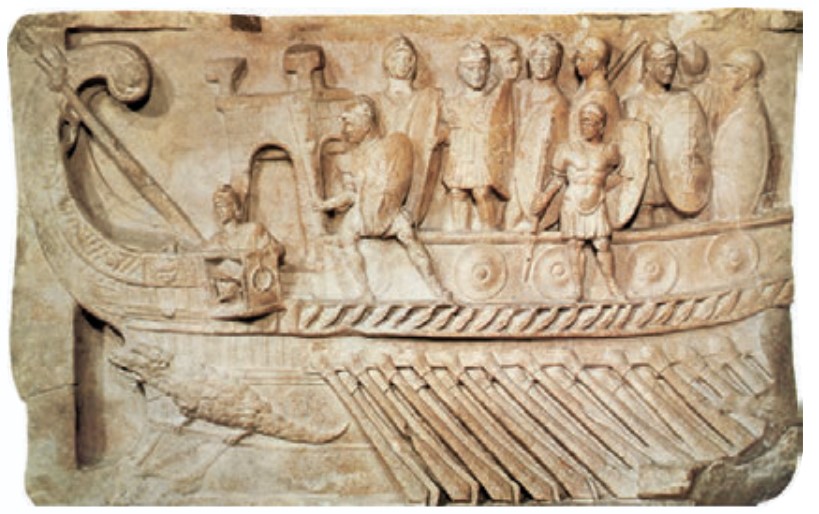
At the start of the First Punic War, Rome had little naval experience and was therefore forced to copy the powerful Carthaginian ships (triremes = three banks of oars, quinqueremes = five banks of oars) captured during naval engagements. However, having greater experience on land, they devised a powerful weapon to secure victory: the corvus—a bridge that, once hooked onto the enemy ship, turned a naval battle into a land engagement. The Romans had also changed their shipbuilding methods, increasing the vessels' power by adding one or two rows of rowers while maintaining the same maneuverability.
During the first conflict with the Carthaginians, the Roman Senate ordered the construction of a fleet of ships equipped with corvi. In anticipation of physical combat, the number of soldiers on board had to be substantial. Thus, after the defeat at Tunis and unfortunate shipwrecks such as that off Camarina in 255 BC, the Romans—thanks to a public subscription among citizens—armed 200 swift quinqueremes.
The Roman commander was Gaius Lutatius Catulus; the Carthaginian commanders were Hanno (in charge of naval forces) and Hamilcar Barca (in charge of land forces). The decisive battle took place in the Egadi Islands, between Levanzo and Trapani.
Reconstruction of the Battle Through Literary Sources
The greatest difficulty in reconstructing the history of the Punic Wars lies in the extreme scarcity of contemporary sources—both literary works providing a continuous narrative of events and documentary evidence that would allow verification, at least on essential points, of later accounts. It goes without saying that such a conflict between two civilized peoples, directly or indirectly involving all the other states of the Mediterranean basin, could not fail to engage the historiographical interest of both participants and onlookers. We know, in fact, of contemporary narratives from Roman, Carthaginian, and neutral perspectives. But this body of contemporary writing has been almost entirely lost. In part this is due to chance—as with the loss of Polybius's section dealing with the destruction of Carthage, events contemporary to him. In part, it is a consequence of the greater authority—for reasons beyond mere chronology—acquired by works that covered all three wars. Finally, one must consider the general phenomenon—which also applies to some extent to epigraphic texts—of the widespread submersion of archaic Latin writings following the establishment of Classical Latin as the standard.
For the history of the First Punic War, we possess only summary information and can therefore reconstruct the broad outline of events at best. It was a disastrous war for both Carthaginians and Romans, lasting over thirty years. A stalemate had been reached, with neither side gaining the upper hand—a war of position fought on land between Palermo and Trapani.
Lutatius Catulus intended to capture Trapani, which was already occupied by the Carthaginians. When some Carthaginian fleets returned home, leaving Trapani less protected, the Romans captured it along with the city of Lilybaeum (Marsala). When news reached Carthage, a final push was attempted. The Carthaginians decided to break the Roman blockade to relieve their compatriots: ships were loaded with food, drink, and reinforcements to aid Hamilcar Barca and the garrison on Mount Eryx. Rome, too, prepared for the final confrontation, equipping a fleet of about 200 well-armed and well-manned ships. The Romans realized that this was their chance to end the long war, destroy Carthage, and thus secure their subsequent total conquest of the Mediterranean.
Hanno wanted to take the fleet to the "Sacred Island" (Marettimo, ancient Hiera) to unload supplies for the land forces and to have lighter, more maneuverable ships—and therefore stronger in naval combat. But Lutatius Catulus, aware of the Carthaginians' arrival, summoned 350 ships from the ports of Marsala and Egussa (Favignana). According to the sources, on March 10, 241 BC, the Battle of the Egadi Islands was fought—the largest in living memory in terms of participants, numbering about 200,000—off the island of Favignana at Cala Rossa (Red Bay), so named because the blood of the dead turned the sea water red.
Reconstruction of the Battle Through Archaeological Investigations
Thus far, the reconstruction based on literary sources. But as is well known, archaeology requires evidence like any other science. In this case, it was necessary to find the ships involved in the battle or at least artifacts that could indicate the location of the engagement.
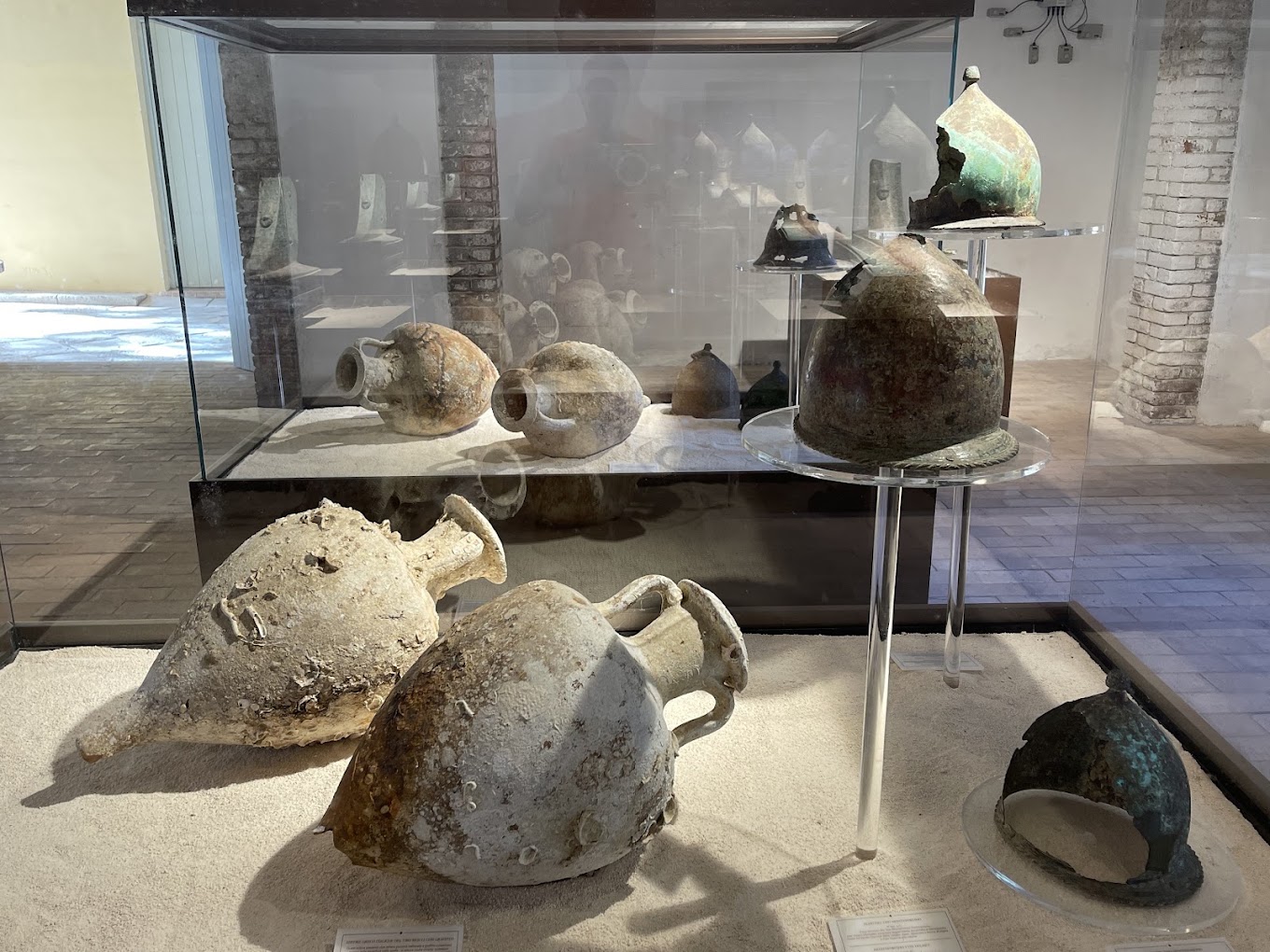
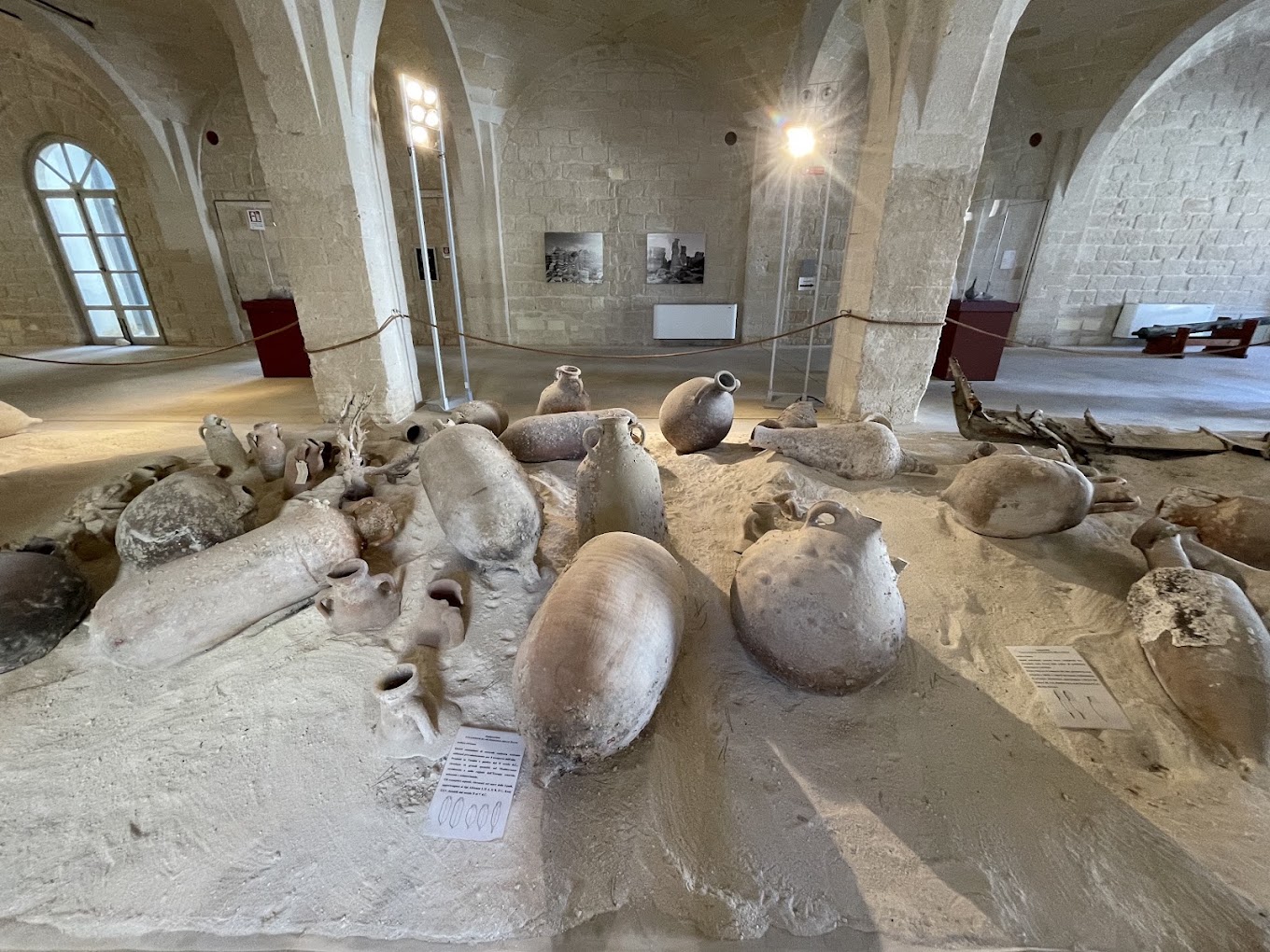
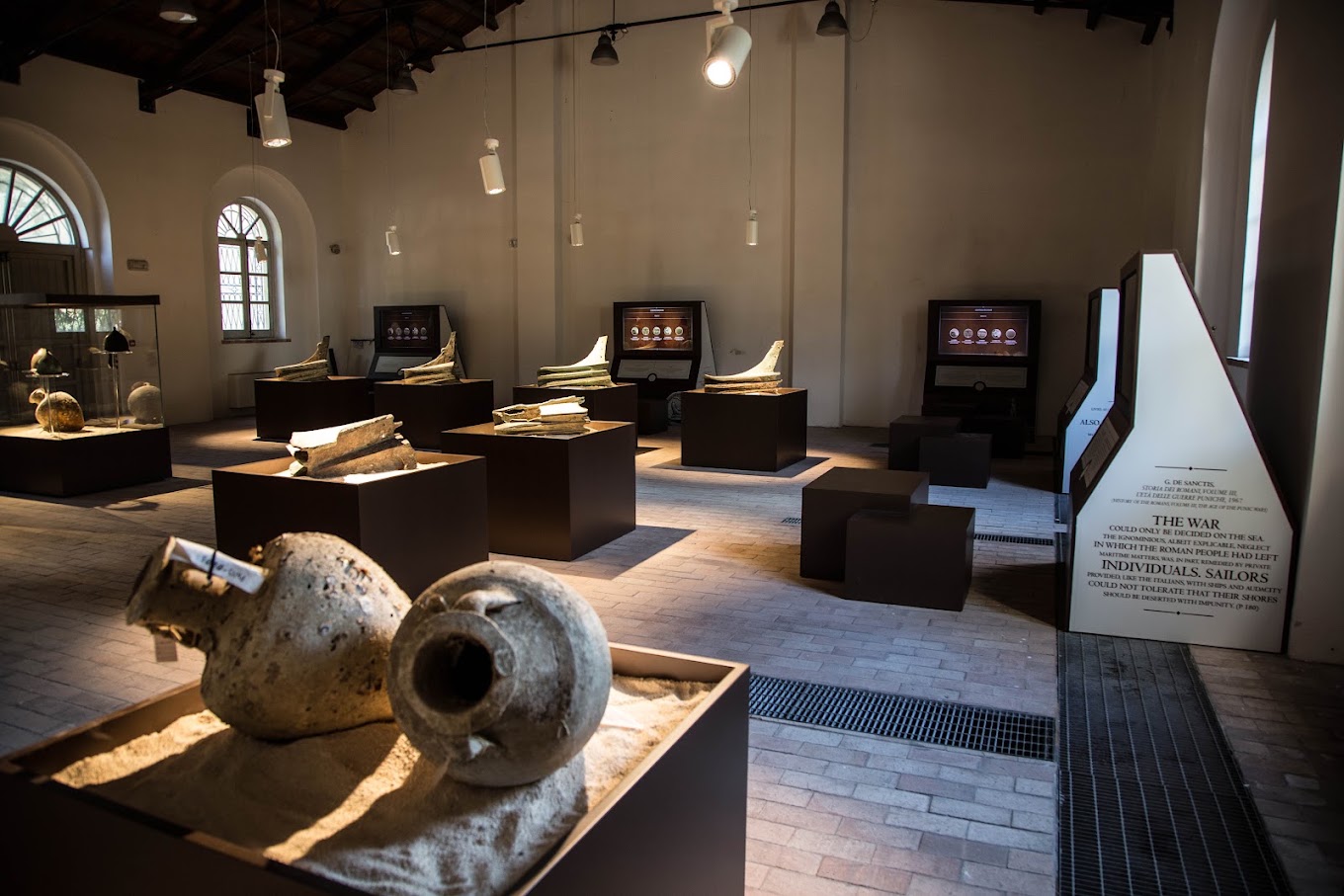
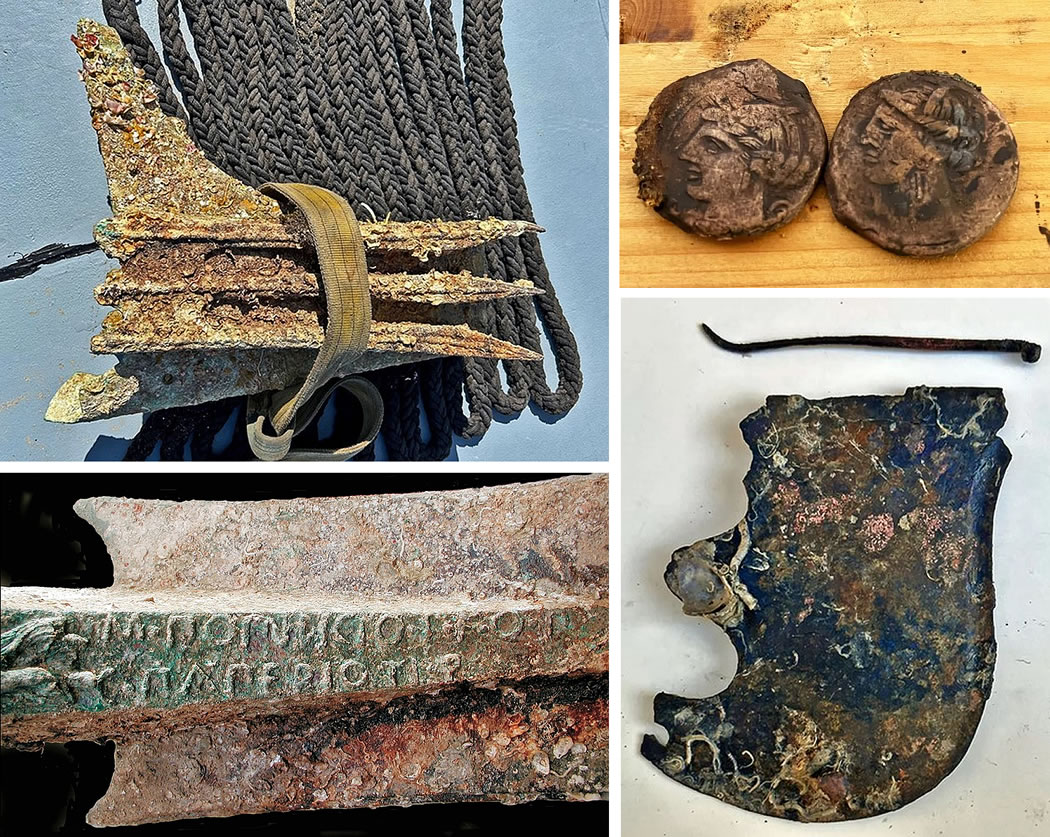
The Sea of Sicily is like a precious submerged museum. In the area of the Battle of the Egadi Islands, 27 bronze rostrums (of which only three are Punic), 30 Montefortino helmets belonging to Roman soldiers, 278 Greco-Italic amphorae, 33 Punic amphorae of the "Maltese ovoid" type, 26 Roman, Punic, and Hellenistic coins, and two swords have been recovered. All objects found at sea were brought to the surface using lifting balloons inflated underwater with oxygen tanks. For example, off the island of Levanzo at Cala Minnula, at a depth of 31 meters, amphorae, anchors, and Roman pottery were found. Off Favignana at Cala Rossa, a pewter bottle that once contained wine was discovered—a find of great importance in the history of maritime archaeology, as it represents one of the earliest traces of wine. The presence of amphorae, shipboard pottery, numerous nails, and wooden elements made it possible to identify a shipwreck at Levanzo.
The various discoveries have allowed historians to reconstruct the dynamics of the battle and the exact location of the final engagement, revealing that it did not take place off Favignana, as the sources indicate, but rather off Levanzo.
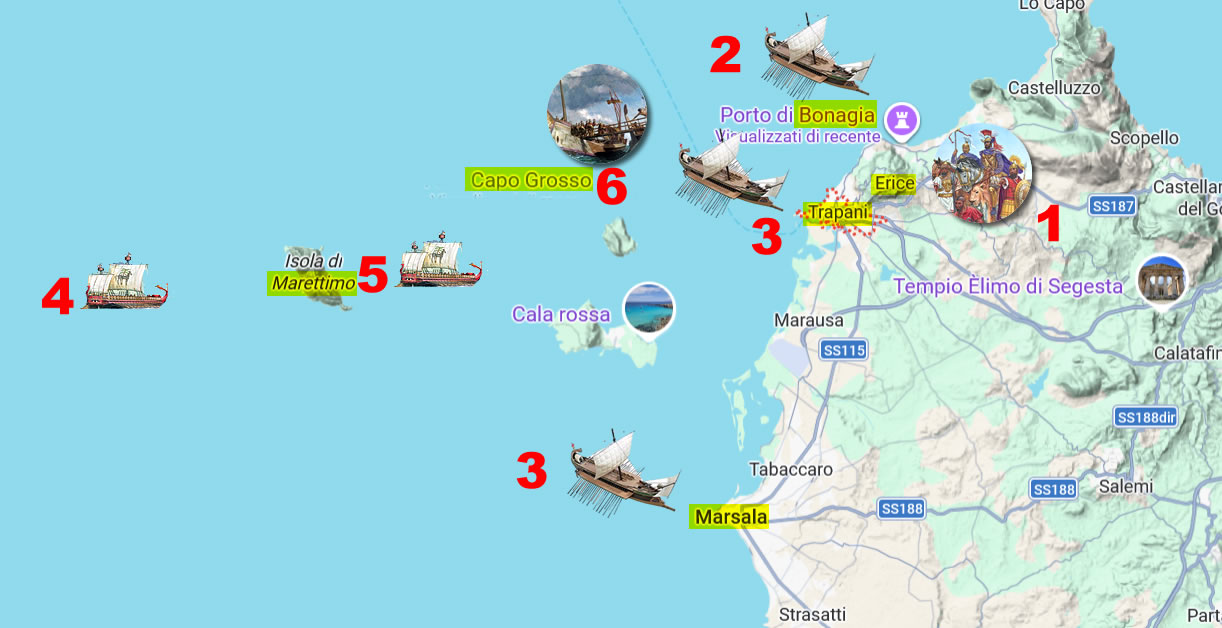
1 - The Carthaginian forces, commanded by Hamilcar, were besieged on the northeastern slopes of Mount Eryx, which overlooks Trapani.
2 - The Romans firmly held the summit and the western slopes, leaving open only a small sea corridor near what is now the Bay of Bonagia (a small inlet on the Sicilian coast north of Trapani—the only landing point from which the Carthaginians could ascend Mount Eryx and rejoin their compatriots).
3 - The Roman fleet also occupied the waters off Trapani and Marsala.
4 - Determined to relieve Hamilcar, who was besieged by the Romans and anxiously awaiting supplies, the Punics assembled a naval fleet of 700 ships (primarily for supply and reinforcement of the land troops stationed on Mount Eryx). Under the command of Admiral Hanno, it set sail from the port of Carthage to reach Marettimo.
5 - At dawn on March 10, 241 BC, Hanno—knowing that the Roman fleet was anchored off Favignana and encouraged by a light southerly breeze that was shifting westward—ordered his fleet to set sail from Marettimo. The ships were laden with all kinds of provisions needed by the troops holed up above Trapani, and the commander believed that with a favorable following wind from the west, he could quickly reach the Bay of Bonagia by passing north of Levanzo, thereby evading the Roman patrols stationed in the stretch of sea between Trapani and Marsala.
6 - The Roman admiral Gaius Lutatius Catulus, seeing the sudden change in wind direction, realized that the Carthaginians would take advantage of the situation by moving further north. He positioned his fleet—Roman sources tend to reduce the number of ships to magnify the victory through the disparity in forces—sheltered behind the heights of Capo Grosso on Levanzo, the smallest island of the Egadi archipelago. He reasoned that if he attacked immediately, the enemy ships would be slow and laden with cargo, and the Romans would easily win.
The Romans lay in ambush. As soon as the Carthaginian ships drew near, Catulus gave the order to cast off lines and set sail toward the enemy fleet. The Roman fleet, numerically inferior but better armed, fell upon the Carthaginians, who, caught off guard, no longer had the strength to disengage. The Carthaginians saw them only when the Roman fleet was already bearing down on them, sowing great confusion.
The enemy ships, slow because of their cargo, were taken by surprise by the swift Roman attack, which unleashed all its shock and surprise value. The engagement took place about four miles northwest of Capo Grosso. The attack was devastating: some Roman ships shattered the sides of Carthaginian vessels with their rostrums, sinking them. Others drew alongside the enemy ships, breaking all the oars on one side to render them unmanageable, then boarded them using the corvus. Catapults launched incendiary amphorae like Molotov cocktails. The confusion among the enemy ranks was so terrible that Hanno even ordered the cargo to be lightened by cutting down the mainmasts.
Moreover, the Roman ships were stripped of all excess weight, and the crews had been kept in training and were supported by elite marines. For the Carthaginians, the situation could not have been worse. The ships were loaded with cargo, making them slow to maneuver and practically useless for battle; furthermore, the crews were completely untrained, and the marines on board had been hastily enlisted for the occasion.
In the afternoon, shortly before sunset, Rome had sunk 50 Carthaginian ships and captured another 70. According to Polybius, Lutatius did not lose a single vessel; according to Diodorus Siculus, however, 30 Roman ships were sunk and another 50 damaged. The finds off Levanzo confirm that numerous Roman vessels were sent to the bottom and that thousands died.
Lutatius Catulus returned to Lilybaeum, where he had to manage the spoils: about 10,000 men had fallen into his hands. Furthermore, the Roman commander renewed the siege of Lilybaeum and succeeded in storming the city. Carthage, therefore, having suffered such a heavy defeat at the Egadi Islands in terms of men and especially ships, with its finances exhausted, was forced to sue for peace with Rome.
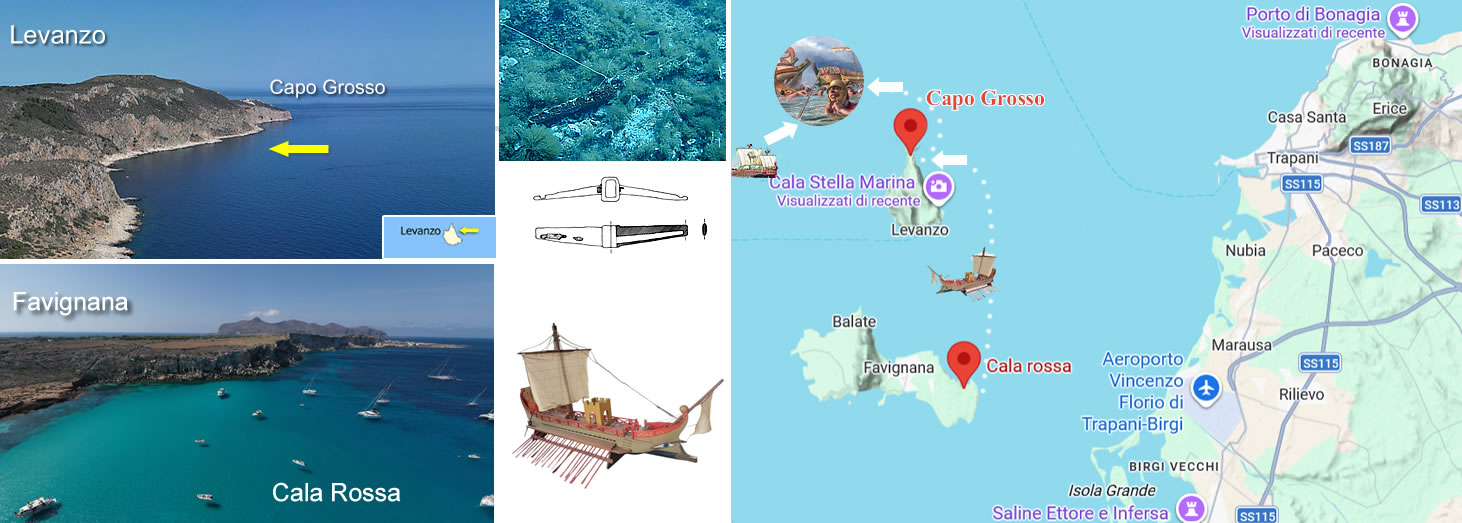
Anchor Stocks
In the 1960s and 1970s, divers pillaged about 300 lead anchor stocks aligned along the seabed in front of the rocky cliff on the eastern side of the island of Levanzo—an inaccessible coast with sheer vertical walls, between Cala Minnola and Capo Grosso. They were melted down to make net weights and even diving belt weights. Many years later, about a dozen more were found near Capo Grosso.
They were extremely heavy lead stocks, weighing up to 150 kilograms each. They weighed down wooden anchors, being inserted transversely into the shanks to improve grip on the seabed. Rarely used before, they replaced stone stocks on a large scale toward the end of the 4th century BC and fell out of use by the end of the 2nd century AD or shortly after. There were fixed types, with a central socket through which a pin passed through the shank, and removable types, similar in shape but without the central pin; alternatively, they consisted of a horizontally sliding bar. From the late Archaic period onward, iron anchors with removable metal stocks were also used.
They are distinguished by their shape (flat socket, absence of a central pin, solid arms) and certain dimensions (especially the small height at the center, about 10 cm, and perhaps the length, mostly around 1.50 m). Moreover, they quite often bear raised inscriptions or markings and numerals incised cold. These latter, in most cases where the weight is known, indicate the amount of metal used in manufacturing the stock; in other cases, perhaps an additional quantity beyond an implicit standard base; and in others still, probably only the small amount used to compensate for volume shrinkage due to cooling of the lead.
The combination of these characteristics—which produced an anchor of small bulk capable of good friction on the seabed—reveals a specific production by workshops operating with constant parameters on a large scale and subject to oversight. Their conspicuous placement testifies, as a concluding and partly identifying act, to the completion of the technical process with the administrative recording of the quantity of metal used, so that it could be counted in reports and recorded in the armament lists of the various naval units. What emerges, therefore, are conditions and procedures that go beyond the needs of private enterprise and are better suited to a systematic organization on a large scale, befitting public structures. Based also on epigraphic evidence, it is likely that these were military organizations.
This type of stock saved space on board, did not hinder movement on the ship (especially on triremes or biremes), and, thanks to its easy removability, could be swiftly mounted even on other compatible shanks. On triremes in particular, space was limited for storing anchors, and the demands of rowing and combat made the exterior of the bulwarks unavailable—where, on other ships, anchors were normally suspended ready for deployment. They could be temporarily placed at the bow or stern and, if disassembled, could remain lying flat with the stock alongside the shank, taking up minimal space, as was done with iron anchors equipped with a movable bar.
Why Were All Those Stocks in an Area That Is Certainly Not an Anchorage or Sheltered Spot?
The regularity with which the anchors were positioned on the seabed led archaeologists to conclude that they had been abandoned suddenly, by cutting the mooring lines at a specific and precise moment. The only plausible interpretation for this imposing concentration of anchors is that it was the anchorage site for military operations of the Roman fleet led by Admiral Lutatius Catulus, who launched—with devastating surprise—the mortal blow against the Carthaginian fleet coming from Marettimo, determining the Punic defeat of 241 BC. Indeed, it could not have been a mooring or loading area, since the zone is crossed by violent currents and stormy winds that often cause sudden rough and dangerous sea conditions. Evidently, Lutatius Catulus had anticipated that Hanno's route might be north of Levanzo; he hid a large part of his fleet precisely in that area where the anchor stocks were found, in order to surprise the enemy as it passed. The consul gave the sudden order to set sail by cutting the lines—in nautical jargon, this means leaving the anchors behind to avoid wasting time weighing them.
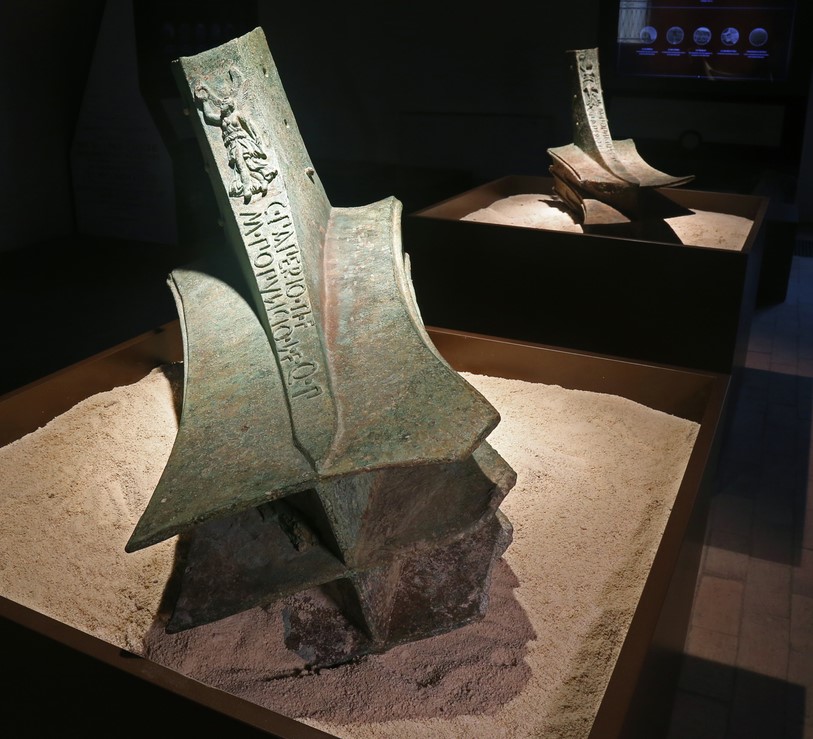
Rostrums
In 2004, a fisherman voluntarily handed over a Montefortino-type bronze helmet he had found at sea, leading to the discovery of the first rostrum. Over more than two decade of research, this initial find enabled scholars to rewrite this page of history with remarkable precision and topographical accuracy. The battle site was eventually localized approximately 4 miles northwest of Levanzo (Favignana, Trapani, Sicily), in the Sea of Quartare, where the recovery of as many as 25 rams – three of which are Punic – has since confirmed the location.
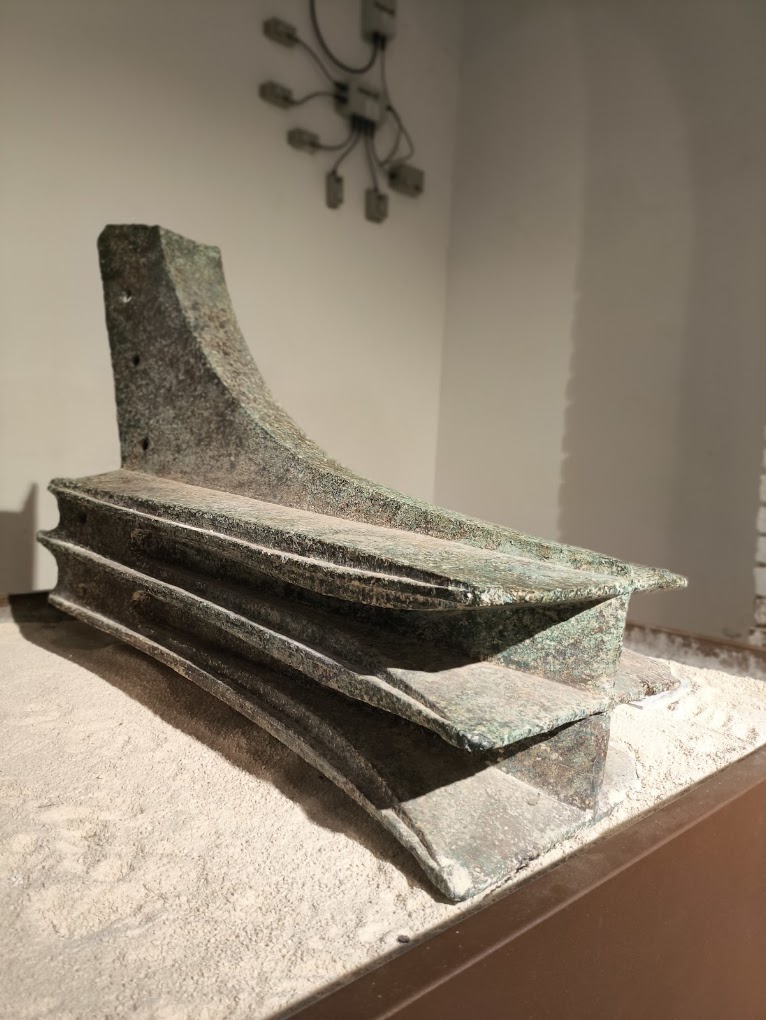
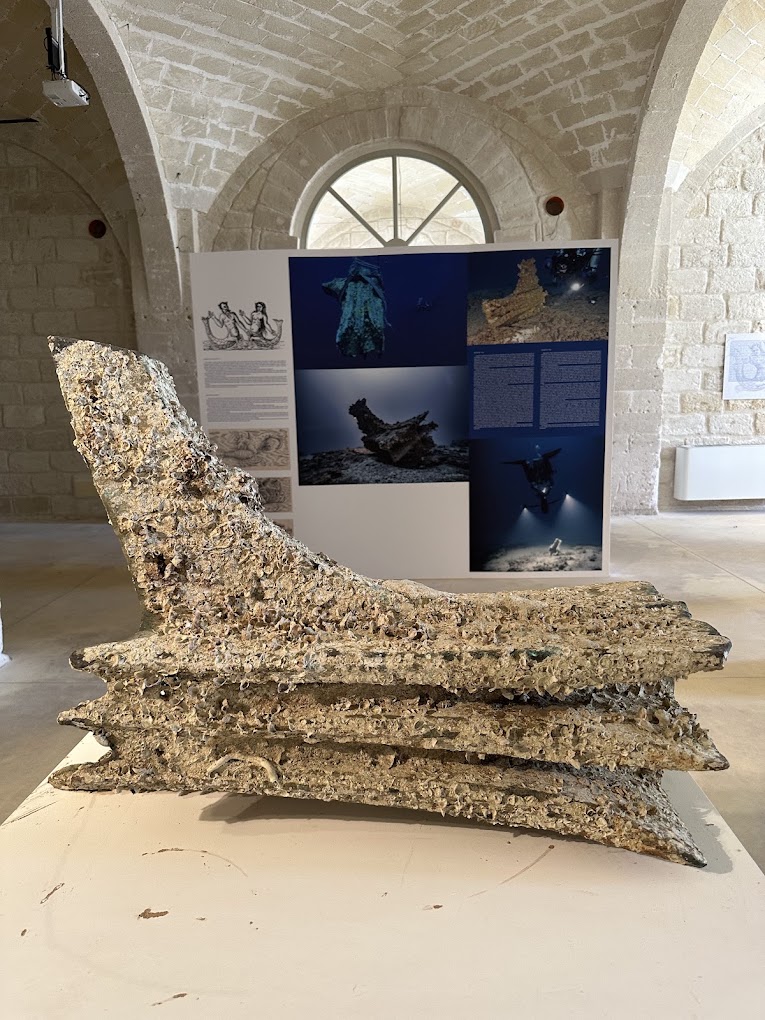
The first of these rostra, discovered in 2004 off Capo Grosso, is an object of exceptional uniqueness; indeed, only two further specimens are known from the entire Mediterranean basin – one recovered near Atlit, Israel, and another of unidentified provenance, currently preserved in the museum of Bremerhaven, Germany.
Cast as a single bronze piece, the rostrum was designed to be inserted at the juncture between the forward extremity of the keel and the lower portion of the stem. It was affixed to the wooden hull by numerous nails, traces of which are still discernible along its perimeter. While the main body was laminar in form, serving essentially as protective cladding for the wooden structure, the anterior section was far more robust, comprising a powerful vertical ram reinforced by three horizontal elements. This was the true lethal weapon: mounted on triremes and biremes at the waterline, it could strike enemy flanks with tremendous force, tearing open breaches that would rapidly sink the vessel or, at the very least, incapacitate it and force its retreat.
The Romans, who had adopted and refined shipbuilding techniques from the Carthaginians, equipped their warships with rostra that were considerably more advanced and powerful than their adversaries'. Roman examples bear inscriptions, in the name of the Quaestor, attesting to the flawless quality of their construction; Punic rostra, by contrast, feature invocations to the deities, imploring protection against the enemy.
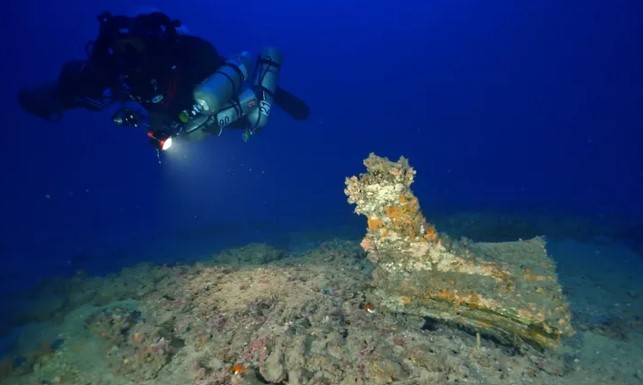
But why have so many Roman rams been found and almost none of the Carthaginian ones?
When a rostrum struck and penetrated the hull of an enemy vessel, it would detach from the bow to which it was attached and slowly sink together with the damaged ship. Consequently, every Roman rostrum recovered from the seabed carried with it a Carthaginian ship to the ocean floor: the Romans sank fifty Carthaginian vessels and captured another seventy, causing thousands of casualties.
Punic rostra, by contrast, were recovered because they were considered spoils of war. Indeed, as confirmed by ancient sources, the Romans, following their victory, would carry the rostra captured from Carthaginian ships back to Rome as trophies and display them in the Forum. Many of these Punic rostra, therefore, did not remain on the seabed but were removed as booty.
This explains why archaeologists have recovered twenty-four Roman rostra and only three Punic ones.
The Ships
In 2011, one of the pieces of evidence confirming the exact location of the Battle of the Egadi Islands was found northwest of Levanzo. Here, more than two thousand years later, traces of one of the Roman ships sunk in the battle were discovered off Trapani. We can imagine the Carthaginian ship with its powerful rostrum aiming straight at the Roman vessel, the rowers pulling with all their might to avoid the collision—but the flank of their ship was already exposed. On deck, the legionaries, defenseless—a crash, and the sinking. Archaeologists recovered about ten helmets belonging to those Roman legionaries at a depth of 75 meters (the bones had not survived because they were exposed on the seabed). They were identifiable as Roman by their characteristic pineapple-shaped knob. Not far away, divers found a Roman rostrum, probably from their own ship.
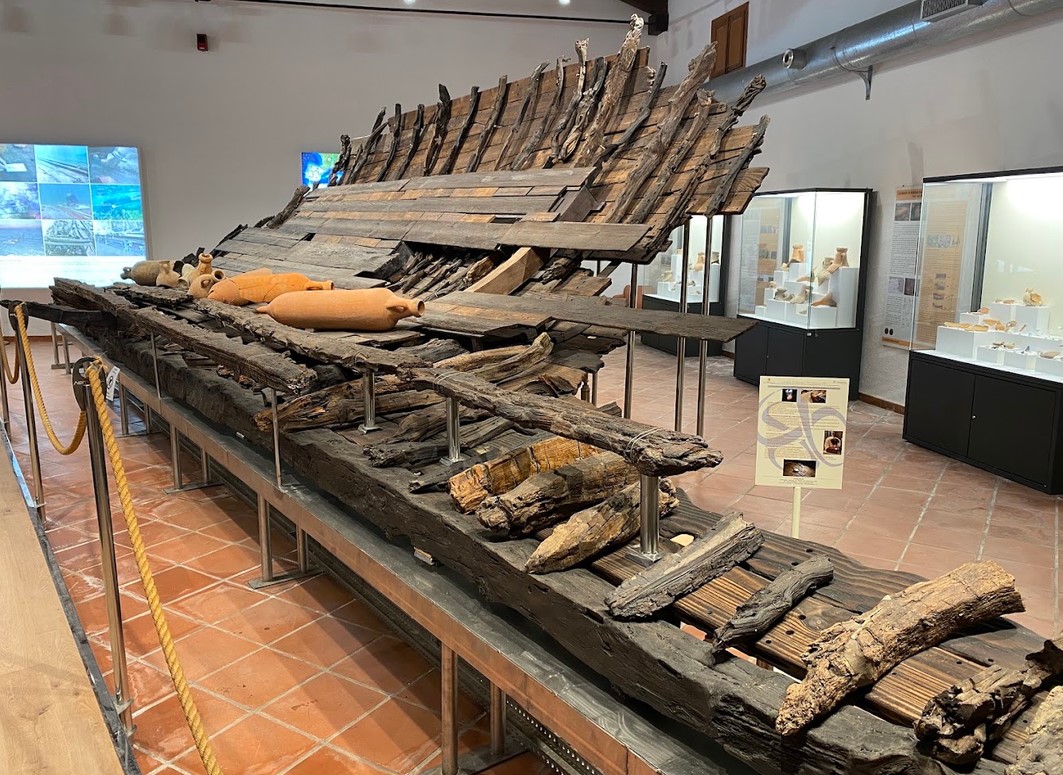
Around the same years, a Punic ship was also recovered off the northern coast of Longa Island, between Punta Scario and Punta Tramontana, a few miles south of the battle area, and another vessel was identified in the same context
The First Punic War
The name "Punic Wars" designates three wars between Rome and Carthage, fought respectively between 264 and 241 BC (with a resumption in 238 BC), 219 and 201 BC, and 151 and 146 BC.
Relations between Rome and Carthage remained cordial as long as Rome was not a naval and commercial power, and therefore as long as its interests were limited to mainland Italy.
In the centuries preceding the clash with Rome, Carthage had built an empire comprising Tunisia and Libya in North Africa, along with numerous colonies and naval bases in Sicily, Sardinia, Spain, and other regions of the western Mediterranean. For a long time, the Roman Republic had maintained excellent relations with Carthage—a distant power with which there were no reasons for conflict, and with which indeed four treaties and an alliance against Pyrrhus had been established. But now, the conquest of southern Italy and Carthage's simultaneous expansion in Sicily changed everything: only the Strait of Messina and a few Sicilian territories separated the two powers.
Rome found itself almost in direct contact with Carthaginian territory in Sicily—a situation that could not fail to breed unease in relations between the two states. Moreover, as a consequence of the conquest, the sphere of interests that Rome had to protect had enormously expanded. It is difficult to say how directly commercial interests were felt in Rome at that time, although it is clear that the new economic prospects were neither neglected nor could they fail to make themselves felt in politics. But it was now Rome's duty to protect the prosperity of the commercial and maritime cities of the southern peninsula, in the interest of Rome's own prosperity.
The Roman Republic was a war machine. The organization of its dominions provided immense reserves of soldiers, which grew with the expansion of conquests. The army was disciplined, well-trained, and capable of adopting complex and effective battle tactics. The conquest of new territories guaranteed the well-being of all citizens and resolved social conflicts, thus encouraging further expansion.
A few years after subjugating the entire Italian peninsula, the Romans learned to master a new and demanding element—the sea—and in subsequent generations they were able to continue their conquests inexorably. One after another, Sicily, Sardinia, Spain, northern Italy, Tunisia, Greece, and Asia Minor came under Roman dominion. Rome became the undisputed superpower of the Mediterranean.
To achieve this result, the only great obstacle was Carthage—the ancient colony founded by the Phoenicians (whom the Romans called Punics) near present-day Tunis. Eliminating the rival power required two long wars: the First Punic War (264–241 BC) and the Second Punic War (218–201 BC). Together, they represent the largest armed conflict of antiquity in terms of duration, scale of forces deployed, and extent of losses on both sides.
Carthage's control over part of Sicily and the entire western Mediterranean posed a threat to Rome and a brake on its ambitions. In 264 BC, the Senate received a request for help against Carthage from the Mamertines. They were certainly not reputable people: they were mercenaries originally from Campania who had occupied Messina, killed the men, divided the women among themselves, and taken up piracy. Quite unusually, the Romans hesitated before embarking on war. No one doubted the superiority of the legions formed by Roman citizens and their allies over the Carthaginian army, which was smaller and composed mostly of mercenaries and soldiers recruited from subject populations. But it was difficult to grant the request of a band of pirates, and at sea, Carthaginian strength was undisputed. In the end, the pro-war faction prevailed.
Once across the Strait of Messina, it quickly became evident that on land the Roman legions had no equals. Carthage, however, still controlled the sea, which allowed it to hold several well-defended coastal cities. To win, there was only one way out: build a fleet capable of wresting mastery of the seas from Carthage. With the help of shipbuilding techniques developed by the Etruscans and the cities of Magna Graecia, a powerful war fleet was built in a short time (according to ancient writers, barely two months). To compensate for their inexperience at sea, the Romans sought to make naval battles resemble land battles: they embarked a large number of legionaries on their ships and built mobile boarding bridges equipped with hooks (the corvi), which could attach to enemy vessels, allowing legionaries to board easily and fight hand-to-hand—a type of combat in which they excelled. This tactic caught the Carthaginians off guard, and they were defeated at Mylae in 260 BC and in numerous subsequent naval engagements.
Rome then decided to take the war directly to Africa. However, the Roman army that reached the African coast, not far from Carthage, under the command of Consul Attilius Regulus, suffered a crushing defeat in 255 BC. The war continued for another thirteen years with bloody but inconclusive battles, until the destruction of the Punic ships off the Egadi Islands in 241 BC brought the conflict to an end.
Carthage no longer had the means to rebuild its fleet quickly, and the victorious Romans—themselves exhausted—imposed moderate peace terms (which many in Rome protested), stipulating Carthage's withdrawal from Sicily and the payment of a fairly modest indemnity. In this terrible war, Rome's greatest achievement was mastery of the sea—which it never later relinquished and which ultimately proved decisive for the annihilation of Carthage.
Finally, the impetus for conquest that had driven Rome thus far could not be halted before the Strait of Messina. The tacit agreement by which Carthage had left Rome undisturbed in its expansion in Italy, while Rome left Carthage undisturbed in its expansion in Africa, Sicily, Sardinia, Corsica, and southern Spain, broke down at the moment when the spheres of action of the two imperialisms came into conflict.
The conflict was almost materially triggered by an appeal to Rome from the Campanian mercenaries (the Mamertines), who had held Messina since 289 BC and, after asking the Carthaginians for help to save themselves from Hiero of Syracuse, thought they could free themselves from the Carthaginian garrison by turning to the Romans. In 264 BC, after much hesitation, they decided to send aid—thus beginning the First Punic War. It was no coincidence that it was Campanians—that is, men from a territory now subject to Rome—who invoked Roman intervention.
The Romans, having succeeded in landing in Sicily, achieved fairly rapid successes there, which prompted Hiero—who had already allied himself with the Carthaginians—to switch sides. The war, however, although one of the most important cities subject to Carthage (Agrigento) was occupied with Hiero's help in 262 BC, threatened to drag on fruitlessly, because the Carthaginians, masters of the sea, could continuously send reinforcements of mercenaries from Africa, which their vast financial resources allowed them to raise. In short, Rome was faced with the need to transform itself overnight into a naval power—something that could happen less difficultly than it might have appeared to the ancients themselves, because the Greek states of southern Italy could provide the model for ships and suitable crews. Rome's merit, in any case, lies in having fully understood this necessity and, after the great victory near Mylae in 260 BC, which demonstrated the perfect equipping of the new fleet under the command of Consul Gaius Duilius, in having drawn the logical consequence and decided to strike at the heart of Carthage by taking the war to Africa, as had now become possible.
The plan was to revive the attempt of the last great defender of Hellenism in Sicily against the Carthaginians, Agathocles. Rome—though barely aware of it—by the very fact of having set itself against Carthage, came to assume in Sicily, as in southern Italy against the Samnites, Iapygians, and others, the defense of Greek cities reduced by internal strife and the attrition of a centuries-long struggle against adverse peoples to the point where they could no longer stand on their own. Even in Sicily, the fate of Greek civilization lay in Rome's hands, in the sense that it would depend on the war whether it would merge into Punic or Roman civilization.
Consul Attilius Regulus, having opened the way to Africa in 256 BC with the Battle of Ecnomus, first succeeded in stirring up the indigenous populations against Carthage, pushing the latter to sue for peace. However, when Regulus's terms were rejected, Carthage, with a new military effort in which it secured the technical expertise of a Greek general, destroyed the Roman army and took Regulus himself prisoner. The transfer of the conflict to Africa had for the time being failed, and the center of the war shifted back to Sicily. The naval superiority already achieved by Duilius was again lost by the Romans, also due to an exceptional series of shipwrecks that struck them, so that for fourteen years the Carthaginian garrisons, entrenched in the western part of the island and supported by sea, were able to hold out. Only in 242 BC did the Battle of the Egadi Islands, won by Lutatius Catulus, restore to the Romans that command of the sea which was the condition for victory and peace. After the first agreement reached between the generals of the two armies was rejected by the Roman people, peace was finally concluded in 241 BC, with the cession of Sicily (Carthaginian territory) and the smaller islands, and the payment of 3,200 talents.
For Rome, the essential consequence of the victory, as a result of which the Tyrrhenian basin became entirely Roman, was—setting aside here the influence on internal constitution—to inaugurate a new phase of its imperialism. Whereas previously it had consisted of predominance over confederated states, now in Sicily (except for the kingdom of Hiero, which remained independent) and then in the other islands, it took the form of direct dominion—the province—in which certain forms of subjection already established by Carthage were retained. Although Rome proceeded very cautiously and with much hesitation along this path, it could only lead to a renewal and intensification of rivalry with Carthage. The latter, meanwhile, was compensating for its losses with a systematic penetration into Spain, directed by Hamilcar Barca and then by his son-in-law Hasdrubal.